
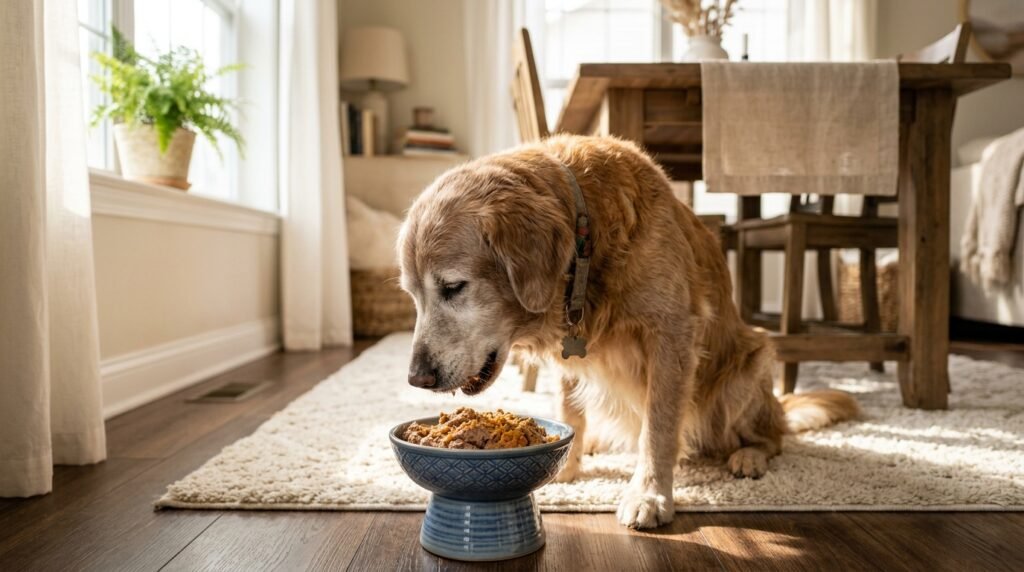
Watching your faithful senior dog walk up to their food bowl, sniff curiously, and slowly turn away without taking a bite is an unsettling experience for any pet parent. For years, the familiar sound of dry kibble rattling into a metal dish brought your companion running at full speed. When that eager enthusiasm fades into hesitation, lip-licking, or complete mealtime disinterest, it is easy to assume your dog is simply slowing down or growing stubborn with age.
In most older canines, a sudden drop in appetite has nothing to do with stubbornness. Declining olfactory sharpness, sensitive gums, fractured teeth, and shifting digestive enzymes make hard, crunchy kibble unappealing or actively painful to chew. Transitioning to high-quality wet food for old dogs offers a gentle, nourishing alternative that transforms mealtime from a painful chore back into a joyful daily ritual.
Soft canned diets and fresh stews deliver high moisture levels, rich aromatic scent profiles, and bioavailable animal proteins that support aging vital organs. By exploring how wet food supports renal filtration, eases dental strain, and protects lean muscle tissue, you can make informed feeding choices that help your senior companion thrive throughout their golden years.
Quick Answer:
Wet food for old dogs provides critical health benefits by delivering 75% to 82% natural moisture, which combats chronic dehydration, supports kidney filtration, and prevents urinary tract stone formation. The soft texture eliminates painful chewing for seniors suffering from periodontal disease, loose teeth, or oral resorptive lesions, while warming the food releases rich volatile aromas that overcome age-related loss of smell to stimulate declining appetites. When choosing a formula, prioritize real animal protein, controlled phosphorus levels to protect kidneys, moderate healthy fats, and low sodium.
Key Takeaways:
- Vital Moisture for Kidney Health: Canned food contains roughly seventy-eight percent water, maintaining renal blood flow and diluting urine in older dogs with declining thirst reflexes.
- Relief for Sore Mouths: Soft pates and stews require zero crunching, protecting dogs with periodontal disease, receded gums, or missing teeth from mealtime pain.
- Scent Overcomes Anosmia: Warming canned food to body temperature releases aromatic fats, stimulating appetite in dogs experiencing age-related sensory decline.
- Dry Matter Protein Superiority: On a dry matter basis, premium wet foods often supply higher quality, easily digestible animal protein than carbohydrate-heavy dry kibbles.
- Gentle Seven-Day Transition: Introduce wet food gradually over seven to ten days to protect sensitive senior digestive tracts from sudden osmotic diarrhea.
The Physiology of Aging and Appetite: Why Senior Dogs Struggle with Food
To understand why older dogs benefit so dramatically from canned food, you must first look at the biological changes occurring inside their bodies. Aging alters sensory perception, dental integrity, and digestive mechanics simultaneously. When an older dog hesitates before eating, one or more physiological factors are usually driving that behavior.
1. Loss of Smell (Hyposmia) and Dull Taste Buds
Canine appetite is governed almost entirely by scent rather than visual presentation. While human mouths possess roughly nine thousand taste buds, canines have only about one thousand seven hundred. To compensate, dogs rely on hundreds of millions of olfactory receptors lining their nasal cavity. Scent molecules trigger salivation and signal the stomach to release gastric acids in anticipation of digestion.
As dogs age, olfactory neurons degenerate and nasal mucosal membranes dry out. This progressive loss of smell, known clinically as hyposmia, leaves dry kibble smelling like cardboard. Because dry kibble holds only eight to ten percent moisture, it produces very few volatile scent molecules at room temperature. If an older dog cannot smell their meal, their brain simply does not register it as appetizing food.
2. Severe Periodontal Disease and Dental Pain
Dental disease is the most common diagnosed health problem in senior canines. Veterinary statistics show that over eighty percent of dogs past age seven suffer from stage two, three, or four periodontal disease. Decades of plaque accumulation lead to deep bacterial infections beneath the gum line, bone resorption around tooth roots, and loose molars.
Biting down on a hard kibble pellet exerts direct mechanical force onto inflamed alveolar nerves. Even dogs with stoic personalities will quickly learn that crunching food produces intense discomfort. According to clinical guidance on canine periodontal disease from Cornell University College of Veterinary Medicine, untreated oral infections cause chronic oral pain, systemic inflammation, and severe food aversion. Soft canned food eliminates this mechanical pressure entirely, allowing your dog to eat without fear of pain.
3. Reduced Saliva Production (Xerostomia)
Saliva serves several essential functions in canine digestion. It lubricates the oral cavity, binds dry particles into a cohesive food bolus, and helps move food smoothly down the esophagus through peristaltic contractions. Many older canines develop xerostomia, an age-related reduction in salivary output often exacerbated by medications for arthritis, heart disease, or kidney conditions.
Swallowing dry kibble with a dry mouth is frustrating and physically uncomfortable. Dry pellets stick to the tongue, scratch delicate pharyngeal tissues, and can trigger gagging or choking fits. Wet food provides immediate moisture lubrication, allowing smooth swallowing without requiring extra salivary effort.
The 5 Major Health Benefits of Wet Food for Old Dogs
Switching your aging pet to a high-moisture diet produces measurable improvements in everyday energy, hydration, and organ performance. Here is how wet nutrition addresses the distinct medical needs of aging dogs.
1. Kidney Protection and Continuous Hydration
Chronic kidney disease is among the leading causes of illness and mortality in geriatric canines. As functional nephrons within the renal cortex gradually decline, the kidneys lose their ability to concentrate urine efficiently. Older dogs produce larger volumes of dilute urine, which drains vital fluids out of their vascular system.
Compounding this problem is the fact that senior dogs experience hypodipsia, a blunted physiological thirst drive. An older dog often will not walk across the room to drink water from their bowl until they are already mildly dehydrated. Feeding canned food with seventy-eight to eighty-two percent moisture content provides built-in hydration with every bite. This continuous fluid influx supports the glomerular filtration rate, flushes cellular metabolic waste, and protects remaining kidney tissue from ischemic damage.
2. Prevention of Lower Urinary Tract Stones
Concentrated urine is the primary risk factor for bladder stones, including struvite and calcium oxalate uroliths. When urine sits stagnant and concentrated in the bladder, mineral salts precipitate out of solution and form microscopic crystals. Over time, these crystals coalesce into painful, bladder-irritating stones that can cause partial or complete urethral obstructions.
Higher moisture intake increases daily urine volume and encourages more frequent bladder emptying. This gentle urinary flushing keeps mineral concentrations well below the threshold of crystallization, protecting your dog from chronic cystitis and painful urinary tract infections.
3. Preservation of Lean Muscle Mass (Combating Sarcopenia)
Age-related muscle wasting, known medically as canine sarcopenia, affects nearly all senior dogs. As activity levels decline and systemic metabolic efficiency shifts, older dogs lose skeletal muscle along their spine, hips, and shoulders. Maintaining healthy muscles requires high-quality, highly digestible dietary protein containing complete amino acid profiles.
Commercial dry kibble relies heavily on plant-based starches and binders like pea flour, corn gluten, or potato starch to hold its hard pellet shape through the high-heat extrusion process. In contrast, premium canned foods are formulated primarily with whole meats, poultry, and organs cooked gently in their own juices. These bioavailable animal proteins are absorbed efficiently across the aging intestinal villi, providing the building blocks required to prevent muscle loss.
4. Satiety and Caloric Regulation for Weight Management
Maintaining a healthy weight is essential for senior dogs suffering from hip dysplasia or osteoarthritis. Carrying just two or three extra pounds puts immense mechanical stress on worn joint cartilage. However, cutting an older dog’s food volume can leave them feeling hungry, anxious, and begging for food throughout the day.
Wet food solves this dilemma through volumetric dilution. Because water contributes bulk without adding calories, a generous portion of wet food fills the stomach, activates gastric stretch receptors, and signals satiety to the brain. Your dog walks away from the bowl feeling satisfied, while consuming fewer total calories than they would from a tiny scoop of energy-dense kibble. You can review precise portion strategies in our detailed guide on low calorie senior dog food for safe weight loss.
5. Easy Medication Administration
Caring for an older companion frequently involves daily prescriptions, such as non-steroidal anti-inflammatory drugs (NSAIDs), heart medications, or joint supplements. Pilling a reluctant senior dog with dry treats can turn into a daily battle of wills, causing unnecessary stress for both of you.
The thick, moldable texture and rich aroma of canned pate make pill concealment effortless. Crushed powders or whole capsules can be folded seamlessly into a spoonful of room-temperature wet food. The intense meaty aroma masks the bitter medicinal taste, and most dogs eagerly swallow the entire bite without chewing or spitting out the tablet.
Dry Matter Basis: How to Accurately Compare Wet Food vs Kibble
One of the biggest stumbling blocks pet owners encounter when evaluating wet food is reading the guaranteed analysis label on the back of the can. Many well-meaning owners look at a can of wet food, see “Crude Protein: 9%”, and immediately compare it to a bag of dry kibble that reads “Crude Protein: 26%”. The natural, but incorrect, assumption is that the dry food contains nearly three times more protein than the wet food.
This comparison is fundamentally flawed because it ignores moisture content. Dry kibble is ninety percent solid matter, whereas canned food is roughly twenty to twenty-five percent solid matter and seventy-five to eighty percent water. To evaluate the true nutrient concentration of any pet food, you must convert the values to a Dry Matter (DM) basis, which calculates nutrient density after removing all water.
Veterinary nutritionists use a simple two-step formula to calculate Dry Matter percentages:
- Calculate Dry Matter Percentage: Subtract the moisture percentage from 100%. (For example: 100% minus 78% moisture equals 22% dry matter).
- Calculate Nutrient on Dry Matter Basis: Divide the guaranteed nutrient percentage by the dry matter percentage, then multiply by 100%. (Formula:
(Nutrient % / Dry Matter %) * 100).
Let us look at a real-world mathematical comparison between a standard senior dry kibble and a quality senior canned food:
- Dry Kibble: Reads 26% crude protein and 10% moisture on the label. First, calculate the dry matter: 100 – 10 = 90%. Next, divide protein by dry matter: (26 / 90) * 100 = 28.8% protein on a dry matter basis.
- Canned Wet Food: Reads 9.5% crude protein and 78% moisture on the label. First, calculate the dry matter: 100 – 78 = 22%. Next, divide protein by dry matter: (9.5 / 22) * 100 = 43.1% protein on a dry matter basis.
When you strip away the water, the canned food actually delivers over forty percent high-biological-value protein, significantly outperforming the dry kibble. As explained in the Tufts Clinical Nutrition Service guide on canned versus dry pet food, evaluating food on a dry matter basis is the only reliable way to compare diets with different moisture levels.
Comparison Table: Canned Wet Food vs Dry Kibble vs Fresh Gently-Cooked Food
Choosing the right feeding approach depends on your dog’s oral health, medical history, and household budget. The following table provides a clear comparison of the three primary dietary formats available for senior dogs.
| Nutritional Attribute | Canned Wet Food | Dry Extruded Kibble | Fresh Gently-Cooked Food |
|---|---|---|---|
| Moisture Content | 75% to 82% (High) | 8% to 10% (Very Low) | 70% to 75% (High) |
| Chewing Effort | Zero; effortlessly lapped | High; requires crushing force | Low to Moderate; soft shreds |
| Aroma and Palatability | High; strong volatile scents | Low to Moderate; spray-on fats | Very High; fresh culinary aroma |
| Carbohydrate Content (DM) | Low (10% to 25%) | High (40% to 60% starches) | Low to Moderate (15% to 30%) |
| Renal and Bladder Support | Superior; steady fluid flow | Minimal; relies on drinking bowl | Excellent; natural food hydration |
| Unopened Shelf Life | 2 to 3 years in sterile cans | 12 to 18 months | Requires continuous freezer storage |
| Cost per Daily Feeding | Moderate to High | Economical | Highest tier |
Choosing the Right Texture: Pate, Shredded, Stew, or Broth?
Wet foods come in several culinary textures. While young adult dogs often devour any texture offered, older dogs have distinct physical preferences influenced by their oral anatomy and tongue mobility.
1. Smooth Ground Pate / Loaf
Smooth pate is the most versatile and practical texture for aging dogs. It consists of finely ground meats, organs, and broths blended into a uniform, dense paste. Because it contains no distinct meat chunks that require biting or chewing, dogs with missing incisors, broken molars, or receded gums can easily lap it up with their tongue.
Pate is also the easiest texture to modify. If your senior dog has severe dental pain, a collapsing trachea, or temporary weakness, you can place two scoops of pate into a bowl, add warm water or low-sodium bone broth, and whisk it with a fork into a smooth, drinkable puree. This slurry allows frail dogs to consume full nutrition without using their teeth.
2. Shredded Meat and Flakes in Broth
Shredded formulas feature visible muscle meat pulled into thin, tender strips suspended in savory broth. These diets closely resemble human culinary food and provide exceptional olfactory stimulation. Shredded textures work best for older dogs who still have sound dentition but need extra hydration and aromatic appeal to maintain their body weight.
3. Chunks in Gravy and Stews
Stew-style formulas feature formed meat nuggets swimming in thickened gravy. While dogs often enjoy licking up the savory gravy, chunks can present unique challenges for senior canines. Some older dogs simply lick away all the liquid gravy, leaving the dry meat nuggets behind in the bottom of the bowl.
Additionally, gravies are thickened using food starches like guar gum, carrageenan, or tapioca. Certain older dogs with sensitive gastrointestinal tracts or chronic pancreatitis may experience loose stools or abdominal discomfort from these heavy thickeners. If you notice digestive upset after feeding gravy formulas, switching to a smooth pate typically resolves the problem.
Critical Nutritional Criteria for Senior Wet Dog Food
Not all canned dog foods are formulated with the nutritional needs of aging canines in mind. Puppies, active adults, and geriatric dogs have vastly different metabolic demands. When evaluating wet food labels for your older dog, keep these key nutritional criteria in mind.
1. High-Quality, Named Animal Proteins
The first two ingredients on the can should always be specific animal protein sources, such as deboned chicken, turkey, beef, lamb, or wild salmon. Avoid foods listing vague ingredients like “meat by-products” or “animal digest”. As dogs age, their protein synthesis efficiency decreases. Feeding highly digestible whole animal proteins ensures your dog receives all essential branch-chain amino acids (leucine, isoleucine, and valine) necessary to counteract sarcopenia.
For a detailed breakdown of how nutrient requirements evolve across life stages, read our guide on old dog nutrition needs and what changes as your dog ages.
2. Controlled Phosphorus Levels to Spare Kidneys
Phosphorus control is one of the most vital nutritional levers in senior canine health. The kidneys are responsible for filtering excess dietary phosphorus from the bloodstream. When kidney function declines with age, phosphorus accumulates in the circulation, leading to hyperphosphatemia.
High blood phosphorus pulls calcium from the bones, damages delicate kidney tubules, and accelerates the progression of chronic renal failure. Senior-specific canned formulas carefully manage phosphorus levels (aiming for roughly 0.4% to 0.8% on a dry matter basis for healthy seniors). Never feed rich puppy food to a senior dog, as puppy formulas contain elevated phosphorus designed for rapid bone growth that can overtax older kidneys.
3. Anti-Inflammatory Omega-3 Fatty Acids (EPA and DHA)
Look for wet foods enriched with cold-water marine oils, such as wild salmon oil, menhaden fish oil, or green-lipped mussel extract. These marine oils are rich in Eicosapentaenoic Acid (EPA) and Docosahexaenoic Acid (DHA). Plant-based omega-3s, like flaxseed oil, contain Alpha-Linolenic Acid (ALA), which dogs convert very inefficiently into active EPA and DHA.
EPA and DHA work systematically to dampen inflammatory cytokines that degrade cartilage in arthritic joints. In addition, DHA crosses the blood-brain barrier to support neural cell membranes, helping reduce the cognitive confusion associated with Canine Cognitive Dysfunction (dementia).
4. Easily Digestible Fibers and Prebiotics
Sluggish intestinal motility is common in older dogs, frequently leading to constipation or hard, painful bowel movements. Senior wet foods should include gentle soluble and insoluble dietary fibers, such as pumpkin, beet pulp, ground miscanthus grass, or chicory root inulin (FOS). These fibers feed beneficial gut flora in the colon, producing short-chain fatty acids that nourish the mucosal lining and keep stools formed yet easy to pass.
5. Low Sodium Content
Cardiac health declines in many senior canines, with conditions like Myxomatous Mitral Valve Disease (MMVD) affecting older small-breed dogs. Excess dietary sodium causes fluid retention, elevating systemic blood pressure and forcing the aging heart to work harder. Quality senior wet foods maintain moderate sodium levels to protect cardiovascular stability.
The American Veterinary Medical Association senior pet care guidelines recommend regular veterinary consultations to ensure your dog’s diet matches their individual organ health and stage of aging.
Step-by-Step Transition Protocol: Shifting from Kibble to Wet Food
When you see your older dog struggling to eat, your natural reaction might be to empty the dry kibble bowl and immediately serve an entire can of rich wet food. While your intentions are loving, sudden dietary changes almost always trigger acute gastrointestinal distress in senior pets.
An older dog’s digestive tract contains an established population of gut microbes and pancreatic enzymes acclimated to processing the exact starch and fat ratios of their previous kibble. Abruptly introducing a rich, high-moisture canned food can overwhelm the intestinal brush border, causing osmotic diarrhea, gas, and vomiting. To keep your dog comfortable, follow a gradual seven to ten-day transition schedule.
The 7-Day Gentle Feeding Transition Schedule:
- Days 1 and 2: 75% previous dry food combined with 25% new wet food.
- Days 3 and 4: 50% previous dry food combined with 50% new wet food.
- Days 5 and 6: 25% previous dry food combined with 75% new wet food.
- Day 7 and onward: 100% complete senior wet food diet.
If your dog produces soft stools or experiences mild gas at any stage, do not push forward to the next step. Hold at the current ratio for an additional two or three days until their stool firms up before increasing the wet food portion. Adding a half-teaspoon of pure canned pumpkin puree or a veterinary-prescribed probiotic powder can help stabilize the microbiome throughout the transition.
The Mixed Feeding Strategy: Combining Wet Food with Kibble
Transitioning your dog to a 100% wet food diet is not the only option. In fact, many pet parents adopt a mixed feeding strategy, combining dry kibble with canned food. This approach offers practical benefits for households with medium to giant breed senior dogs.
Feeding a ninety-pound senior Labrador entirely on canned food can require three to four large cans every day, which can become financially prohibitive over several years. Mixed feeding delivers the key benefits of wet food (heightened aroma, enhanced moisture, and softer texture) while keeping daily feeding costs manageable.
The Golden Rule of Mixed Feeding: Avoid the Double-Feeding Trap
The most common mistake owners make when mixing diets is simply adding two large spoonfuls of wet food directly on top of their dog’s full scoop of kibble. While your dog will love this feast, those extra spoonfuls represent uncounted calories that lead directly to unhealthy weight gain.
To keep your dog at their optimal body condition, calculate the caloric contribution of each component. For instance, if you want to feed a fifty-fifty split, provide exactly half of your dog’s daily required calories from kibble and the remaining half from wet food. For dogs needing support with appetite recovery or weight management, explore our detailed resource on how to help a senior dog gain weight safely.
The Warm Water Hydration Hack for Kibble
If you feed a mixed diet, you can gain additional moisture benefits by softening the kibble before adding the wet food. Pour warm water (about 100°F) over the dry kibble portion and let it sit for ten to fifteen minutes. The kibble will absorb the warm liquid, expanding and softening into a tender consistency. Once softened, fold in your wet food topper. This simple technique doubles the moisture intake and ensures every single mouthful is soft and easy on aging teeth.
To determine the exact calorie and cup amounts appropriate for your companion’s size, check out our companion guide on how much to feed a senior dog with a weight-based feeding guide.
Practical Mealtime Hacks for Inappetent or Picky Seniors
If your senior companion has lost their appetite due to advanced age, chronic kidney issues, or post-operative recovery, getting them to eat can be an emotional hurdle. Here are five veterinary-approved mealtime techniques to re-ignite your dog’s natural eating instincts.
1. Warm the Wet Food to Body Temperature
Never serve wet food straight out of the refrigerator. Cold food has congealed fats, a stiff texture, and almost zero aroma. Take the serving of wet food and microwave it for five to eight seconds, or stir in a splash of hot water, bringing the temperature to roughly 98°F to 100°F (37°C to 38°C).
Warming liquefies the natural fats and releases a burst of savory volatile aromas. This intense scent stimulates the olfactory nerve endings in your dog’s nasal passages, triggering appetite responses even in dogs with diminished senses. Always stir the food thoroughly and test the warmth with your finger before serving to ensure there are no hot spots that could burn your dog’s tongue.
2. Raise the Food Bowl to Shoulder Height
Bending their neck all the way down to the floor to eat places significant downward strain on the cervical spine, shoulders, and arthritic front elbows. For dogs with spinal spondylosis or severe arthritis, lowering their head can be uncomfortable enough to make them walk away after just a few bites.
Place your dog’s dish on an elevated feeding stand positioned so the rim of the bowl sits level with their lower chest or shoulder joint. This allows your senior dog to stand or sit in a relaxed, neutral posture while eating, eliminating orthopedic strain during mealtime.
3. Use Wide, Shallow Ceramic or Glass Dishes
Many older dogs develop heightened tactile sensitivities, including whisker fatigue. Deep, narrow metal bowls force a dog’s whiskers to rub against the sides of the dish with every bite. The repetitive sensory input can cause discomfort, and the loud scraping noise of tags or teeth against metal can startle sensitive seniors.
Switch to a wide, shallow ceramic saucer or a low-lipped porcelain plate. The shallow profile allows your dog to reach their food without brushing their whiskers against bowl walls or having to lower their head into a dark cylinder.
4. Hand-Feeding and Lick-Mat Enticement
When an aging dog feels nauseous or lethargic, approaching a large bowl of food can feel overwhelming. Sitting quietly beside your companion on the living room rug and offering a tiny scoop of warm wet food from your fingertips or a shallow spoon often breaks through their hesitation. The comforting scent of your hand combined with personal reassurance encourages them to take that first restorative bite.
Alternatively, spread two tablespoons of smooth canned pate across a textured silicone lick mat. The repetitive rhythmic licking motion releases endorphins in the canine brain, soothing anxiety while gently delivering vital calories and hydration.
5. Nutrient-Dense Natural Toppers
If your dog needs extra enticement, you can incorporate safe culinary toppers in small amounts:
- Warm Bone Broth: Use only plain, unsalted bone broth made without onions, garlic, or excessive salt.
- Canned Sardines in Water: A forkful of canned sardines packed in spring water provides intense fish aroma, natural omega-3s, and coenzyme Q10 for heart support.
- Pure Pumpkin Puree: One tablespoon of 100% pure pumpkin (not spiced pie mix) adds gentle fiber and natural sweetness.
For safe snack ideas between regular meals, review our recommendations for the best senior dog treats that are soft and healthy.
Special Health Conditions: Tailoring Wet Diets to Chronic Illness
Geriatric dogs often live with one or more chronic medical diagnoses. High-moisture wet food can be customized to support specific medical treatment plans under your veterinarian’s supervision.
1. Chronic Kidney Disease (Renal Insufficiency)
In canine kidney disease, prescription renal wet diets are considered a cornerstone medical therapy. These specialized canned formulas provide restricted, exceptionally high-quality protein to reduce toxic blood urea nitrogen (BUN) waste, low phosphorus levels to spare remaining nephrons, added omega-3 fatty acids, and potassium supplementation. The moisture content supports continuous renal flushing, directly prolonging survival times.
2. Congestive Heart Failure
Dogs with enlarged hearts or degenerative valve disease require strict sodium restriction to prevent pulmonary edema and ascites. Senior canned foods designed for cardiac support provide restricted sodium (often under 0.25% on a dry matter basis), along with elevated L-carnitine and taurine to support myocardial cell contractions.
3. Canine Diabetes Mellitus
Diabetic dogs experience postprandial glucose spikes following meals high in fast-digesting carbohydrates and starches. Because canned foods do not require starch binders, they are naturally lower in carbohydrates and higher in protein and moisture than dry kibbles. Feeding consistent portions of low-carbohydrate wet food at twelve-hour intervals helps stabilize blood glucose and improves insulin efficiency.
4. Post-Dental Surgery and Missing Teeth
Following a major dental procedure where multiple loose or infected teeth are extracted, your dog’s mouth will be tender and stitched with dissolvable sutures for two to three weeks. Feeding smooth canned pate whipped with warm water is mandatory during this post-surgical recovery period. It provides complete nutrition without disturbing healing gingival tissues.
Common Wet Food Myths Debunked
Despite the clear veterinary benefits of high-moisture nutrition, several outdated myths about canned food continue to circulate among pet owners. Let us examine the clinical facts behind these common misconceptions.
Myth 1: “Wet food rots your dog’s teeth; dry kibble cleans them.”
This is perhaps the most widespread myth in canine nutrition. The idea that dry kibble functions like a toothbrush is largely incorrect for standard diets. When a dog bites a piece of standard commercial kibble, the pellet shatters instantly upon contact with the tooth tip. The crumbs fall away without scraping the plaque accumulating at the gum line.
True dental health depends on active oral care: daily tooth brushing with enzymatic canine toothpaste, veterinary dental cleanings under anesthesia, and approved dental chews. Soft wet food does not rot teeth any faster than dry kibble, provided you maintain an appropriate oral care routine. For dogs who already suffer from loose teeth or sore gums, crunching kibble is agonizing, making soft wet food the far kinder and healthier option.
Myth 2: “Feeding wet food makes dogs chronically picky.”
Pet owners often worry that once their dog tastes delicious canned food, they will refuse to eat anything else. What looks like “pickiness” in an older dog is almost always a physical signal of comfort versus discomfort. If your senior dog refuses hard kibble after trying wet food, they are simply choosing the meal that does not hurt their teeth, irritate their stomach, or require uncomfortable chewing. Choosing comfort over pain is natural, healthy behavior.
Myth 3: “Canned food causes watery diarrhea.”
Wet food does not cause diarrhea when introduced appropriately. When digestive issues occur, they almost always stem from one of two errors: transitioning too abruptly from dry kibble without allowing gut microbes to adjust, or choosing low-grade canned foods loaded with fatty gravies and artificial binders. When you choose a quality formula and introduce it gradually over seven days, older dogs typically produce firm, healthy stools.
Safe Storage, Handling and Can Preservation
Proper food handling is essential when feeding wet diets to keep meals fresh and prevent bacterial contamination.
- Refrigeration: Once an aluminum can is opened, cover it securely with a food-grade silicone pet can lid or transfer the contents into an airtight glass container. Refrigerate immediately and use within three to four days.
- Room Temperature Limits: Never leave wet food sitting in your dog’s bowl for longer than two to three hours. Unlike dry kibble, moist food at room temperature quickly attracts airborne bacteria and insects. If your dog does not finish their portion within thirty minutes, pick up the dish, cover it, and refrigerate it for their next meal.
- Freezer Portioning: If you have a small dog who eats only a few spoonfuls per meal, you can scoop the fresh can into individual portions using a silicone muffin tray or ice cube mold and freeze them. Thaw individual portions in the refrigerator overnight as needed.
Frequently Asked Questions
#### Is it safe to feed an old dog only wet food?
Yes, it is entirely safe and healthy to feed an older dog a 100% wet food diet, provided the product is labeled as “Complete and Balanced” under AAFCO (Association of American Feed Control Officials) nutritional guidelines. Complete canned formulas contain every essential vitamin, mineral, amino acid, and fatty acid your dog needs for long-term health. Dogs with advanced dental disease, kidney issues, or poor appetites often thrive best when fed exclusively on canned nutrition.
#### How much wet food should I feed my senior dog each day?
Daily feeding amounts depend on your dog’s current weight, body condition score, and activity level. Because wet food contains roughly seventy-eight percent water, you will need to feed a larger volumetric portion than you would with dry kibble. On average, a typical twelve-point-five ounce can of senior wet food contains between two hundred fifty and three hundred fifty kilocalories. Check the feeding guideline table on the can for your dog’s target weight, use a digital scale for accuracy, and adjust portions based on monthly weigh-ins at your veterinary clinic.
#### Why does my senior dog eat wet food but refuse dry kibble?
When an older dog eagerly eats wet food while refusing dry kibble, they are usually experiencing oral pain or sensory decline. Crunching hard kibble hurts inflamed gums, loose teeth, or oral resorptive lesions. At the same time, dry kibble has minimal scent compared to warm, moist canned food. Your dog is avoiding the pain of chewing and gravitating toward the food that smells appealing and can be swallowed comfortably.
#### Does wet food cause bad breath in older dogs?
Wet food does not directly cause bad breath. Foul oral odor (halitosis) in senior dogs is almost always caused by underlying periodontal disease, decaying tooth roots, or trapped bacteria beneath the gum line. In some cases, strong breath can also be a sign of advanced kidney disease (uremic breath) or metabolic illness. If your dog has foul breath, schedule a thorough oral examination with your veterinarian rather than blaming their soft diet.
#### Can wet food trigger pancreatitis in senior dogs?
High-fat wet foods, particularly rich gourmet formulas with heavy gravies, can trigger acute pancreatitis in dogs predisposed to digestive illness. However, this is a function of fat content rather than the wet texture itself. If your dog has a history of pancreatitis or gastrointestinal sensitivity, choose a senior canned formula with low to moderate fat levels (aiming for less than twelve to fifteen percent fat on a dry matter basis) and avoid foods containing rich gravies or added lard.
#### Should I keep leftover wet food in the original metal can?
Modern pet food cans feature food-safe interior enamel coatings that prevent the food from reacting with the aluminum or steel container. However, once the seal is broken, exposure to oxygen can slightly alter the flavor of the food along the edges of the metal. For maximum flavor preservation and freshness, transfer leftover food into a clean, airtight glass or BPA-free plastic container with a tight lid before placing it in the refrigerator.
Nourishing Your Senior Dog with Patience and Compassion
Watching your dog grow gray around the muzzle is a poignant reminder of how precious every year together really is. While aging brings inevitable physical shifts, food should always remain a source of comfort, nourishment, and pure joy for your companion. Transitioning to high-quality wet food is one of the most effective, compassionate steps you can take to protect your senior dog’s vitality.
By providing natural hydration to ease the burden on aging kidneys, sparing tender mouths from the mechanical strain of hard kibble, and offering rich aromas that awaken declining senses, wet nutrition helps your dog stay energized and satisfied. Monitor your dog’s weight, maintain open communication with your veterinarian, and enjoy the happy wag of their tail as they finish every single bite of their daily meals.