
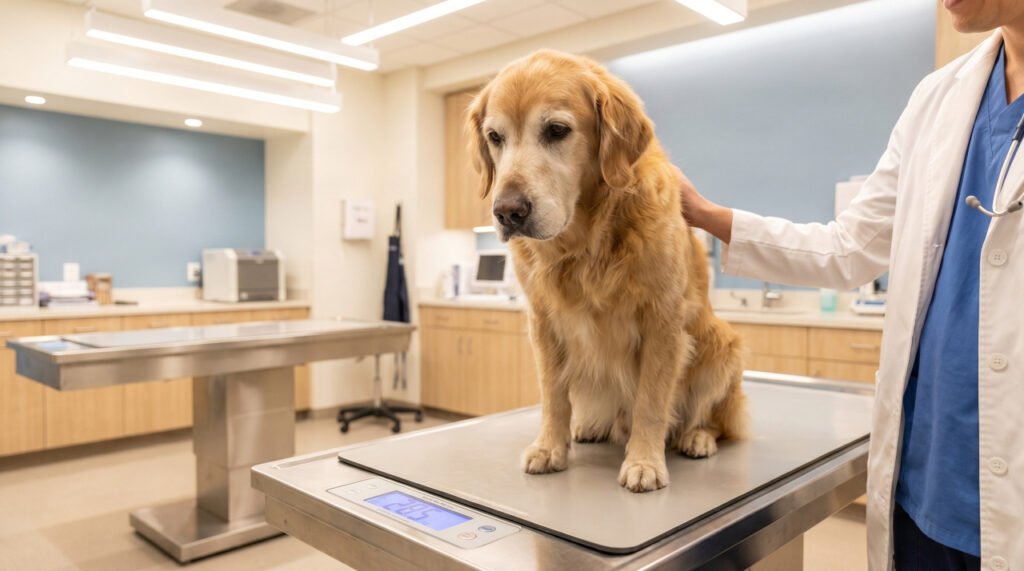
Did you know that over 50% of dogs in the US are overweight or obese, and senior dogs carry the highest risk of all? But here’s what most people miss: weight loss in an older dog can be just as dangerous, and it’s far more likely to signal a serious disease. If your senior dog’s weight is shifting in either direction, your instincts are right to pay attention.
This article breaks down every angle of the senior dog weight problem, what causes it, how to spot it early, what the risks are, and what you can actually do about it today. You’ll also learn how to check your dog’s body condition at home, without any equipment.
Whether your aging dog is packing on pounds or dropping weight unexpectedly, you’ll find clear, vet-backed answers here.
Why Senior Dogs Are More Vulnerable to Weight Changes
Age changes everything about how a dog processes food and uses energy. Your senior dog’s metabolism slows significantly around age 7 for large breeds and age 10 for smaller ones. That slower metabolism means the same food that kept your dog lean at age 3 may now cause steady weight gain.
At the same time, many senior dogs become less active due to arthritis, joint pain, or simple fatigue. Less movement means fewer calories burned. The result is a body that stores more fat even when you haven’t changed a single thing about their diet.
But there’s a flip side that gets far less attention. Senior dogs can also lose weight rapidly due to illness, dental disease, organ failure, or cancer. That kind of weight loss is often the first visible sign that something serious is happening internally. You shouldn’t wait to act on it.
The Two-Sided Senior Dog Weight Problem
Most articles focus only on overweight senior dogs. That’s a mistake. Both directions, weight gain and weight loss, are serious, and they have very different causes.
Weight gain in senior dogs is often driven by reduced activity, slowed metabolism, overfeeding, and hormonal disorders like hypothyroidism or Cushing’s disease. According to the Association for Pet Obesity Prevention, approximately 56% of dogs in the US were classified as overweight or obese in recent years, with older dogs overrepresented in that group.
Weight loss in senior dogs is frequently a red flag. Causes include dental pain (making eating difficult), kidney disease, liver disease, diabetes, intestinal disorders, and cancer. The American Veterinary Medical Association recommends twice-yearly wellness exams for senior dogs specifically because early disease detection, often spotted through weight changes, dramatically improves outcomes.
If your dog is losing weight without you changing their diet or exercise, call your vet this week. Don’t wait for a scheduled annual checkup.
Muscle Loss vs. Fat Gain: A Distinction Most Owners Miss
Here’s something your vet will understand immediately but that most online articles skip entirely: not all weight change is the same.
A senior dog can look healthy or even “filled out” while actually losing critical muscle mass. This condition is called sarcopenia , age-related muscle wasting, and it’s extremely common in dogs over age 8. Sarcopenia makes dogs weaker, less stable on their feet, and more prone to falls and injuries.
At the same time, that same dog may be gaining fat tissue while losing muscle. The scale might barely move, but the body composition has shifted dangerously. You could have a dog who weighs the same as last year but is now weaker, fatter, and at greater risk.
The fix for sarcopenia isn’t just calories, it requires adequate protein intake and gentle resistance-based movement like leash walking on varied terrain. Most senior dog foods don’t contain enough protein to combat muscle loss, which is one of the most overlooked senior dog nutrition problems.
How to Check Your Senior Dog’s Body Condition Score at Home
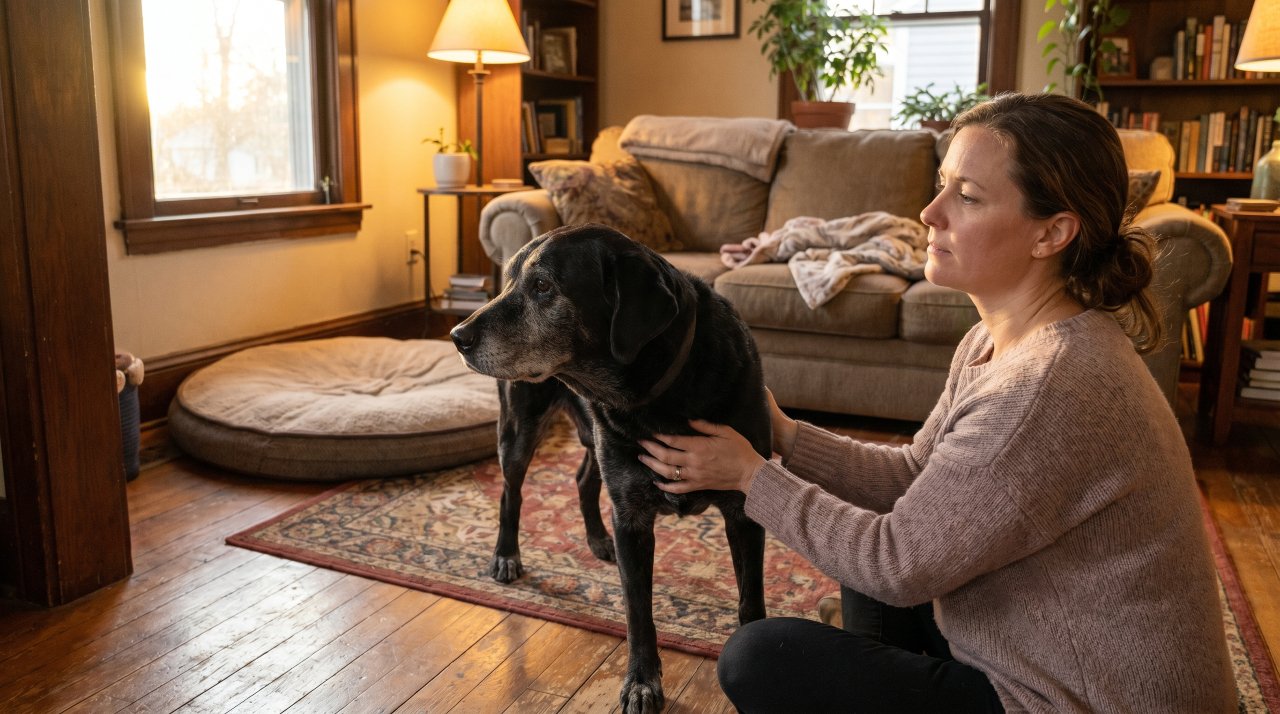
You don’t need a scale to assess your dog’s weight. Vets use a Body Condition Score (BCS) system rated from 1 to 9, where 4–5 is ideal. You can do a basic version at home right now.
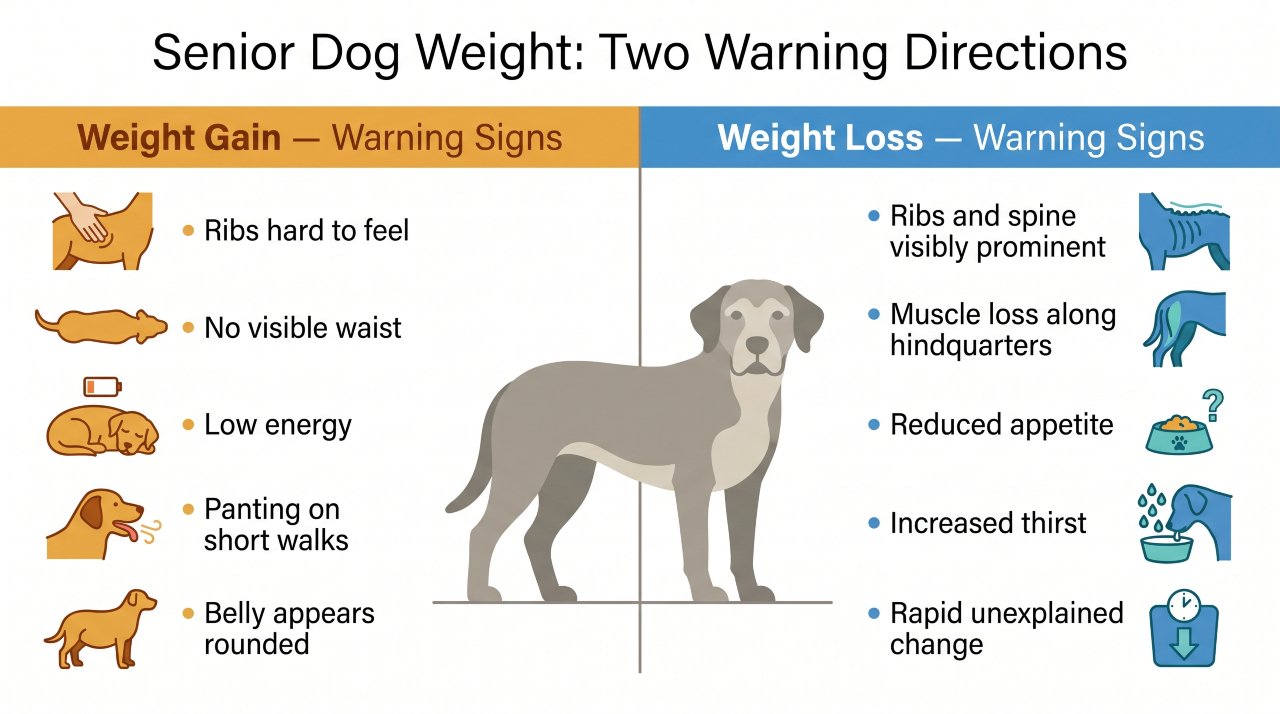
The Rib Test: Place both hands on your dog’s ribcage. You should feel each rib easily with light pressure, but not see the ribs visibly. If you have to press hard to feel them, your dog is likely overweight. If you can see them clearly without touching, your dog may be underweight.
The Waist Check: Look at your dog from above. You should see a clear “tuck” inward behind the rib cage. No visible waist? That suggests excess fat. An extremely pronounced tuck may signal weight loss.
The Hip and Spine Check: Run your fingers along your dog’s spine and over the hip bones. Prominent, sharp-feeling bones with little tissue coverage signal underweight or muscle loss, especially concerning in seniors.
If you’re unsure what you’re feeling, ask your vet to walk you through the full 9-point BCS at the next appointment. It takes under five minutes and gives you a clear baseline.
Common Causes of Senior Dog Weight Gain
| Cause | What’s Happening | Action |
|---|---|---|
| Slowed metabolism | Fewer calories burned at rest | Reduce daily caloric intake by 10–20% |
| Reduced activity | Arthritis or fatigue limits movement | Switch to shorter, more frequent walks |
| Overfeeding | Portions sized for a younger, more active dog | Reassess portions based on senior-specific guidelines |
| Hypothyroidism | Low thyroid hormone slows metabolism | Vet diagnosis required; treatable with medication |
| Cushing’s disease | Excess cortisol triggers fat storage and muscle loss | Vet diagnosis required; several treatment options |
| High-calorie treats | Treats add up fast in a low-activity dog | Switch to low-calorie options like baby carrots or apple slices |
Hypothyroidism and Cushing’s disease deserve special mention. Both are common in dogs aged 7 and older, and both cause weight changes that won’t respond to diet changes alone. If your dog is gaining weight despite eating less, a vet panel to check thyroid and adrenal function is worth requesting.
Common Causes of Senior Dog Weight Loss
Weight loss in a senior dog should always prompt a vet visit, especially when it happens quickly or without explanation. Here are the most common culprits.
Dental disease affects the majority of dogs over age 7. Painful teeth and gums make eating uncomfortable or impossible. Dogs often hide dental pain well, so weight loss may be your first real clue. Look for food dropping from the mouth, reluctance to eat hard kibble, or bad breath.
Kidney disease is one of the leading causes of death in senior dogs. As the kidneys struggle to filter waste, dogs often feel nauseated, lose appetite, and drop weight progressively. According to the Cornell University College of Veterinary Medicine, chronic kidney disease is far more common in aging pets than most owners realize, and early diagnosis allows for dietary and medical management.
Cancer is unfortunately common in senior dogs, with some estimates suggesting over 50% of dogs over age 10 will develop some form of it. Unexplained weight loss is a classic warning sign and should be investigated promptly.
Diabetes causes weight loss despite a normal or increased appetite. If your dog is eating well but losing weight, this is one of the first conditions your vet will rule out.
Health Risks of Carrying Extra Weight as a Senior Dog
Extra body fat isn’t just a cosmetic issue, it directly worsens conditions that already target older dogs.
Joint damage accelerates. Excess weight puts additional stress on hips, knees, and elbows that are already stiffened by arthritis. A study published in the Journal of Veterinary Internal Medicine found that overweight dogs develop osteoarthritis at significantly higher rates and earlier ages than lean dogs.
Heart and respiratory function decline. Fat tissue around the chest and abdomen restricts breathing and forces the heart to work harder. In a dog already managing age-related cardiac changes, extra weight adds serious strain.
Life expectancy drops. Research from Purina’s long-term canine lifespan study showed that dogs kept lean throughout life lived nearly two years longer than overweight counterparts. That’s not a small number when a dog’s total lifespan is 10–15 years.
You can’t undo years of extra weight overnight, but starting now always beats waiting. Even a 5–10% reduction in body weight can produce measurable improvements in mobility and energy within weeks.
What to Feed an Overweight Senior Dog
Changing your senior dog’s diet takes a bit of planning, but you don’t need to make it complicated. The goal is fewer calories, high-quality protein, and enough fiber to keep your dog feeling full.
Switch from a standard adult formula to a senior-specific or weight-management formula. Senior formulas typically contain fewer calories, more joint-supporting supplements like glucosamine, and higher protein relative to fat. As you’ll see in our diet plays a key role in senior dog weight, the quality of ingredients matters just as much as the calorie count, cheap fillers can quietly sabotage even the best portion control efforts. Check the label and look for a named protein (chicken, salmon, beef) as the first ingredient.
Measure meals precisely. Most dog owners overestimate portion sizes by 10–25% when eyeballing, which adds up to hundreds of extra calories per week. Use a kitchen scale or measuring cup, and follow feeding guides based on your dog’s target weight, not their current weight.
Cut back on treats or switch to low-calorie options. Treats should make up no more than 10% of your dog’s daily caloric intake. Baby carrots, cucumber slices, and blueberries work well as low-calorie rewards most dogs actually enjoy.
Exercise for Senior Dogs With Weight Problems
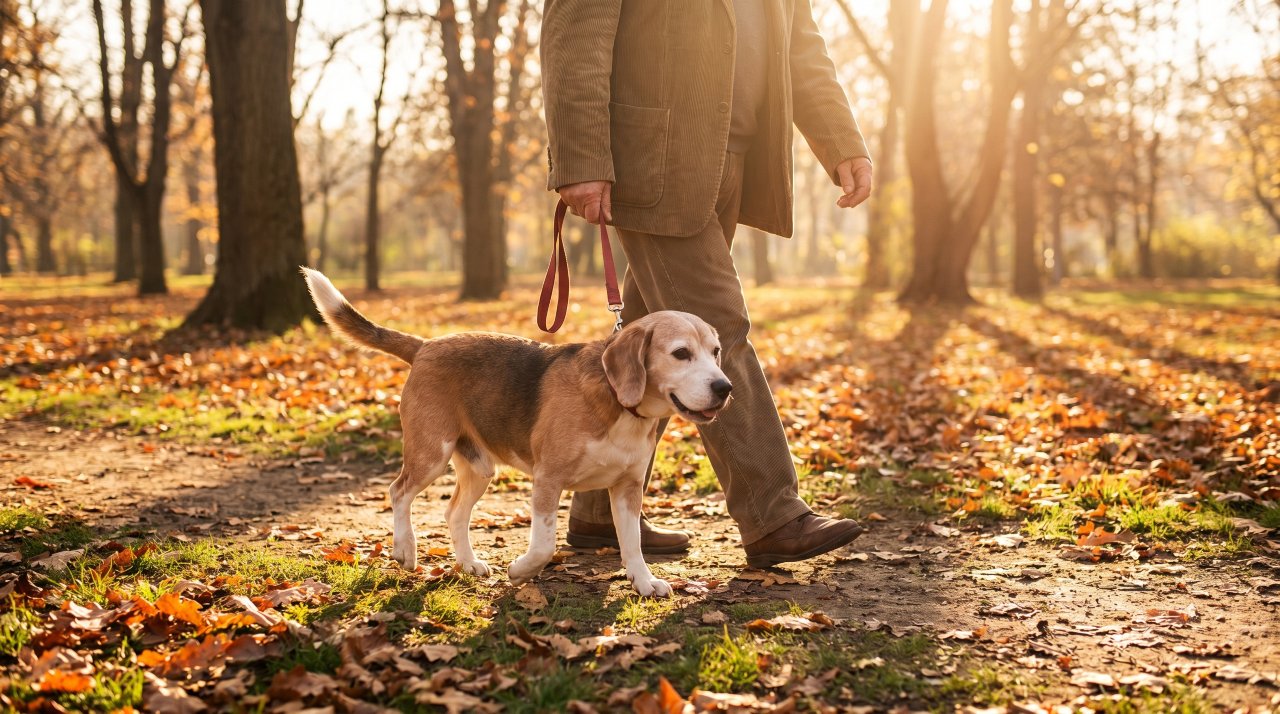
Exercise for a senior dog looks different than it did at age 2, and that’s completely fine. The goal isn’t intensity, it’s consistency and gentle movement.
Short, frequent walks work better than one long walk that exhausts your dog. Aim for two to three 10–15 minute walks daily rather than one 45-minute session. Watch for signs of fatigue: heavy panting, lagging behind, or reluctance to keep moving.
Swimming and hydrotherapy are excellent options for overweight seniors with joint problems. Water supports their body weight while still engaging muscles. Many veterinary clinics offer hydrotherapy, and some areas have dog-specific swim facilities.
For dogs battling sarcopenia, gentle resistance work, walking on grass, sand, or slightly uneven ground, helps maintain muscle tone without overloading joints. Talk to your vet before starting anything new, especially if your dog has diagnosed arthritis or heart issues.
When to Call Your Vet, Non-Negotiable Warning Signs
Some weight changes need professional attention fast. Don’t manage these at home.
Call your vet promptly if you notice: rapid weight loss of more than 10% of body weight over a few weeks, weight gain despite reduced food intake, visible muscle wasting along the spine or hindquarters, loss of appetite lasting more than 48 hours, increased thirst paired with weight change, vomiting or diarrhea alongside weight changes, or any visible lumps, swellings, or distension of the abdomen.
Senior dogs mask pain and illness surprisingly well. By the time weight change is visible, the underlying condition has often been developing for months. Twice-yearly vet visits, not annual, give you the early-warning advantage that can make a real difference in treatment outcomes.
FAQ: Senior Dog Weight Problems
At what age is a dog considered a senior?
Most vets classify small and medium dogs (under 50 lbs) as senior at around age 10, while large and giant breeds reach senior status closer to age 7. Breed and individual health history matter, so ask your vet when your specific dog enters the senior life stage.
Why is my senior dog gaining weight but eating less?
This is a classic sign of a hormonal disorder, most commonly hypothyroidism or Cushing’s disease. Both conditions disrupt the body’s ability to regulate metabolism, causing fat gain even with reduced food intake. A blood panel from your vet can usually identify or rule out both conditions quickly.
Why is my old dog losing weight?
Unexplained weight loss in a senior dog most often points to dental disease, kidney disease, diabetes, intestinal problems, or cancer. Each of these conditions is treatable or manageable when caught early. A vet visit is the right next step, don’t attribute it to “just getting old.”
How do I know if my senior dog is overweight?
Use the rib test: you should feel your dog’s ribs easily with light finger pressure but not see them clearly. You should also see a visible waist tuck when looking down at your dog from above. If you’re uncertain, your vet can assign a Body Condition Score (BCS) on the 1–9 scale at any appointment.
What should I feed my senior dog to lose weight?
Choose a senior-specific or weight-management formula with a named protein as the first ingredient. Measure portions precisely using a kitchen scale and base amounts on your dog’s target weight, not current weight. Cut treats to no more than 10% of daily calories and replace high-calorie snacks with vegetables like carrots or cucumber.
Can a senior dog safely exercise if they’re overweight?
Yes, gentle exercise is beneficial and important. Short, frequent walks on even terrain are safer than long, intense sessions. Swimming and hydrotherapy are excellent low-impact options. Always watch for signs of pain or excessive fatigue, and clear any new exercise routine with your vet first.
The One Thing You Should Do This Week
The most important takeaway here is simple: weight change in a senior dog always means something. It’s never “just age.” Whether your dog is gaining, losing, or both, the weight shift is a signal worth acting on.
This week, do the rib test and waist check described in this article. Write down what you observe. If anything feels off, ribs too hard to find, bones too prominent, waist completely absent, book a vet appointment rather than waiting for the next scheduled one.
Senior dogs can live comfortably well into their later years when weight issues get caught early and managed properly. You’ve already taken the right step by learning what to look for. Now act on it.