

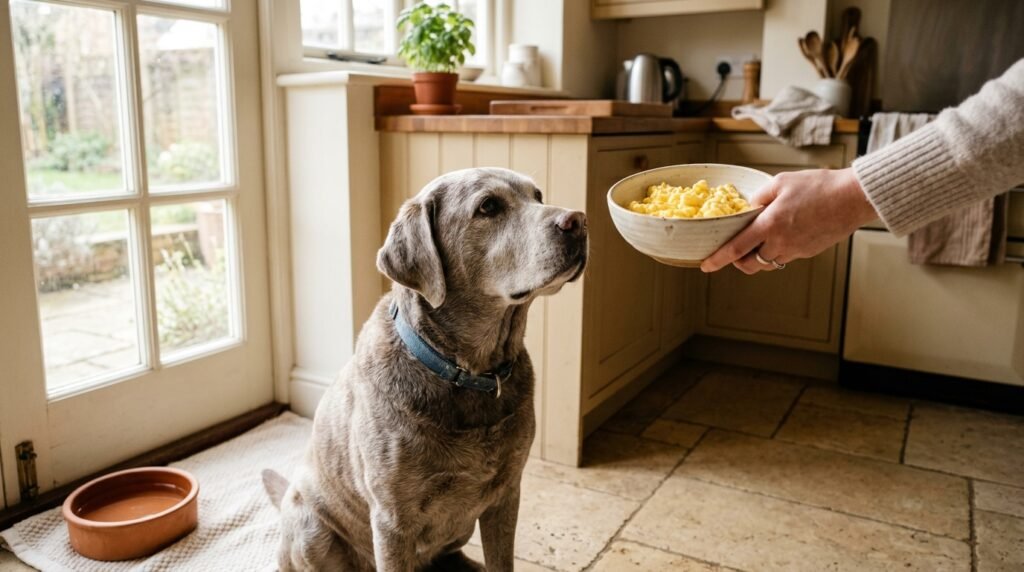
You’re cooking breakfast, and your old dog is sitting by the stove with that hopeful look. Maybe they’ve been picky lately, or you just want to give them something soft and tasty. So you wonder: can senior dogs eat scrambled eggs, or is this one of those human foods that causes trouble?
For most older dogs, plain scrambled eggs are a safe, gentle treat. The catch is that “most” isn’t “all.” Older dogs are more likely to have pancreatitis, kidney disease, or weight problems. Each of those changes the answer.
This guide goes beyond a simple yes or no. It helps you pick the right version for your dog: the whole egg, the whites only, or none at all. Then it walks you through cooking and portioning eggs safely.
Quick Answer:
Yes, most senior dogs can eat scrambled eggs if they’re cooked plain (no butter, oil, salt, or milk) and fed as a treat within 10% of daily calories. Dogs with pancreatitis, kidney disease, or weight problems may need egg whites only, or no eggs, so check with your vet first.
Key Takeaways:
- Main Point: Plain, fully cooked eggs are a soft, high-protein treat that suits many older dogs with weaker teeth or smaller appetites.
- Who Needs Caution: Dogs with a history of pancreatitis, on a low-fat diet, or with kidney disease may need whites only or no eggs.
- Home Action Step: Cook the egg in a dry nonstick pan, cool it, and start with a spoonful mixed into the regular meal.
- When to See a Vet: Call if vomiting, diarrhea, or itchy skin follows an egg, or before adding eggs to a dog on a prescription diet.
Can Senior Dogs Eat Scrambled Eggs? The Short Answer
Yes, with conditions. Eggs are a common, well-tolerated food for dogs, and cooking makes them safer.
Raw eggs carry a risk of salmonella. Uncooked whites also contain avidin, a protein that blocks the B vitamin biotin. Cooking takes care of both problems.
The American Kennel Club guide to eggs recommends serving them plain and cooked. It also treats them as an occasional extra, not a daily staple. That advice fits senior dogs especially well.
What changes with age is the margin for error. A young, healthy dog might shrug off a buttery scramble. An older dog with a sensitive pancreas or failing kidneys may not.
Why Eggs Can Be Good for Older Dogs
Eggs earn their place in a senior dog’s bowl for a few practical reasons. Each large egg has roughly 70 to 80 calories and about 6 grams of protein. That’s a lot of nutrition in a small, soft package.
- Protein for aging muscles: Older dogs tend to lose muscle, and good-quality protein helps them hold on to it.
- Soft texture: Scrambled eggs need almost no chewing, which helps dogs with sore gums or missing teeth.
- Strong smell and taste: Many dogs find eggs tempting, which can help when appetite fades with age.
- Useful nutrients: The yolk provides fat-soluble vitamins (A, D, E, and K) and biotin.
Eggs are a supplement to a complete diet, not a replacement for one. A balanced senior dog food already covers your dog’s needs, so eggs are an extra, not a fix.
First, Check Your Dog’s Health Profile
This is the step most articles skip, and it’s the one that matters most for older dogs. The yolk holds most of an egg’s fat and phosphorus, while the white is mostly lean protein. So for some seniors, the question isn’t “eggs or no eggs” but “which part of the egg.”
| Your dog’s situation | What usually fits |
|---|---|
| Healthy senior at a good weight | Whole scrambled egg, in treat-sized portions |
| Underweight or losing muscle | Whole egg can help add calories and protein |
| Overweight | Egg whites, in small amounts, counted in the daily calories |
| History of pancreatitis or on a low-fat diet | Egg whites only, or skip eggs (ask your vet) |
| Kidney disease or a kidney diet | Ask your vet first; yolks are high in phosphorus |
| Known food allergies or a prescription diet | Skip eggs until your vet says otherwise |
If your dog has pancreatitis in their history, take this seriously. A fatty food can trigger a painful flare. Our guide to low-fat food for senior dogs explains why fat matters so much for these dogs.
Kidney disease is the other big one. Diets for kidney disease limit phosphorus, and treats can quietly undo that work.
The Tufts Petfoodology guide to kidney-friendly treats covers how to choose treats for these dogs. For the diet side, see our guide to kidney disease in senior dogs.
What You’ll Need
- One fresh egg (or just the whites, if your dog’s profile calls for it)
- A nonstick pan, so you don’t need butter or oil
- A spatula and a plate for cooling
- Your dog’s regular food, to mix the egg into
- A rough idea of your dog’s weight, to set the portion
How to Feed Scrambled Eggs to a Senior Dog Safely
Step 1: Talk to Your Vet If Your Dog Has a Condition
Older dogs often have health issues that change what’s safe to eat. A quick call matters most if your dog has had pancreatitis, has kidney disease, or eats a prescription food.
The most common mistake is assuming a “healthy” human food is safe for every dog. Eggs are healthy in general, but not for every medical situation. Doing it right means asking once, then following that advice every time.
Step 2: Cook the Egg Plain and All the Way Through
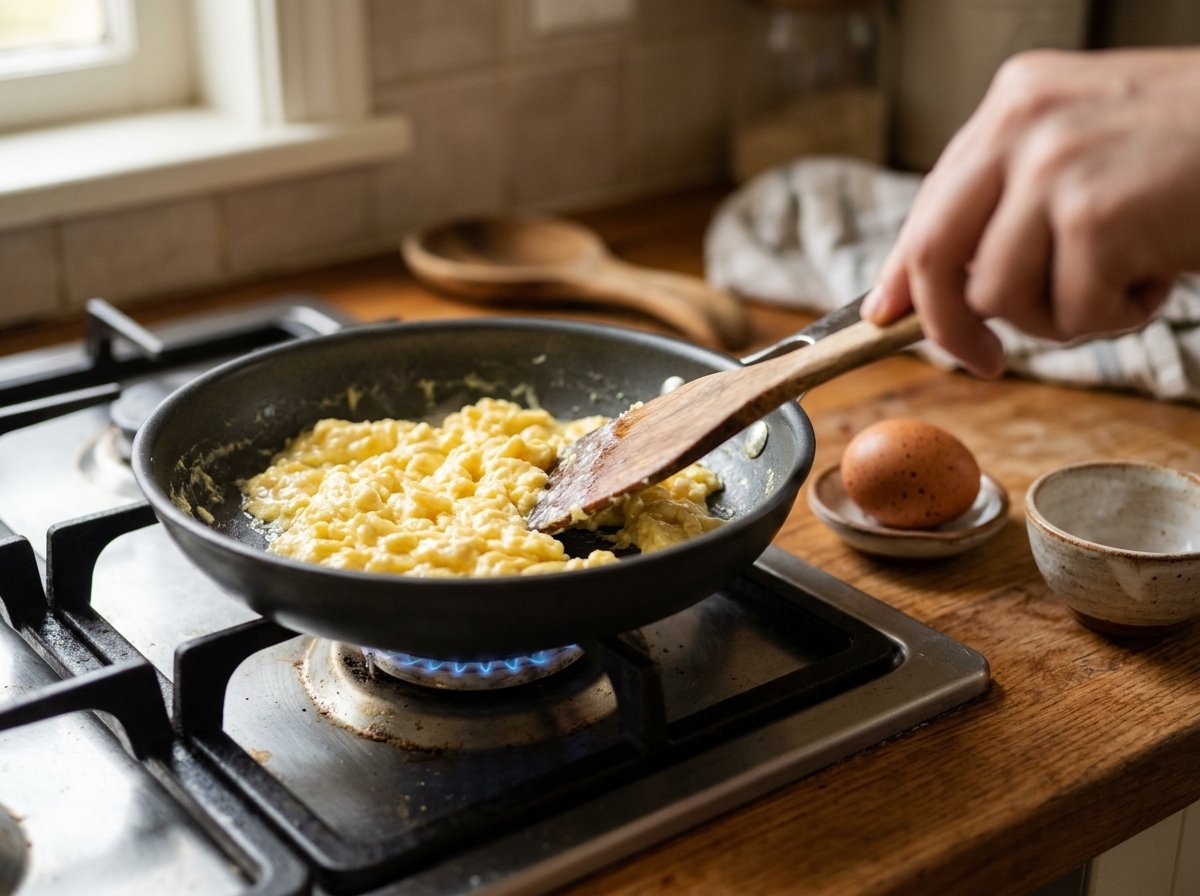
Crack the egg into a bowl and whisk it with a splash of water instead of milk. Cook it in a dry nonstick pan over low to medium heat. Stir until there’s no runny or glossy egg left.
Leave out butter, oil, salt, pepper, cheese, and milk. Fats can upset an older stomach, salt adds sodium your dog doesn’t need, and many dogs digest dairy poorly. Onions, garlic, and chives are toxic to dogs, so never share eggs cooked with them.
The usual mistake here is sharing from your own plate. Cook your dog’s portion separately, before you season yours.
Step 3: Let It Cool and Break It Into Small Pieces
Hot food can burn a dog’s mouth, and older dogs sometimes gulp. Let the egg cool to room temperature before serving.
Break it into small, soft pieces with your spatula. This makes it easier for dogs with dental pain or missing teeth to eat. It also lets you mix it evenly into their food.
Step 4: Start With a Small Test Portion
Even safe foods can upset a senior dog’s stomach when they’re new. Start with a teaspoon or two mixed into the regular meal.
Then watch your dog for the next 24 hours. Look for vomiting, loose stools, gas, or extra scratching. If everything stays normal, you can move up to a full treat-sized portion next time.
A common mistake is giving a whole egg on day one. If your dog does react, a small test makes it much easier to settle and to pin down the cause.
Step 5: Keep Eggs Within the 10% Treat Budget
Treats of every kind should make up no more than about 10% of your dog’s daily calories. Eggs count toward that limit, along with biscuits, chews, and table scraps.
The PetMD guide to feeding eggs suggests these serving sizes, once or twice a week:
| Dog’s weight | Serving size |
|---|---|
| 2 to 10 pounds | 1/4 of an egg |
| 11 to 20 pounds | 1/2 of an egg |
| 21 to 50 pounds | 1 egg |
| 51 to 90 pounds | 1 1/2 eggs |
| 91 pounds and up | 2 eggs |
Here’s a quick example of the math. A dog that needs about 500 calories a day has a treat budget of roughly 50 calories. That’s about two-thirds of an egg, with nothing left over for other treats that day.
For overweight seniors, trim the regular meal slightly on egg days, or switch to whites only. Small extras add up fast in a less active dog.
Step 6: Use Eggs to Support Meals, Not Replace Them
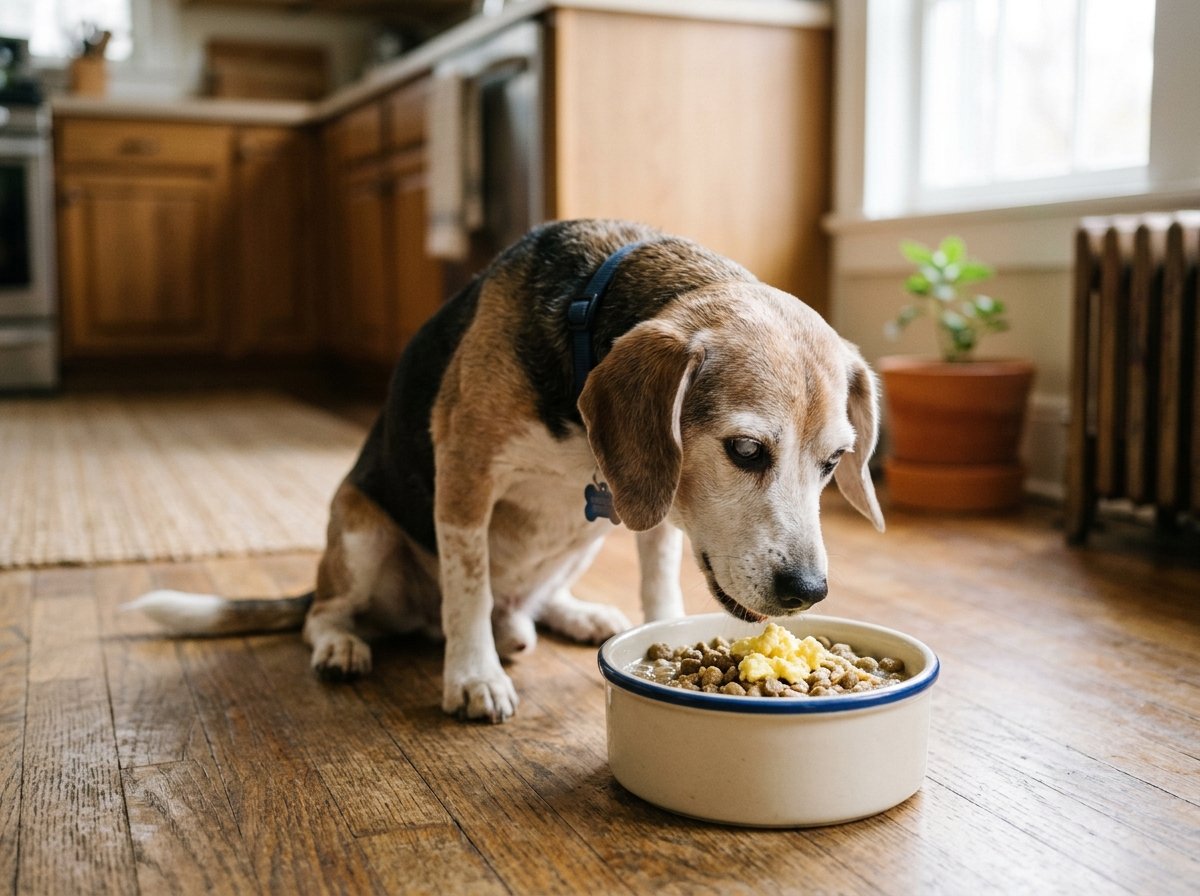
Eggs work best as a topper. A spoonful mixed into regular food can coax a picky senior to finish the bowl. They don’t provide the full balance of minerals and vitamins an older dog needs.
If your dog will only eat when eggs are added, treat that as a sign worth checking. A drop in appetite in an older dog often has a medical cause. Our guide to senior dog loss of appetite causes covers the most common ones.
Doing it right looks like this: eggs a couple of times a week, mixed into a complete diet, with your dog’s weight staying steady.
Easy Ways to Serve Eggs to an Older Dog
Once you know eggs suit your dog, a little variety keeps mealtimes interesting. These ideas all stay plain and simple.
- Mixed into softened kibble: Soak the regular kibble in warm water for a few minutes, then stir in a spoonful of scrambled egg. This helps dogs with sore teeth.
- Egg-white topper: For dogs who need less fat, scramble just the whites and crumble them over dinner.
- Chopped hard-boiled egg: Boil, peel, cool, and chop finely. It keeps in the fridge for a few days, so one egg can cover several small servings.
- A training or pill reward: A small piece of cooked egg can make medication time easier, as long as it fits your dog’s diet.
Keep each serving inside the same weekly limits, however you prepare it. Changing the format doesn’t change the calories.
Common Mistakes Owners Make With Eggs
Most egg problems in older dogs come from how the egg is cooked or how much is given, not from the egg itself. Watch out for these:
- Sharing seasoned leftovers: Your own eggs often have salt, butter, cheese, or onion. Cook a separate plain portion instead.
- Feeding eggs every day: Daily eggs can push a less active senior over their calorie needs and lead to weight gain.
- Forgetting the yolk’s fat: For dogs with a history of pancreatitis, the yolk is the risky part. Whites only, or skip it.
- Serving them hot: Older dogs can gulp food, so always let eggs cool first.
- Hiding a bigger problem: If eggs are the only thing your dog will eat, that’s worth a vet visit, not just more eggs.
Warning Signs to Watch For
Most dogs handle plain eggs well, but older dogs can react differently. Stop feeding eggs and call your vet if you notice any of these:
- Vomiting or diarrhea within a day of eating eggs
- A hunched posture, a painful belly, or restlessness after a meal (possible pancreatitis)
- New itching, ear infections, or red, inflamed paws over the following weeks (possible food allergy)
- Weight gain you can feel over the ribs
- Any change in thirst or urination in a dog with kidney disease
Pancreatitis signs need a vet the same day. Mild stomach upset that settles quickly is less urgent, but skip eggs until you’ve talked it through.
Frequently Asked Questions
How many scrambled eggs can a senior dog eat a week?
For most healthy seniors, one or two treat-sized portions a week is plenty. Portion by size: about a quarter of an egg for very small dogs, up to two eggs for giant breeds. Keep all treats together under 10% of daily calories.
Are scrambled eggs good for a dog with an upset stomach?
Plain, well-cooked egg is gentle, and some vets include it in a bland diet. Fat can make diarrhea worse in some dogs, though, so ask your vet first. Our guide to a bland diet for senior dogs with diarrhea covers safer first steps.
Can dogs with kidney disease eat eggs?
Sometimes, but only with your vet’s guidance. Egg yolks are rich in phosphorus, which kidney diets try to limit. Your vet may allow small amounts of egg white instead, or suggest a kidney-friendly treat.
Is boiled egg better than scrambled egg for old dogs?
Both are fine if they’re plain. Hard-boiled eggs need no fat at all, which makes them easy to keep simple. Scrambled eggs are softer and easier to mix into food, which helps dogs with dental problems.
Can dogs eat eggshells?
It’s simplest to leave the shells out. Sharp pieces can irritate the mouth and gut, and a complete dog food already contains the calcium your dog needs. If you’re curious about ground eggshell as a calcium source, ask your vet before adding it.
Can senior dogs eat raw eggs?
It’s best to avoid them. Raw eggs can carry salmonella, which can make both dogs and people sick.
Uncooked whites also contain avidin, which interferes with biotin absorption. Cooking removes both risks.
A Simple, Soft Treat Your Old Friend Can Enjoy
For most senior dogs, a little plain scrambled egg is a safe and welcome treat. Cook it without butter, oil, or salt, start small, and keep it within your dog’s treat budget.
The exceptions matter more as dogs age. If your dog has had pancreatitis, has kidney disease, or eats a prescription diet, check with your vet before the first bite.
If this guide helped, save it for the next time those hopeful eyes appear by the stove. And share it with a friend who’s caring for an older dog too.