

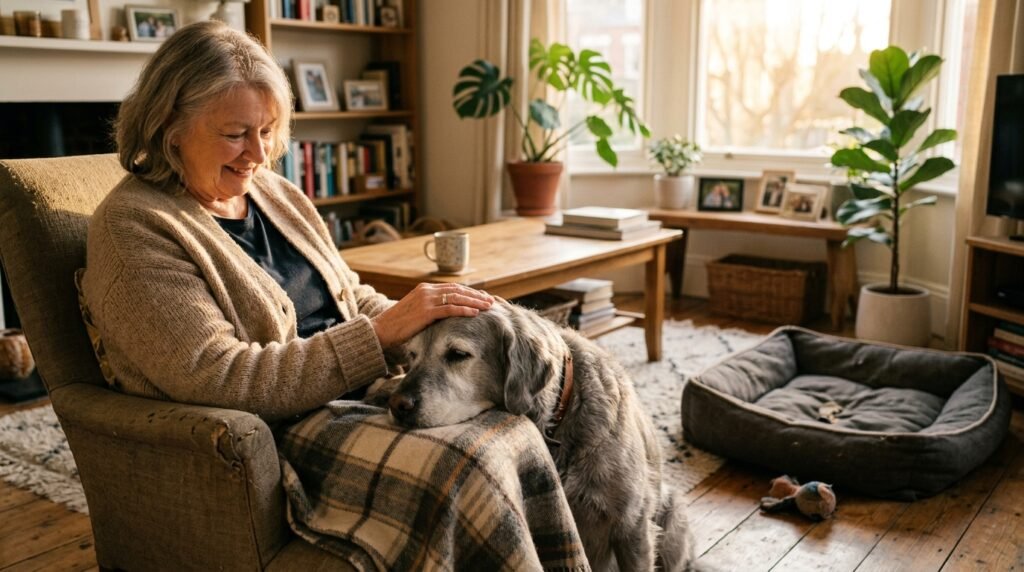
Losing a beloved pet is devastating for human family members, but we often forget that surviving pet companions experience deep grief too. Dogs form strong social bonds with their pack mates. When a longtime feline or canine companion passes away, a surviving senior dog can feel disoriented, anxious, and deeply sad.
Because senior dogs are already navigating age-related sensory and cognitive changes, losing a companion disrupts their daily security. Recognizing canine grief symptoms and providing gentle emotional support helps your surviving dog heal alongside you.
This guide explains how senior dogs process loss, common canine grief behaviors, and practical ways to comfort a grieving senior dog.
Do Dogs Experience Grief?
Veterinary behavioral science confirms that dogs experience real emotional loss. According to studies published by VCA Animal Hospitals, over 65 percent of surviving dogs display behavioral shifts following the death of a housemate pet.
Dogs grieve not only because they miss their companion’s physical presence, but also because their daily social structure and routine have changed. Surrounding your senior dog with stability, patience, and affection helps restore their feeling of safety.
Recognizing Signs of Grief in Senior Dogs
| Canine Grief Behavior | How It Manifests | Support Action |
|---|---|---|
| Searching the House | Pacing between rooms; sniffing deceased pet’s bed | Allow gentle sniffing; maintain peaceful calm atmosphere |
| Appetite Loss | Refusing kibble or eating very slowly | Add warm bone broth or chicken toppers to meals |
| Increased Vocalization | Whining, soft howling, or crying at night | Offer gentle verbal reassurance and extra cuddles |
| Lethargy & Hiding | Sleeping extra hours; withdrawing under furniture | Provide warm orthopedic bed near family activity |
| Clinginess / Separation Anxiety | Following you closely from room to room | Provide calm physical presence and extra attention |
1. Maintain Strict Daily Routines
Predictability is the ultimate antidote to canine anxiety. Feed meals, schedule short grass walks, and set bedtime at the exact same times every day. Consistency reassures your surviving dog that their world remains safe and stable. Read senior dog routine guide.
2. Provide Extra Comfort and Gentle Physical Presence
Spend dedicated quiet time with your senior dog every day. Gentle stroking, soft vocal reassurance, and brush grooming sessions lower stress hormones for both you and your pet. Read senior dog grooming tips.
3. Should You Allow Your Surviving Dog to See the Deceased Pet?
Whenever possible, allow your surviving dog to sniff their deceased companion’s body for a few minutes before burial or cremation. Sniffing allows the dog to process the physical reality of death, reducing weeks of anxious searching behavior around the house.
4. Should You Get Another Pet Right Away?
Resist the urge to rush out and adopt a new puppy or kitten immediately to “replace” the lost pet. Introducing a high-energy young animal to a grieving, stiff senior dog can cause intense stress and friction. Give your senior dog and yourself several months to heal first.
When to Consult Your Vet About Grief
While mild sadness is normal, contact your veterinarian if your senior dog displays these severe warning signs:
- Complete food refusal lasting more than 48 hours
- Refusing to drink water for over 24 hours
- Severe lethargy or inability to rise from bed
- Sudden onset of vomiting, diarrhea, or rapid weight loss
Your vet can prescribe short-term appetite stimulants or mild anti-anxiety medications to support your dog through acute grief.
Frequently Asked Questions
#### How long does dog grief usually last?
Most dogs process acute grief within 2 to 6 weeks as new household routines stabilize. Persistent sadness lasting past two months warrants a veterinary checkup to rule out underlying medical conditions.
#### Should I wash the deceased pet’s bedding immediately?
No. Leave a blanket or bed containing the deceased pet’s scent in the house for a week or two. Familiar scent markers comfort a grieving senior dog during early transition.
#### How can I help my grieving dog eat again?
Warm their food slightly to enhance aroma, top kibble with unseasoned cooked chicken or warm bone broth, and offer small hand-fed portions in a quiet room.
#### Can dogs get depressed after losing a feline companion?
Yes. Dogs form strong bonds with family cats. Surviving dogs mourn cat companions just as deeply as canine pack mates.
#### What natural calming aids help a grieving dog?
Dog-appeasing pheromone (DAP) diffusers, soft white noise at night, and natural chamomile or L-theanine chews help soothe grief anxiety.
#### How do I handle my own grief without stressing my dog?
Dogs pick up on human emotional cues. While it is okay to cry around your pet, pair your grief with quiet stroking and calm walks so your dog feels comforted rather than panicked.
Healing Together Through Love
Grief is a natural reflection of deep love. By maintaining consistent routines, offering gentle affection, enticing appetite with warm meals, and giving your companion time to heal, you guide your surviving senior dog through loss toward peace and comfort.
“@
,Description: