

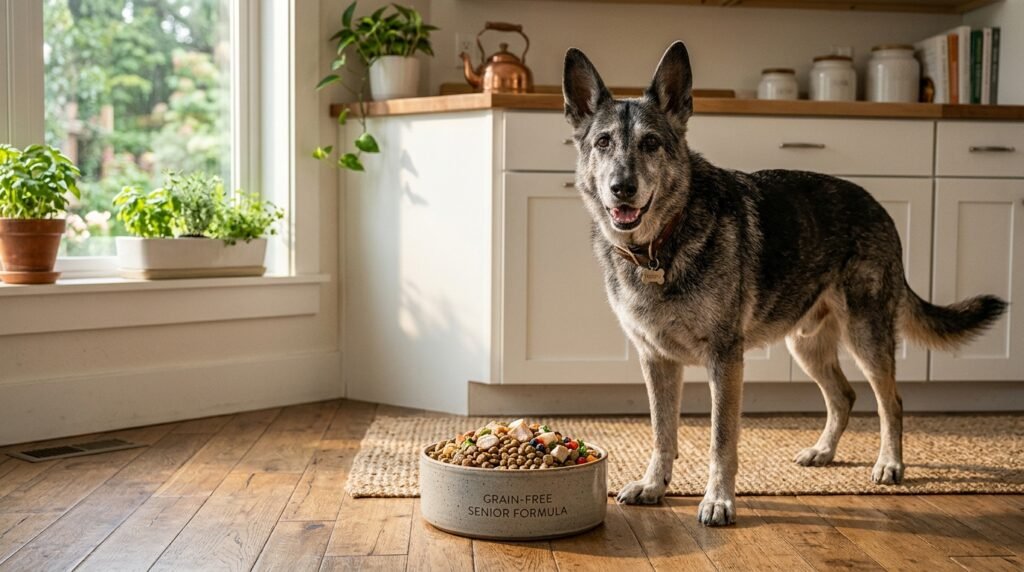
Navigating the dog food aisle filled with grain-free, grain-inclusive, and specialized senior formulas can feel overwhelming. Grain-free senior dog foods have sparked significant discussion among pet owners and veterinary nutritionists over recent years.
Understanding when grain-free nutrition is beneficial for an aging dog—and when traditional grain-inclusive diets are preferred—helps you make an informed choice for your senior dog’s long-term health and vitality.
In this comprehensive guide, you will learn what grain-free senior food contains, evaluate potential benefits and medical considerations, discover top ingredients to look for, and choose the safest diet for your dog.
What Is Grain-Free Senior Dog Food?
Grain-free dog foods replace traditional grains (wheat, corn, rice, barley, oats) with alternative carbohydrate sources such as sweet potatoes, chickpeas, lentils, green peas, or tapioca.
These formulas focus on elevated protein content and novel carbohydrate sources, designed originally for dogs with diagnosed food allergies or severe grain intolerances.
According to veterinary dermatology studies, true grain allergies account for less than 10 percent of canine food allergies, with meat proteins (chicken, beef, dairy) causing the vast majority of food sensitivities.
When Grain-Free Diets Benefit Senior Dogs
Grain-free options offer specific medical benefits for select senior pets:
- Diagnosed Grain Allergies: Relieves chronic itchiness, reddened skin, and recurrent ear infections caused by wheat or corn.
- Highly Digestible Carbohydrates: Ingredients like sweet potatoes provide steady glucose release and gentle fiber for sensitive stomachs.
- Novel Protein Combinations: Paired with unique proteins (duck, venison, salmon) for dogs with multiple food sensitivities.
- Improved Stool Quality: Helps dogs struggling with chronic gas or soft stools from grain intolerance.
1. Evaluating Sweet Potatoes vs. Legume Fillers
Not all grain-free carbohydrate substitutes offer equal nutritional value.
Sweet potatoes and pumpkin provide excellent soluble fiber, beta-carotene, and potassium without disrupting nutrient absorption. In contrast, heavy reliance on pea flour or lentil meal can dilute meat protein concentration.
When evaluating labels, choose formulas where real meat is listed first and sweet potatoes serve as the primary carbohydrate source.
2. The Role of Taurine and Heart Health
Veterinary cardiologists recommend evaluating grain-free diets carefully due to cardiac considerations.
Research conducted by the FDA and AKC investigated potential links between legume-heavy grain-free diets and Dilated Cardiomyopathy (DCM) in certain dog breeds.
Ensure any grain-free senior food contains supplemental taurine and L-carnitine to support heart muscle contraction and cellular energy production. Learn more in our guide on senior dog heart health symptoms.
3. Maintaining Lean Muscle Mass in Aging Dogs
Senior dogs require high quality protein to prevent muscle wasting (sarcopenia).
Grain-free diets often feature higher crude protein levels (28% to 34%) derived from animal sources like salmon or turkey. Strong muscle tissue supports aging hips and joints during daily walks.
Combine quality nutrition with joint care by reviewing our recommendations for senior dog joint supplements.
4. Managing Weight with Grain-Free Nutrition
Because some grain-free kibbles replace grains with dense legume starches, caloric density can vary widely.
Check the calorie count per cup (kcal/cup) on the packaging to avoid unintended weight gain in less active senior dogs. Explore weight control strategies in our guide on low calorie senior dog food.
5. Hydration and Wet Food Grain-Free Options
Combining grain-free kibble with grain-free wet food adds vital moisture to support kidney function.
Wet grain-free foods provide rich aroma and soft texture for senior dogs with missing teeth or dental decay. Read complete feeding advice in our guide on wet food for old dogs.
Grain-Free vs. Grain-Inclusive Senior Diet Comparison
| Nutritional Aspect | Grain-Inclusive Senior Food | Grain-Free Senior Food | Senior Health Consideration |
|---|---|---|---|
| Primary Carbs | Brown rice, oats, barley | Sweet potato, peas, lentils | Sweet potatoes offer gentle fiber |
| Allergy Relief | Standard sensitivity risk | High grain allergy relief | Ideal for diagnosed grain allergies |
| Protein Density | 22–26% | 28–34% | Supports lean muscle retention |
| Heart Support | Natural grain nutrients | Requires added taurine | Check for taurine supplementation |
| Glycemic Index | Moderate | Low to Moderate | Helps manage blood sugar stability |
How to Choose a Safe Grain-Free Formula
Use these vet-backed rules when selecting a grain-free diet for your aging dog:
- Real Meat First: Confirm deboned meat (salmon, turkey, lamb) is the primary ingredient.
- Added Taurine and L-Carnitine: Verify active cardiac support nutrients are included on the label.
- Moderate Legume Content: Avoid formulas listing peas or lentils in the top three ingredients.
- AAFCO Senior Adequacy: Ensure the diet meets nutritional standards for senior maintenance.
For complete diet planning, check out our guide on the best food for senior dogs.
Frequently Asked Questions
#### Do most senior dogs need grain-free food?
No. True grain allergies are uncommon in dogs. Most senior dogs digest wholesome grains like brown rice and oatmeal easily unless a specific allergy is diagnosed by a vet.
#### What should I look for on a grain-free senior food label?
Look for real meat as the first ingredient, added taurine for heart health, NASC or AAFCO adequacy statements, and moderate legume levels.
#### Can grain-free food cause heart problems in senior dogs?
Legume-heavy grain-free diets lacking taurine have been investigated by the FDA. Choose formulas with added taurine or consult your vet about balanced grain-inclusive diets.
#### Is sweet potato better than corn or wheat for senior dogs?
Sweet potatoes provide soluble fiber, antioxidants, and gentle complex carbohydrates that are easily digested by aging gastrointestinal tracts.
#### How do I transition my senior dog to grain-free food?
Transition gradually over 7 to 10 days by mixing increasing proportions of the new grain-free kibble with their current food to prevent gut upset.
#### Does grain-free food help with senior dog skin itching?
If skin itching is caused by a grain allergy, switching to grain-free food brings relief within 4 to 6 weeks. However, meat protein allergies (chicken or beef) are more common causes of itching.
Making an Informed Nutritional Choice for Your Senior Dog
Grain-free senior dog food offers valuable health benefits for dogs with specific allergies or sensitive stomachs. By selecting a formula rich in real meat, sweet potatoes, and added taurine, you provide safe, wholesome nutrition that supports your dog’s golden years.