
Here’s something that surprises most dog owners: by age 3, around 80% of dogs already show signs of periodontal disease, according to the American Veterinary Medical Association. By the time your dog reaches senior age — typically 7 years or older — that number climbs even higher. Old dog dental care isn’t a luxury. It’s one of the most important things you can do to protect your dog’s quality of life.
The good news? It’s rarely too late to start. Even small improvements in your senior dog’s oral health can reduce pain, slow disease, and add comfortable years to their life. This guide walks you through exactly what you need to know — from spotting early warning signs to safe brushing techniques to what happens when your dog refuses a toothbrush altogether.
Why Dental Disease Gets Worse as Dogs Age
Senior dogs face a steeper dental battle than younger dogs. Their immune systems weaken with age, making it harder for their bodies to fight the bacteria that cause gum disease. Years of plaque and tartar buildup create a compounding problem that accelerates in their later years.
Saliva production can also decrease in older dogs, reducing a natural defense against oral bacteria. Thinner, more sensitive gum tissue makes seniors more vulnerable to infection. This is why a dog who seemed fine at age 6 can show dramatic dental decline by age 9 or 10.
There’s also an age-within-age distinction worth knowing. A 7-year-old Labrador is a young senior with manageable dental issues. A 13-year-old toy breed is geriatric, with potentially severe disease requiring urgent intervention. You’ll want to factor your dog’s size and breed into your expectations — small breeds tend to develop dental disease earlier and more severely than large breeds.
The Systemic Health Connection You Can’t Ignore
This is the angle most pet websites skim over, but it’s critical. Dental disease doesn’t just stay in the mouth. Oral bacteria can enter your dog’s bloodstream and travel to major organs.
Research published in veterinary literature consistently links severe periodontal disease to kidney disease, liver damage, and heart conditions in dogs. The Merck Veterinary Manual notes that bacteria from infected gums can damage heart valves — a condition called bacterial endocarditis. For a senior dog already managing age-related organ changes, this extra bacterial load can accelerate serious decline.
Treating your old dog’s teeth isn’t just about fresh breath. You’re protecting their heart, kidneys, and liver. That reframes the entire conversation around dental care from “cosmetic” to “life-extending.”
7 Signs Your Senior Dog Has a Dental Problem
Most dogs hide pain instinctively — it’s a survival mechanism. You may not see obvious signs until disease is advanced. Watch for these red flags:
| Warning Sign | What It May Indicate |
|---|---|
| Bad breath (beyond mild odor) | Bacterial infection, periodontal disease |
| Dropping food while eating | Tooth pain, loose teeth |
| Pawing at the mouth or face | Oral pain or abscess |
| Swollen or bleeding gums | Active gum disease |
| Yellow-brown buildup on teeth | Heavy tartar accumulation |
| Reluctance to chew toys or bones | Tooth sensitivity or pain |
| One-sided chewing | Avoiding a painful tooth |
If you notice two or more of these signs together, schedule a veterinary exam promptly. Don’t wait for the next annual checkup.
How to Brush Your Senior Dog’s Teeth (Beginner Guide)
Brushing remains the gold standard for at-home old dog dental care. Start slowly — especially with a senior dog who may be sensitive or arthritic. Here’s a simple routine that actually works.
What you need:
- A soft-bristled dog toothbrush or finger brush
- Dog-specific enzymatic toothpaste (never human toothpaste — xylitol is toxic to dogs)
Week 1 — Build trust first. Let your dog sniff and lick the toothpaste from your finger. Do this for 2–3 minutes each day. Don’t attempt brushing yet.
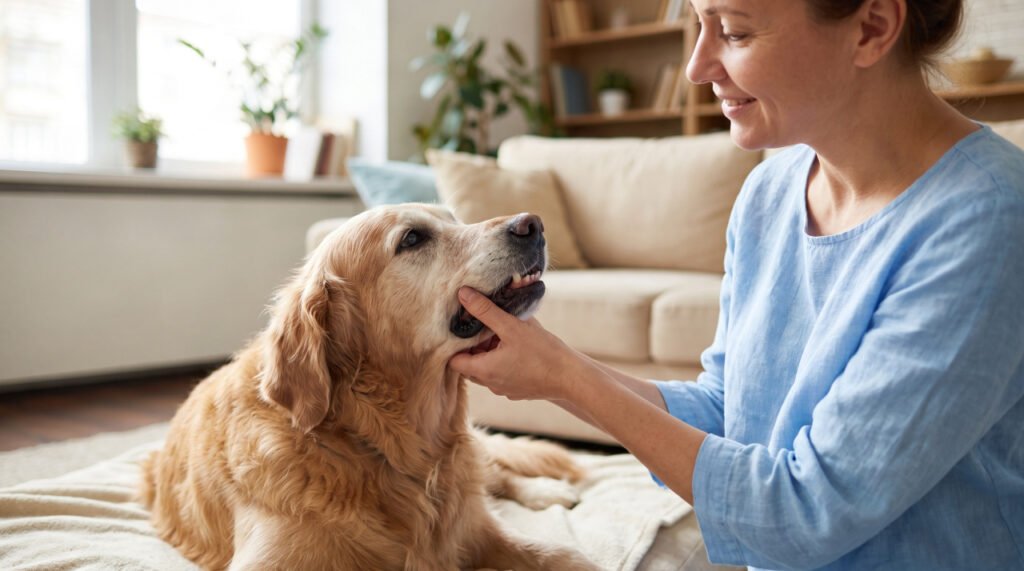
Week 2 — Introduce touch. Gently rub your finger along your dog’s gum line. Reward calmly with praise or a small treat after each session.
Week 3 — Add the brush. Introduce the toothbrush with a small amount of toothpaste. Start with just the front teeth for 30 seconds. Build up gradually over the following weeks.
Ongoing routine: Aim for daily brushing, or at minimum three times per week. A study in the Journal of Veterinary Dentistry found that brushing fewer than three times weekly provided minimal benefit in preventing periodontal progression.
Keep sessions short — 60 to 90 seconds is enough. Your dog’s comfort matters more than perfection. A stressed senior dog will resist, making future sessions harder.
When Your Dog Won’t Accept a Toothbrush
Here’s the honest truth: some senior dogs simply won’t tolerate brushing. Arthritic jaws, sensitive gums, or a lifetime of no dental handling can make a toothbrush a non-starter. That doesn’t mean you give up.
These alternatives can help slow dental disease when brushing isn’t possible:
Dental wipes: Gauze or specialized wipes remove surface plaque without a brush. They’re less effective than brushing but far better than nothing.
Enzymatic water additives: Added to your dog’s drinking water, these products use enzymes to reduce bacterial load in the mouth. Look for products with the Veterinary Oral Health Council (VOHC) seal — this guarantees independent testing for effectiveness.
VOHC-approved dental chews: Not all chews are equal. Only chews carrying the VOHC seal have proven efficacy in clinical trials. Give one daily as a supplement to other care, not a replacement.
Dental diets: Prescription dental kibble uses specially sized and textured pieces to mechanically scrub teeth during chewing. Ask your vet if a dental diet suits your senior dog’s overall nutritional needs.
You can also explore senior dog nutrition and diet options that support overall health alongside dental care.
Professional Cleanings: What to Expect and Is Anesthesia Safe?
This is the question that stops most senior dog owners cold. You want your dog’s teeth cleaned professionally, but the word “anesthesia” feels terrifying for an older dog.
Here’s what you need to know. The risk of anesthesia for a healthy senior dog, when properly pre-screened, is very low. The American Animal Hospital Association (AAHA) recommends pre-anesthetic bloodwork, urinalysis, and sometimes chest X-rays before any senior dog goes under anesthesia. These tests catch hidden organ problems that could increase risk.
The risk of not treating advanced dental disease is often greater than the anesthetic risk itself. Untreated infections cause chronic pain and can damage kidneys and the heart — conditions that also increase anesthetic risk over time. You may be choosing between two risks, not between risk and safety.
Anesthesia-free dental cleanings have grown in popularity but carry serious limitations. Without anesthesia, a technician can only clean visible tooth surfaces. Bacteria live primarily below the gum line, where anesthesia-free cleaning can’t reach. The AVMA and AAHA both oppose anesthesia-free cleanings as a substitute for proper veterinary dental procedures.
Talk to your vet about pre-anesthetic screening for your specific dog. A thorough health check gives you real information — not generalized fear — to make your decision.
You can read more about managing vet visits for senior dogs to reduce stress for both you and your dog.
What Does a Professional Dog Dental Cleaning Cost?
Cost is a real concern, and you deserve straight numbers. Here’s a general range for the US market in 2025–2026:
- Basic dental cleaning (no extractions): $300–$700
- Cleaning with extractions: $500–$1,500+
- Pre-anesthetic bloodwork: $80–$200 (often required for seniors)
- X-rays (dental radiographs): $150–$300
Prices vary significantly by location, clinic type, and your dog’s individual needs. Veterinary dental specialists charge more than general practitioners but offer expertise for complex cases.
Pet insurance can offset these costs significantly if your policy covers dental disease. Check your plan carefully — some exclude pre-existing conditions or dental illness entirely.
Frequently Asked Questions
Is it too late to start brushing my old dog’s teeth?
No — it’s rarely too late to start. Even partial plaque removal slows disease progression and reduces oral bacteria. You won’t reverse existing tartar buildup at home, but you can prevent it from getting worse. Starting today is always better than waiting.
How often do senior dogs need professional dental cleanings?
Most vets recommend annual professional cleanings for senior dogs, though dogs with moderate to severe disease may need them every 6 months. Your vet will assess your individual dog’s condition and give you a personalized recommendation after a full oral exam.
Is anesthesia safe for older dogs during dental cleanings?
Anesthesia carries some risk at any age, but pre-anesthetic screening dramatically reduces that risk for most senior dogs. Bloodwork, urinalysis, and a full physical exam help identify dogs who need extra precautions. Talk openly with your vet about your dog’s specific health history before making a decision.
What can I give my senior dog for dental health at home?
The most effective at-home options include daily brushing with enzymatic toothpaste, VOHC-approved dental chews, enzymatic water additives, and dental wipes. Products carrying the VOHC seal have independent clinical evidence behind them — always look for that seal when choosing dental products. You can browse VOHC-accepted products for dogs on their official site.
What are the first signs of dental disease in dogs?
Bad breath beyond a mild odor is usually the first sign owners notice. Other early signs include yellow-brown tartar on the back teeth, slight gum redness, and mild reluctance to chew hard items. Don’t dismiss these as “normal aging” — they signal active disease that needs attention.
Can dental disease make my old dog seriously ill?
Yes. Oral bacteria can enter the bloodstream and affect the heart, kidneys, and liver. Senior dogs with existing organ vulnerabilities face compounded risk. Treating dental disease is a genuine health intervention, not just cosmetic care.
Your Next Step Starts Today
Old dog dental care matters deeply — and it’s far more achievable than most owners realize. The single most important takeaway from everything above is this: start where you are, with what your dog tolerates. Even one step forward — a dental wipe, a VOHC-approved chew, or a conversation with your vet — is meaningful.
Don’t let fear of anesthesia or guilt about starting late keep you paralyzed. Your senior dog can’t tell you their mouth hurts, but you can act on their behalf.
Book a dental exam with your vet this week. Ask for pre-anesthetic bloodwork. Ask about a home care plan built specifically for your dog’s age and condition. One appointment can completely change what you know — and what you can do — for your dog’s comfort and longevity.