
Your senior dog’s breath has turned sour, and you can see brown crust on a few back teeth. Then a groomer or pet store mentions a dental cleaning without anesthesia, and the offer sounds gentle and affordable. If you are weighing senior dog dental cleaning without anesthesia, you deserve a clear answer before you book anything.
Here is the short version. A cleaning without anesthesia scrapes the visible tartar and very little else. It cannot reach under the gums, check the whole mouth, or take dental X-rays. This guide explains why, what a safer path looks like for an older dog, and what you can do at home while you decide.
Quick Answer:
A senior dog dental cleaning without anesthesia only removes visible tartar while your dog is awake and restrained. It cannot clean below the gumline, examine the whole mouth, or take dental X-rays. For most older dogs, a full cleaning under anesthesia, after a pre-anesthetic health check, is the safer choice.
Key Takeaways:
- Primary Cause: Plaque hardens into tartar, and gum disease builds below the gumline where scraping cannot reach.
- Observable Signs: Bad breath, red or bleeding gums, pawing at the mouth, or chewing on one side.
- Home Action Step: Check the teeth several times a week and start gentle brushing or wiping.
- When to See a Vet: Face swelling, refusing food or water, or trouble breathing needs care right away.
Why So Many Senior Dogs Need Dental Care
Dental disease is one of the most common health problems in adult dogs. The American Kennel Club notes that studies suggest at least 80% of dogs over the age of 3 show signs of periodontal disease. You can read more in the AKC guide to anesthesia-free dentistry.
Plaque is a soft film of bacteria. When it sits on the teeth for days, it hardens into tartar. Over the years, that buildup pushes into the gums and bone that hold each tooth in place.
Older dogs carry more years of this buildup. Their gum tissue can be thinner, and their bodies fight infection less well. A dog who seemed fine at six can show clear decline by nine or ten. That is why dental care matters more with each birthday.
What Anesthesia-Free Dental Cleaning Actually Does
Anesthesia-free dentistry, sometimes called non-anesthesia dental scaling, means a provider scrapes tartar off the visible part of the teeth while your dog stays awake. Some use an ultrasonic tool, and others use hand scalers. The crowns of the teeth look smoother afterward, and many owners see whiter teeth when they leave.
Your dog has to be physically restrained for the whole visit. Dogs do not understand what is happening, so they may pull away or struggle. The American Veterinary Dental College has warned that even a slight head movement can injure the mouth, and that the person working in the mouth can get bitten when a dog reacts.
That restraint is hard on any dog. It is harder on an older dog with stiff joints, sore teeth, or a nervous temperament.
What It Misses Below the Gumline
The gumline is where the real damage happens. The American Veterinary Dental College explains that scraping without anesthesia leaves the area beneath the gums untouched. That is where the bacteria behind periodontal disease live and where tooth roots and bone take damage.
So a mouth can look clean and still hide a painful problem. Pockets under the gums can keep trapping bacteria. A cracked or loose tooth can go unnoticed because no one has examined it closely.
A full exam also needs the dog to stay still while the vet checks every tooth. That check is not possible in an awake dog. Dental X-rays, which show tooth roots and bone, are also out of reach without anesthesia.
The Merck Veterinary Manual says gingivitis usually responds to thorough professional cleaning while the dog is under anesthesia. It also notes that gingivitis comes back when teeth are not kept clean at home. Both points matter for your decision. You need the deep cleaning, and you need a plan for home care after it. The Merck Veterinary Manual on dental disorders covers the stages of gum disease in plain language.
Is Anesthesia Safe for an Older Dog?
This is the question that worries most owners, and it deserves a straight answer. Age alone is not a reason to skip anesthesia. Heart, kidney, liver, and blood health tell a vet far more than the birthday on the chart.
The AVMA and the American Animal Hospital Association have both stated that dental cleanings should be done under anesthesia. The AAHA dental guidance, as reported by the AVMA, says general anesthesia with intubation is necessary to properly assess and treat the dental patient. A breathing tube also protects the airway from fluid or debris, which matters during dental work.
Many older dogs go through dental anesthesia without trouble when the team checks them first. The risk is lower when your vet knows what to watch for.
Checks to Ask About Before Anesthesia
Ask your vet which pre-anesthetic tests they recommend for your dog. The right list depends on age, breed, and any known conditions.
- Blood work to check kidney, liver, and blood cell health
- A urine test to see how well the kidneys concentrate urine
- A heart exam, and chest imaging if your vet hears a murmur or suspects heart disease
- A written pain control plan for before and after the procedure
- A monitoring plan during anesthesia, including who watches your dog and how
Good answers to these questions tell you the clinic takes your senior dog seriously. Vague answers are a reason to ask again or get a second opinion.
Signs Your Senior Dog Needs a Dental Visit Now
Some dental signs can wait a few weeks while you book an exam. Others need a vet soon. Use this quick triage as a guide, then book a dental exam either way.
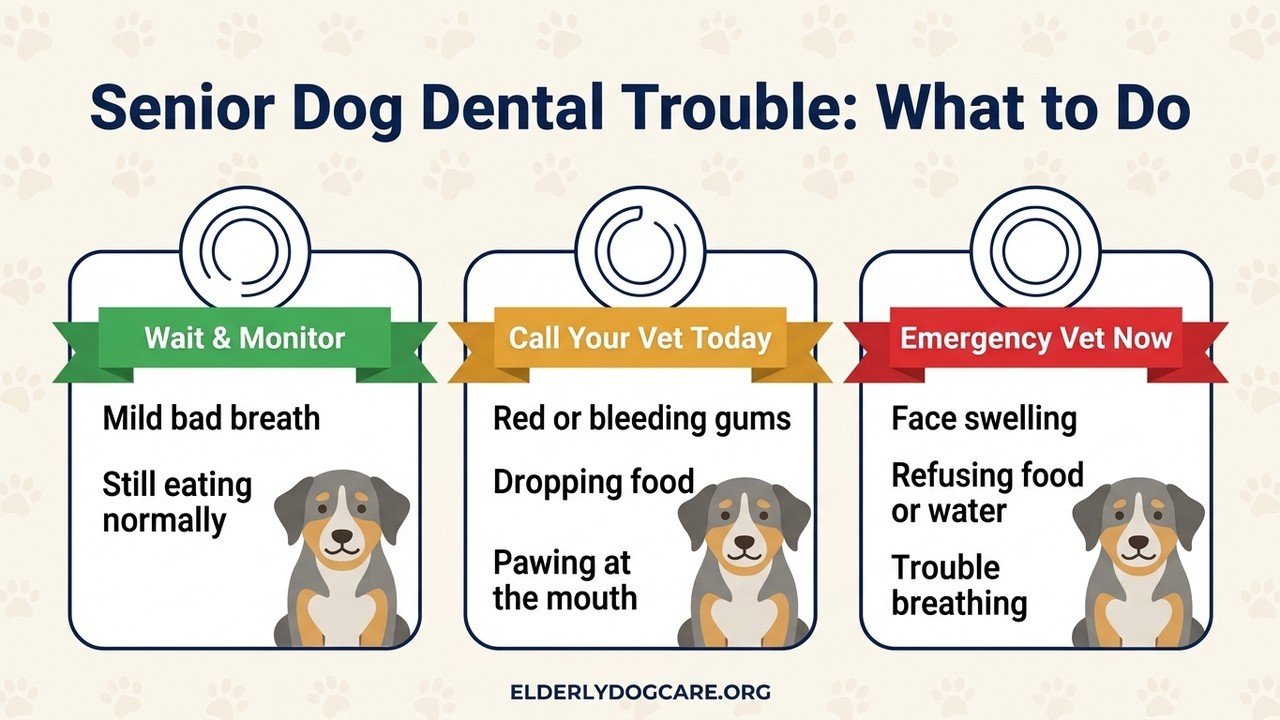
- Bad breath that gets worse, not better, after brushing
- Tartar along the gumline, or teeth that look yellow or brown
- Red, swollen, or bleeding gums
- Pawing at the mouth, dropping food, or chewing on one side
- Face swelling, refusing food or water, or trouble breathing
Mild bad breath with normal eating can wait for a scheduled exam. Red or bleeding gums and changes in chewing need a call to your vet today. Face swelling, refusing food or water, and trouble breathing need emergency care.
Questions to Ask Your Vet Before Any Dental Procedure
Bring a short list to the appointment. The answers will tell you what the plan really covers.
- Can you examine the whole mouth, including below the gumline?
- Will you take dental X-rays during the procedure?
- Which pre-anesthetic tests do you recommend for my dog’s age and health?
- Who monitors my dog during anesthesia, and how often?
- What pain control plan do you use before and after the procedure?
- What home care should I start once the teeth are clean?
Write down the answers and the cost estimate. Compare them side by side if you get a second quote.
What You Can Do at Home Between Cleanings
Home care will not replace a professional cleaning. It can slow tartar buildup and keep gum problems from moving faster while you plan the visit. Daily care is the one part of dental health you control completely.
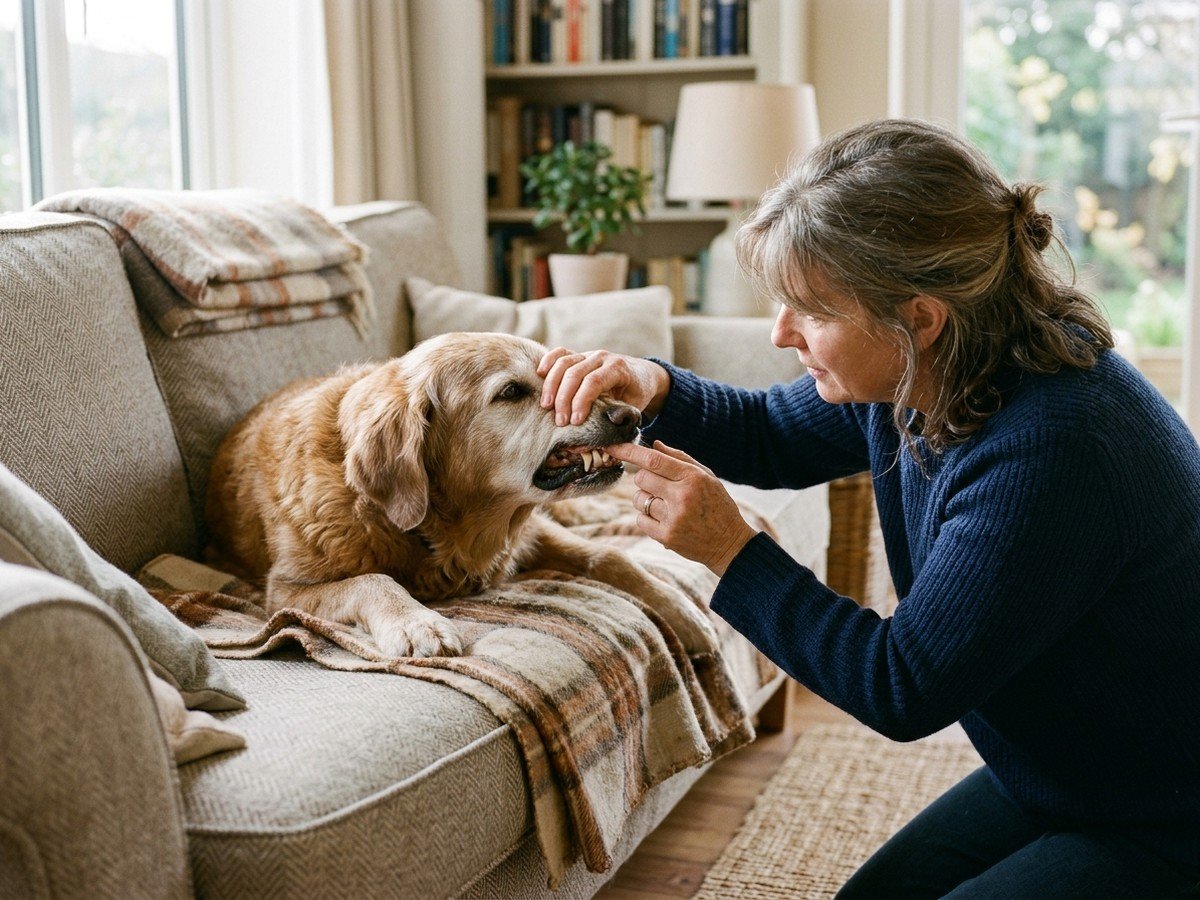
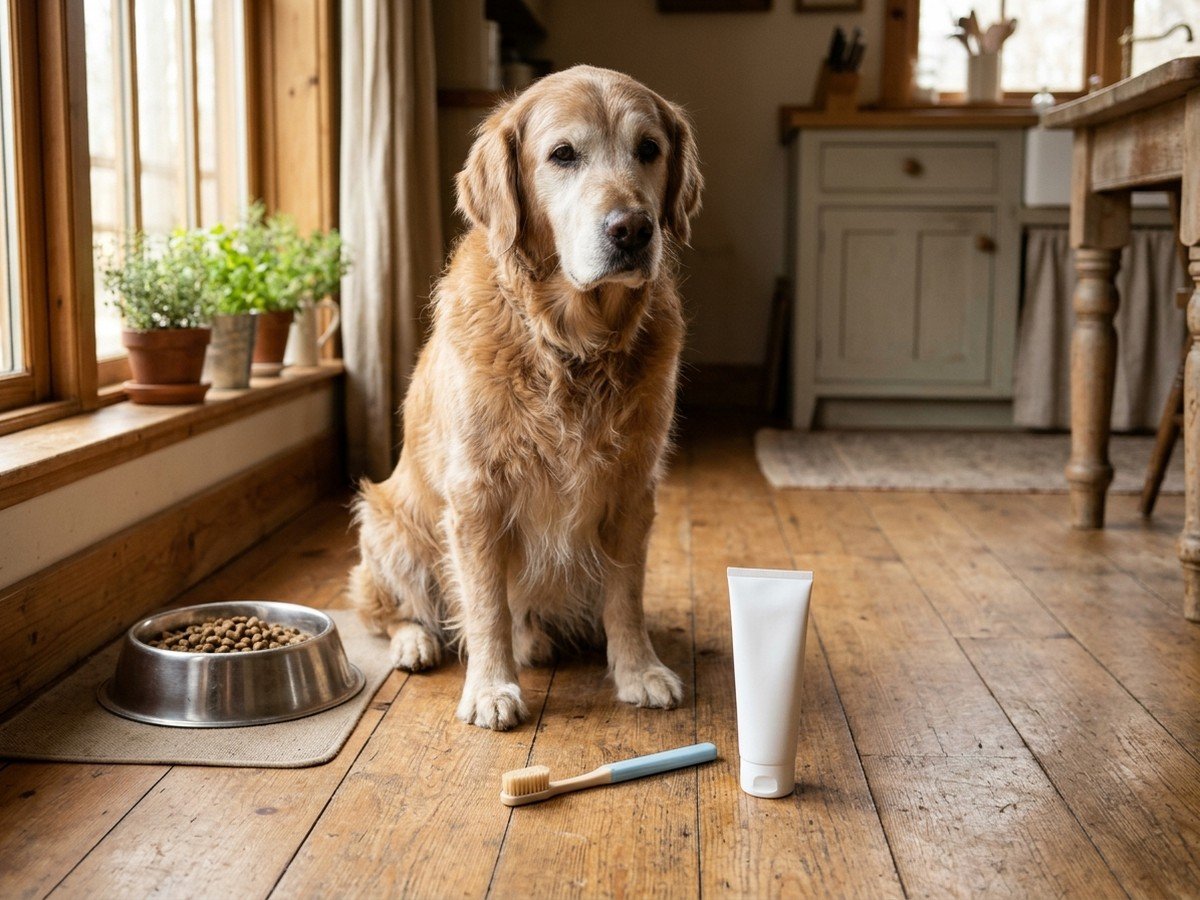
Start slowly. Lift your dog’s lip for a few seconds each day and look at the teeth. Next, touch a soft cloth or a finger to the outer surfaces of a few teeth. Work up to a soft dog toothbrush and a pet toothpaste once your dog accepts it.
Never use human toothpaste, since many brands contain ingredients dogs should not swallow. If bad breath is your main worry, our guide on dog bad breath causes in senior dogs explains the common triggers. Ask your vet which dental chews or water additives they trust. Look for products that carry the Veterinary Oral Health Council seal.
What Recovery Looks Like After a Full Dental
Most dogs go home the same day or the next day after a dental. Your dog may be groggy for a few hours, and some seem off for a day or two. Follow the discharge instructions closely, especially for pain medicine and any antibiotics.
If your vet pulled teeth, soft food for the first few days is common. Ask how long to keep your dog on soft meals and when to start hard chews again. Gently check the mouth each day for swelling, bleeding, or a bad smell.
Watch appetite and water intake closely in the first 48 hours. A dog who refuses food after a dental needs a call to the clinic. Mention any change in breathing, coughing, or unusual weakness right away.
A recheck visit lets your vet look at the healing gums and plan the next steps. Write down questions as they come up at home so you do not forget them at the appointment.
Cost and Planning a Safer Dental Visit
A full dental under anesthesia costs more up front than a groomer’s session. A cheaper cleaning that misses the gumline can still leave disease spreading quietly. Compare the scope of each option, not just the price.
Ask for a written estimate that lists the exam, pre-anesthetic tests, X-rays, anesthesia, any extractions, and follow-up visits. Extractions can add to the bill, so ask how the clinic handles them. Some clinics offer payment plans, and some owners split the work into stages.
If you want to plan the costs of an older dog’s checkups, our guide on senior dog vet checkups, costs and tests walks through what to expect. Owners new to dental care can start with our guide on starting dental care in an older dog, which explains where to begin.
When to See a Vet Right Away
Most dental problems move slowly, so you usually have time to plan. Some signs cannot wait for a scheduled visit. Trouble breathing, face swelling, and a dog who refuses food or water all need emergency care. Call your vet or the nearest emergency clinic without delay.
Frequently Asked Questions
Can a vet clean dogs’ teeth without anesthesia?
Some providers scrape visible tartar while the dog is awake. A vet cannot examine the mouth or clean below the gumline that way. A full cleaning needs anesthesia.
Is it safe to put a 13 year old dog under anesthesia for teeth cleaning?
For many older dogs, yes, after a pre-anesthetic check of heart, kidney, liver, and blood health. Ask your vet which tests they recommend and what risks apply to your dog specifically.
Should I get my 12 year old dog’s teeth cleaned?
If your dog has tartar, bad breath, red gums, or changes in chewing, yes. Start with an exam so your vet can judge how much cleaning is needed.
Do senior dogs need dental cleaning?
Many do at some point. Dental disease is common in older dogs, so regular exams and home checks matter more with age.
What are non-anesthesia teeth cleaning options for senior dogs?
Daily tooth brushing or wiping, dental chews your vet recommends, and regular exams are the main options. Anesthesia-free scraping is a provider service, but it does not reach below the gumline.
Do you recommend anesthesia-free dental cleaning?
Not as a replacement for a full dental under anesthesia. Talk with your vet before you book a non-anesthetic service, and ask what it will and will not clean.
Keeping Your Senior Dog’s Smile Healthy
The main takeaway is simple. A cleaning without anesthesia can make teeth look better, but it cannot treat disease under the gums. Your best path is an exam, a pre-anesthetic plan, and a full cleaning when your vet recommends it, followed by steady home care.
Book the exam this week, even if your dog seems fine. Bring the questions above, and write down the answers. If this guide helped you sort out the options, bookmark it or share it with another owner who is weighing the same choice.