
One minute your old dog is napping. The next, they’re stumbling, their head is tilted, and their eyes are flicking side to side. If you’re reading this with a dog like that beside you, take a breath. You’re doing the right thing by looking for answers.
This guide covers the signs of stroke in senior dogs, what to do in the first hour, and how vets tell a stroke apart from old dog vestibular disease. That last part matters most. Vestibular disease looks almost the same, it’s far more common, and it’s often mislabeled as a stroke.
Quick Answer:
Signs of stroke in senior dogs start suddenly and can include collapse, a head tilt, circling, stumbling, rapidly moving eyes, blindness, disorientation, or an abrupt change in behavior. Strokes are rare in dogs, and old dog vestibular disease causes many of the same signs. Any sudden change like this needs a same-day vet visit, since only an exam (and sometimes an MRI) can tell the two apart.
Key Takeaways:
- Primary Cause: A stroke is a sudden interruption of blood supply to part of the brain, from a clot or a bleed.
- Observable Signs: Sudden head tilt, circling, stumbling, flicking eyes, blindness, or confusion.
- Home Action Step: Keep your dog safe and quiet, note the time, and film the signs for your vet.
- When to See a Vet: The same day for any sudden neurological sign, and right away for collapse or a seizure.
What a Stroke Is in Dogs
A stroke, also called a cerebrovascular accident, happens when blood flow to part of the brain suddenly stops. Without blood, that area of brain tissue runs short of oxygen and stops working properly.
There are two main types. An ischemic stroke happens when a clot blocks a blood vessel. A hemorrhagic stroke happens when a vessel bleeds into the brain, and these bleeds tend to be more severe.
Here’s something that may ease your mind a little. Strokes are rare in dogs, as VCA’s guide to strokes in dogs explains. Big human risk factors, like smoking and high cholesterol, simply don’t apply to them.
Signs of Stroke in Senior Dogs
The signs depend on which part of the brain is affected and for how long. What they share is speed. A stroke comes on suddenly, often over minutes, not weeks.
Watch for any of these:
- Sudden collapse or being unable to stand
- A head tilt to one side
- Circling in one direction
- Stumbling or walking like they’re drunk
- Rapidly moving eyes that flick side to side or up and down
- Sudden blindness, such as bumping into furniture they know well
- Disorientation or seeming not to recognize where they are
- Abrupt behavior changes, like new fearfulness or confusion
Signs may get worse over the first 24 to 72 hours before they settle. After that, many dogs begin a slow recovery.

Stroke or Vestibular Disease? Why They’re Confused
This is the part most owners never hear. Old dog vestibular disease affects the balance system, and it causes a head tilt, falling to one side, and darting eyes. Those signs look a lot like a stroke.
The veterinary guide on vascular accidents in dogs’ brains puts it plainly. A dog with a head tilt, falling toward that side, and darting eyes most likely has vestibular disease, which it says “is often incorrectly referred to as a stroke.”
| Feature | Stroke | Old dog vestibular disease |
|---|---|---|
| How common | Rare in dogs | Much more common in older dogs |
| Onset | Sudden | Sudden |
| Typical signs | Varies by brain area: collapse, blindness, circling, behavior change | Head tilt, falling to one side, darting eyes |
| Underlying disease | Found in about half of cases | Often no cause is found |
| How it’s confirmed | Exam plus tests, with MRI the best imaging | Exam and ruling out other causes |
You can’t safely tell them apart at home, and neither can most people online. That’s why the vet visit matters. Our guide to senior dog vestibular disease explains how that condition is managed and what recovery looks like.
What to Do If You Think Your Dog Had a Stroke
Your first job is to keep your dog safe and get good information to your vet. These steps take only a few minutes.

Step 1: Note the time
Write down when you first noticed the signs. Your vet will want to know how fast things changed, and timing is easy to forget in a stressful moment.
Step 2: Keep your dog safe
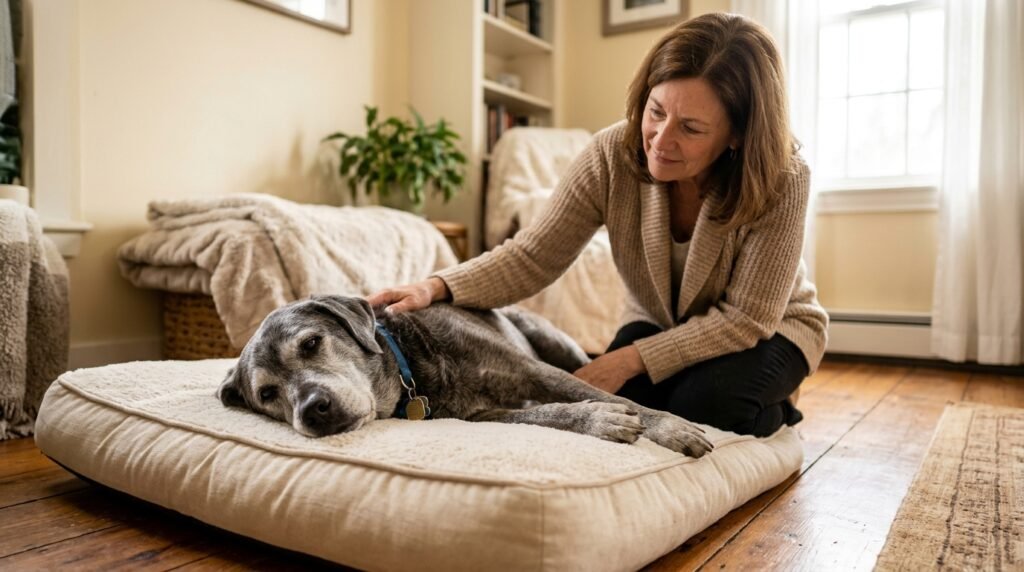
Move your dog away from stairs, pools and furniture edges. Lay them on a soft blanket on the floor. A dizzy senior dog can fall and hurt themselves trying to walk.
Step 3: Film the signs
Take a short phone video of their walking, head position and eyes. Signs can change or ease before you reach the clinic, so a video gives your vet a clear picture.
Step 4: Call your vet now
Call your regular vet or an emergency clinic right away. Go straight in if your dog has collapsed, has a seizure, or can’t stand.
Step 5: Bring a medication list
List every medication and supplement your dog takes, with doses. Some medicines and health conditions affect stroke risk, so this list helps your vet narrow things down.
What Raises Stroke Risk in Older Dogs
Age itself isn’t the main driver. Instead, the risk tends to follow other health problems that show up in senior dogs.
- Underlying disease: One is found in about 50 percent of dogs that have a stroke.
- High blood pressure: Around 30 percent of dogs with a stroke have it.
- Cushing’s disease: One of the most common risk factors in dogs.
- Chronic kidney disease: The other most common risk factor.
- Heartworm disease: A migrating worm can rarely end up in the brain.
- Phenylpropanolamine: A medicine used for urinary incontinence has rarely been linked to strokes in dogs.
- Breed: Cavalier King Charles Spaniels and Greyhounds seem more likely to be affected.
If your dog has one of these conditions, regular checkups and blood pressure checks are worth asking about. Our guides to Cushing’s disease in older dogs and kidney disease in senior dogs explain how each is monitored.
Don’t stop an incontinence medication on your own because of this list. The link is rare, and stopping suddenly can cause other problems. Talk it through with your vet instead.
How Vets Diagnose a Stroke
Diagnosing a stroke usually means ruling out other conditions with similar signs. Head trauma, poisoning, infection, inflammation and brain tumors can all look alike at first.
Your vet may suggest blood work, blood pressure checks, clotting tests, and screening for infections. MRI is the best imaging test for spotting a stroke and the damage it caused. It usually needs a referral to a specialty hospital and general anesthesia.
For an older dog, ask your vet how each test would change the plan. Some families choose fewer tests and focus on supportive care, and that’s a reasonable choice to talk through.
Can You Lower the Risk of a Stroke?
You can’t prevent every stroke, especially since the cause of most strokes is never found. Known risks, though, can often be reduced.
- Keep up senior wellness visits. Older dogs benefit from regular checkups, where problems like kidney disease and Cushing’s can be caught early.
- Ask about blood pressure. High blood pressure shows up in many dogs that have a stroke, and checking it is quick and painless.
- Stay on heartworm prevention. Heartworm disease is a known, if uncommon, stroke risk.
- Review medications yearly. Ask your vet if anything your dog takes affects blood pressure or clotting.
Managing an existing condition well is the most useful thing you can do. Dogs whose stroke had a known cause face a higher chance of another one, so that ongoing care really counts.
Questions to Ask Your Vet
Vet visits after a scare can feel rushed. Bringing a short list helps you leave with answers instead of more worry.
- Does this look more like a stroke or vestibular disease, and why?
- Which tests would change how we treat my dog?
- Should we check blood pressure, kidney values or hormone levels?
- What signs at home mean I should come back right away?
- Would a neurologist or a rehab therapist help?
Write the answers down or ask if you can record the conversation. It’s hard to remember details when you’re upset.
Treatment and Recovery After a Stroke
There’s no single cure for a stroke in dogs. The “clot-buster” drugs used in human hospitals haven’t been established for animals. Treatment focuses on supportive care and on finding any underlying cause.
Supportive care at home often includes:
- Help with standing and walking, using a towel sling or a lifting aid
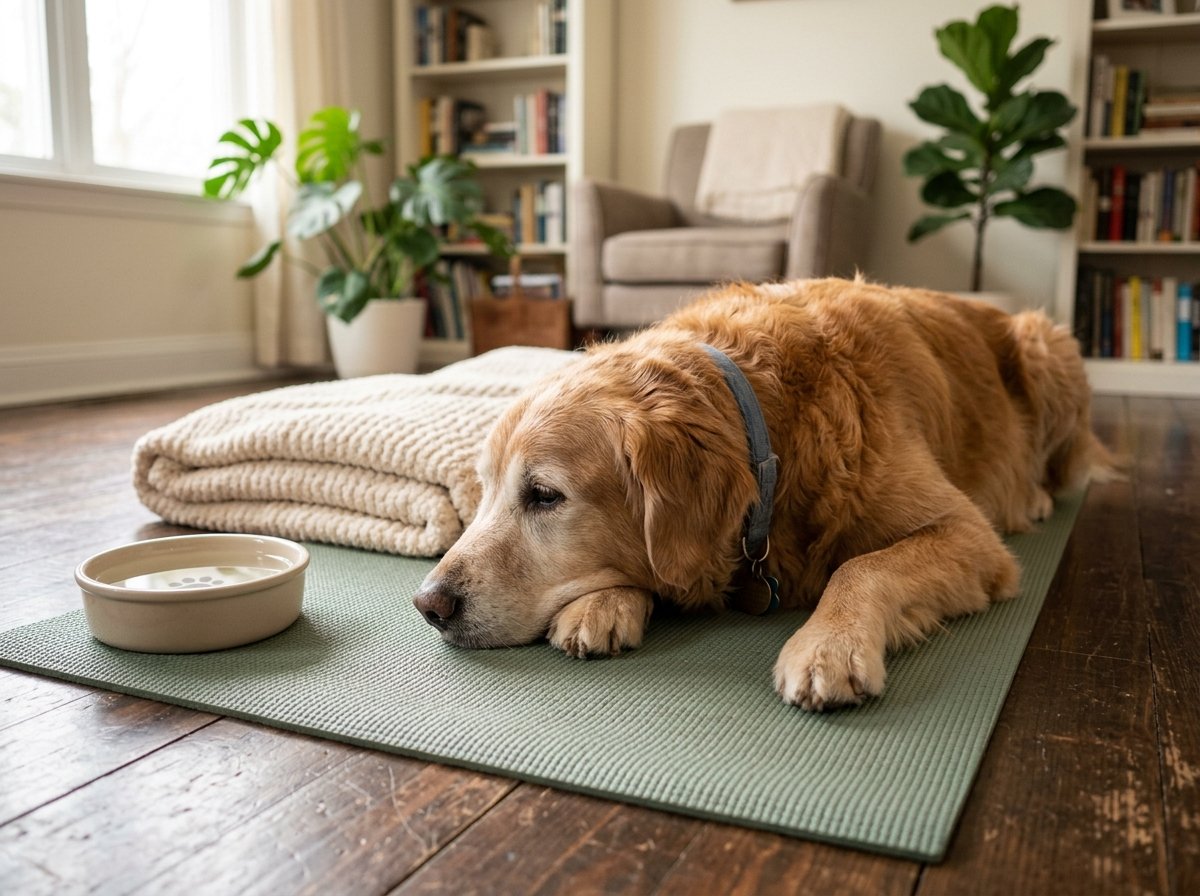
- Non-slip rugs or yoga mats over smooth floors
- Food and water within easy reach, raised if your dog wobbles when bending down
- A quiet, padded resting area away from stairs
- Gentle physical therapy, if your vet recommends it or refers you to a rehab therapist
Many dogs recover better than people do after a stroke. Recovery is often measured in days to weeks. Some dogs regain most of their movement, though behavior changes can take longer to settle.
The outlook depends partly on the cause. Dogs with a known underlying disease tend to have a higher risk of another stroke, so treating that condition is a big part of long-term care.
Living With Lasting Changes
Some dogs are left with a slight head tilt or a less steady walk. Many still enjoy their days, eat well and seek out their people. A small tilt on its own usually doesn’t bother a dog as much as it worries us.
Keep an eye on the basics: appetite, toileting, sleep and interest in you. When those stay good, your dog’s quality of life is often better than it looks.
If your dog struggles to stand, stops eating, or seems distressed most of the day, talk openly with your vet about comfort and next steps. That conversation is part of caring for an old dog, not a sign of giving up.
Warning Signs That Need an Emergency Vet
Some signs mean you shouldn’t wait for a regular appointment. Head to an emergency clinic if your senior dog:
- Collapses or can’t get up
- Has a seizure, or seizures that keep coming
- Becomes unresponsive or very hard to wake
- Gets steadily worse over a few hours
- Has trouble breathing or pale gums
- Has a head injury or may have eaten something toxic
Even if the signs ease quickly, book a vet exam the same day. A short episode can still point to a problem that needs attention.
Frequently Asked Questions
What are the first signs of a stroke in an old dog?
The first signs usually appear suddenly. Look for a head tilt, stumbling, circling, flicking eyes, sudden blindness, confusion, or collapse. Any sudden change like this calls for a same-day vet visit.
Can a senior dog recover from a stroke?
Yes, many do. Dogs often recover over days to weeks, and some regain most of their movement. Behavior changes may take longer, and recovery depends on the cause and severity.
How can I tell if my dog had a stroke or vestibular disease?
At home, you usually can’t. Both cause sudden head tilt, poor balance and darting eyes. Vestibular disease is far more common in old dogs, and your vet’s exam and tests sort out which one it is.
Do dogs have mini strokes?
Owners sometimes see brief episodes of wobbliness or confusion that pass quickly. Many conditions can cause short episodes like these, so have your vet check your dog even if they seem fine afterward.
Which dog breeds are more prone to strokes?
Cavalier King Charles Spaniels and Greyhounds seem more likely to be affected. Any breed can have a stroke, though, usually linked to another health problem.
How long do stroke symptoms last in dogs?
Signs can worsen over the first 24 to 72 hours, then slowly improve. Many dogs show progress within days to weeks, though some changes may be permanent.
Is a stroke painful for a dog?
Ask your vet to check for pain during the exam. The clearer risks are fear, disorientation and falls, so keep your dog on a soft surface and away from stairs.
Caring for Your Dog After a Scare
Seeing your old friend suddenly unsteady is frightening. Often, these signs turn out to be vestibular disease, not a stroke. Either way, a prompt vet visit gets your dog the right care fastest.
Keep your dog safe, film what you see, and call your vet. Then focus on comfort: soft bedding, good footing, and plenty of quiet company. Bookmark this page so you have the steps handy, and share it with another senior dog owner who might need it someday.