

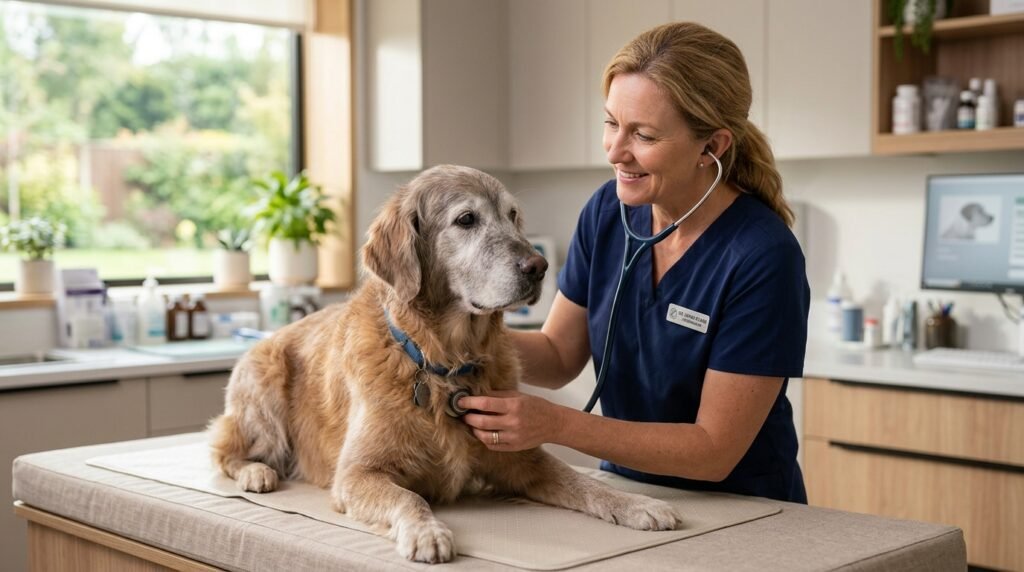
Listening to your senior dog’s chest during a quiet cuddle session brings comfort, but changes in heart function are a primary health concern for aging pets. Canine heart disease affects approximately 10 percent of all dogs, with rates rising to over 60 percent in dogs over age ten, according to veterinary cardiology research.
Heart conditions like Chronic Valvular Disease (CVD) and Dilated Cardiomyopathy (DCM) develop gradually. Recognizing subtle early symptoms allows pet owners to seek timely veterinary care, slowing disease progression and preserving quality of life.
In this guide, you will learn the key signs of heart disease in senior dogs, understand diagnostic tests, and discover practical daily management strategies.
Common Types of Heart Disease in Senior Dogs
Senior dogs typically experience one of two primary heart conditions:
- Myxomatous Mitral Valve Disease (MMVD): Most common in small to medium breeds like Cavalier King Charles Spaniels, Poodles, and Chihuahuas. The mitral valve weakens, allowing blood to flow backward and causing a heart murmur.
- Dilated Cardiomyopathy (DCM): Most common in large and giant breeds like Doberman Pinschers, Great Danes, and Boxers. The heart muscle thins and stretches, reducing its pumping efficiency.
Key Symptoms of Senior Dog Heart Problems
Early stage heart disease often presents with non-specific signs. Watch for these classic warning signals:
- Persistent Nighttime Coughing: A dry, hacking cough that worsens at night or after resting, caused by fluid accumulation or an enlarged heart pressing on airways.
- Rapid Heavy Breathing: Increased resting respiratory rate (over 30 breaths per minute while sleeping).
- Exercise Intolerance: Tiring quickly on routine walks or lagging behind.
- Unexplained Weight Loss: Muscle wasting and loss of body condition despite normal appetite.
- Fainting or Collapse: Sudden weakness or momentary loss of consciousness during exertion.
Diagnostic Tests Your Vet May Recommend
A comprehensive cardiac evaluation includes several diagnostic tools:
– **Auscultation:** Listening with a stethoscope to detect heart murmurs or abnormal rhythms.
– **Chest X-rays:** Evaluating heart size, shape, and checking for fluid in the lungs (pulmonary edema).
– **Echocardiogram (Ultrasound):** Assessing valve structure, wall thickness, and real-time blood flow.
– **Electrocardiogram (ECG):** Monitoring electrical impulses to identify arrhythmias.
Daily Care and Lifestyle Support for Dogs with Heart Conditions
Managing heart disease involves a combination of medication, dietary modifications, and exercise restriction.
Administer vet-prescribed cardiac medications (such as pimobendan, ACE inhibitors, or diuretics) strictly on schedule. Provide a low-sodium diet to prevent fluid retention and support fluid balance.
Keep physical activity gentle and brief. Avoid strenuous exercise or walking in hot, humid weather, which strains the cardiovascular system.
Veterinary cardiology studies published by VCA Animal Hospitals emphasize monitoring resting respiratory rates daily at home as the most reliable indicator of heart stability.
If your dog is experiencing weight changes alongside heart issues, review our guide on senior dog weight management and check recommendations for the best senior dog food options.
Frequently Asked Questions
What is a normal resting breathing rate for a dog with heart disease?
A normal resting respiratory rate while sleeping should be under 30 breaths per minute. A consistent rate above 30 breaths per minute requires immediate veterinary evaluation.
Can heart disease in senior dogs be cured?
Most acquired heart conditions cannot be cured, but medical management slows progression, controls symptoms, and maintains an excellent quality of life for years.
Is coughing always a sign of heart disease?
No. Coughing can also result from tracheal collapse, bronchitis, or respiratory infections. A veterinarian must perform diagnostic chest X-rays to confirm the source.
Conclusion
Early detection and proactive daily care make a profound difference for senior dogs with heart conditions. By watching for subtle symptoms, maintaining routine vet visits, and providing low-stress surroundings, you help your beloved companion enjoy comfortable, happy golden years.
Cardiovascular Diseases in Senior Dogs Explained
Canine cardiac disease develops gradually over months or years, making subtle symptom tracking vital for owners of senior pets.
Myxomatous Mitral Valve Disease (MMVD) affects over 75 percent of small breed senior dogs past age ten. The mitral valve flaps degenerate and leak, allowing blood to back up into the left atrium and causing a heart murmur.
Dilated Cardiomyopathy (DCM) primary affects large and giant breeds like Dobermans, Boxers, and Great Danes. The heart walls thin and stretch, reducing cardiac output and blood oxygen distribution.
Home Monitoring of Resting Respiratory Rate
Monitoring your senior dog’s sleeping breathing rate is the most sensitive home indicator of congestive heart failure stability.
Count your dog’s breaths for 60 seconds while they are sleeping peacefully. A normal resting rate is under 30 breaths per minute. A consistent sleeping rate above 30 breaths per minute indicates potential fluid accumulation in lungs (pulmonary edema) and requires immediate vet contact.
Nutritional and Lifestyle Management for Cardiac Dogs
- Low-Sodium Diets: Reduces fluid retention and eases work required by the heart pump.
- Omega-3 Fish Oil: Combats cardiac cachexia (muscle wasting) and supports vascular health.
- Controlled Gentle Exercise: Short 5-minute garden walks replace strenuous activity to avoid cardiac fatigue.
- Heat Stress Prevention: Keep cardiac dogs in air-conditioned environments during warm summer months.
Frequently Asked Questions
#### What is a normal resting breathing rate for a dog with heart disease?
A normal resting respiratory rate while sleeping should be under 30 breaths per minute. A consistent rate above 30 breaths per minute requires immediate veterinary evaluation.
#### Can heart disease in senior dogs be cured?
Most acquired heart conditions cannot be cured, but medical management slows progression, controls symptoms, and maintains an excellent quality of life for years.
#### Is coughing always a sign of heart disease?
No. Coughing can also result from tracheal collapse, bronchitis, or respiratory infections. A veterinarian must perform diagnostic chest X-rays to confirm the source.
#### What medications do vets prescribe for senior dog heart failure?
Vets commonly prescribe pimobendan to improve heart contraction strength, ACE inhibitors (enalapril) to relax blood vessels, and diuretics (furosemide) to remove fluid buildup.
#### Should a dog with heart disease exercise?
Strenuous exercise must be avoided, but short, gentle 5-minute walks keep joint mobility active without straining the heart.
#### How long can a senior dog live with a heart murmur?
Dogs with early grade 1 or grade 2 heart murmurs often live normal lifespans for years with routine vet monitoring and dietary support.