

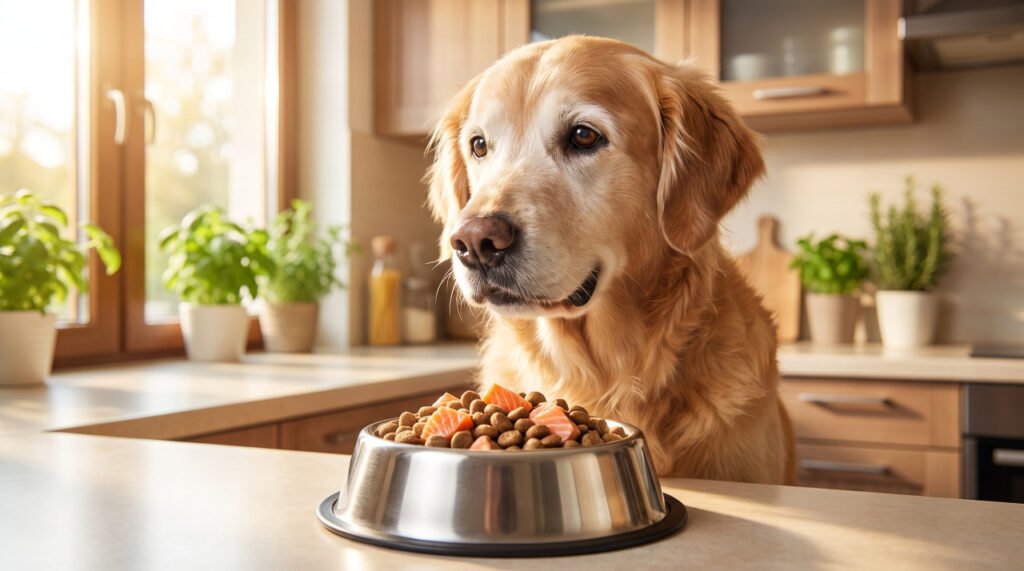
Did you know that nearly 40% of dogs in the US are now classified as senior, yet most owners don’t change their dog’s diet until a health problem forces them to? If your dog is getting older, what’s in their bowl matters more than ever.
Finding the best food for senior dogs doesn’t have to be confusing. By the end of this guide, you’ll know exactly what nutrients aging dogs need, what ingredients to avoid, when to make the switch, and what warning signs mean their current food isn’t cutting it anymore.
Let’s get your older pup eating like the senior superstar they are.
When Is a Dog Actually “Senior”?
Most people assume senior means old — but the timeline is different for every dog. Breed size plays a huge role in when your dog enters their senior years.
- Small breeds (under 20 lbs): Senior around age 10–12
- Medium breeds (21–50 lbs): Senior around age 8–10
- Large breeds (51–90 lbs): Senior around age 7–8
- Giant breeds (90+ lbs): Senior as early as age 5–6
According to the American Veterinary Medical Association’s senior pet care guidelines, large and giant breeds age significantly faster than small breeds. A Great Dane at 6 is already in their golden years, while a Chihuahua at 6 is still middle-aged.
You don’t need to wait until your vet officially declares your dog “senior.” If your dog is hitting the lower end of those age ranges, start thinking about their nutrition now — not after problems appear.
What Changes in a Senior Dog’s Body
Before you pick a food, you need to know why their needs change. This helps you read labels with a lot more confidence.
As dogs age, their metabolism slows down, muscle mass decreases, and organ function changes — especially the kidneys and liver. Their ability to absorb nutrients from food also gets less efficient, which means the quality of what they eat becomes even more critical.
Senior dogs are also more prone to joint pain, dental disease, weight gain, and cognitive decline. The right food actively supports all of these areas — not just keeps them alive.
The Most Important Nutrients for Senior Dogs
High-Quality Protein Comes First
There’s a common myth that senior dogs need less protein to protect their kidneys. Research doesn’t back that up for healthy seniors. According to a study published in the Journal of Nutrition, older dogs actually need more protein than younger adults to maintain muscle mass — not less.
Look for a named animal protein as the first ingredient. Think chicken, beef, salmon, turkey, or lamb. If the label says “meat meal” or “animal by-product” as the first ingredient, that’s a red flag worth noting.
Aim for a food with at least 25–30% crude protein for a healthy senior dog. Your vet may recommend lower protein only if your dog has confirmed kidney disease — not as a general rule for all older dogs.
Healthy Fats Support Brain and Joints
Omega-3 fatty acids — especially DHA and EPA — do double duty for senior dogs. They support cognitive function and reduce joint inflammation, two of the biggest concerns for aging dogs.
Fish oil is the gold standard source. Look for foods that list salmon oil, anchovy oil, or flaxseed on the ingredient panel. If your dog’s food doesn’t include these, you can add a separate senior dog omega-3 supplement — the research from the National Institutes of Health strongly supports their use in aging dogs.
Controlled Calories Prevent Weight Gain
Senior dogs move less and burn fewer calories. Obesity in older dogs worsens arthritis, stresses the heart, and shortens their life. Many senior-formula foods are lower in calories and fat to account for this.
Check the feeding guide on the bag and don’t just eyeball portions. Use a measuring cup every single time — it makes a bigger difference than most owners realise.
Glucosamine and Chondroitin for Joints
These two ingredients support joint cartilage and are especially helpful for larger breeds prone to arthritis. Many senior dog foods include them already. If yours doesn’t, your vet can recommend a supplement to add alongside meals.
Wet Food vs. Dry Food for Senior Dogs
This is one of the most common questions you’ll face when switching your older dog’s diet. Both have real advantages, and the best answer often depends on your specific dog.
Dry food (kibble):
- Helps clean teeth mechanically
- More affordable per serving
- Easier to store and measure
- Better for dogs who need controlled calories
Wet food (canned):
- Higher moisture content helps with hydration
- Easier to eat for dogs with dental problems or tooth loss
- More palatable for picky eaters or dogs with reduced appetite
- Can help dogs with kidney issues stay hydrated
Many owners find that a mix of both works beautifully — the hydration benefits of wet food combined with the convenience of kibble. You can also add warm water to dry food to soften it if your dog struggles with chewing.
If your senior dog has lost several teeth or has severe dental disease, wet food may be the more humane choice. Talk to your vet if you’re unsure.
Warning Signs Your Dog’s Current Food Isn’t Working
This section is what most articles skip — and it’s genuinely one of the most useful things you can know. Your dog can’t tell you their food isn’t right for them. But their body will show you.
Watch for these signs:
| Warning Sign | What It May Indicate |
|---|---|
| Dull, flaky coat | Lacking omega-3s or low-quality fat sources |
| Loose stools or frequent gas | Poor digestibility or ingredient sensitivity |
| Rapid weight gain or loss | Wrong calorie balance for their activity level |
| Lethargy or decreased energy | Nutrient deficiencies or calorie mismatch |
| Vomiting after meals | Ingredient intolerance or too-fast transition |
| Increased thirst/urination | Possible kidney issue — see a vet immediately |
| Refusing to eat | Food may be spoiled, stale, or palatability is low |
If you notice two or more of these signs together, it’s worth reviewing your dog’s food with your vet — don’t just switch brands blindly.
Ingredients to Avoid in Senior Dog Food
Not all dog food is created equal. Some ingredients that are fine for young dogs can be harder on senior systems.
Skip foods that list these high up in the ingredients:
- Corn syrup or added sugars (unnecessary calories, blood sugar spikes)
- Artificial colors (Red 40, Yellow 5, Blue 2 — no nutritional value)
- BHA, BHT, or ethoxyquin (chemical preservatives linked to organ stress)
- Generic “animal fat” or “animal digest” (low-quality, unspecified sources)
- Excessive fillers like corn, wheat, or soy as primary ingredients
You don’t need to panic over every ingredient. But if you see several of these near the top of the list, the food’s overall quality is probably low.
How to Transition Your Senior Dog to New Food
Switching food too fast causes digestive upset — loose stools, vomiting, and a very unhappy senior dog. The good news is that a slow transition almost always prevents this.
Follow this 7–10 day transition schedule:
- Days 1–2: 75% old food, 25% new food
- Days 3–4: 50% old food, 50% new food
- Days 5–6: 25% old food, 75% new food
- Days 7–10: 100% new food
If your dog’s stomach seems upset at any stage, slow down and spend an extra two to three days at that ratio. Senior dogs often need a gentler transition than younger dogs because their digestive systems are more sensitive.
How Often Should You Feed a Senior Dog?
Most adult dogs eat twice a day, and this works well for most seniors too. Splitting their daily portion into two meals helps with digestion and keeps blood sugar more stable throughout the day.
Some senior dogs do better with three smaller meals if they have a sensitive stomach or are recovering from illness. Avoid feeding your dog just once a day — large single meals can cause bloat in medium and large breeds, which is a serious medical emergency.
Always feed at consistent times. Senior dogs thrive on routine, and regular mealtimes help regulate their digestion and energy levels.
The Honest Truth About Senior Dog Food Costs
Here’s something most guides won’t tell you: premium senior dog food costs more upfront but often reduces vet bills over time. Dogs eating low-quality food are more prone to obesity, digestive problems, and nutrient deficiencies — all of which cost money to treat.
A realistic monthly cost for a quality senior dry food runs between $40–$90 per month for a medium-sized dog, depending on the brand and your dog’s size. Prescription diets for dogs with kidney disease, heart conditions, or diabetes will cost more — sometimes $80–$150 per month.
You don’t need to buy the most expensive food on the shelf. Look for foods that meet AAFCO (Association of American Feed Control Officials) nutritional standards — you’ll see this stated on the bag. According to the AAFCO official guidelines, this label means the food meets minimum nutritional requirements for your dog’s life stage.
Budget matters. If a premium food isn’t realistic for you right now, focus on choosing a mid-range food with a named protein as the first ingredient, no artificial preservatives, and AAFCO certification. That alone puts you well ahead of many popular budget brands.
FAQ: Best Food for Senior Dogs
What is the best food to feed a senior dog?
The best food for senior dogs is one with high-quality named protein (like chicken or salmon) as the first ingredient, healthy fats including omega-3s, and no artificial preservatives. It should meet AAFCO standards for “all life stages” or specifically for senior or mature dogs. Your vet can help you narrow down options based on your dog’s specific health conditions.
When should I switch my dog to senior food?
You should consider switching around age 7 for large breeds and age 10 for smaller breeds, though this varies. Don’t wait for health problems to appear. Making the switch proactively — even if your dog seems fine — helps support their joints, metabolism, and organ function before issues develop.
Is wet or dry food better for senior dogs?
Neither is universally better. Wet food helps with hydration and is easier to eat for dogs with dental problems. Dry food is more affordable and helps clean teeth. Many owners find a combination of both works best. Your dog’s individual health needs should drive the decision.
What ingredients should I avoid in senior dog food?
Avoid foods with artificial preservatives like BHA and BHT, added sugars or corn syrup, artificial colors, and vague protein sources like “animal digest.” Also skip foods where corn, wheat, or soy appear as the first or second ingredient — this typically signals a low-quality formula.
How often should senior dogs eat?
Most senior dogs do well with two meals a day — morning and evening. Dogs with sensitive stomachs may benefit from three smaller meals. Avoid feeding once a day, as large meals increase the risk of bloat and digestive discomfort in older dogs.
Can senior dogs eat regular adult dog food?
Some can, especially if the adult food is high-quality and nutritionally dense. However, senior-specific formulas are designed to address the unique needs of aging dogs — including joint support, lower calories, and easier digestibility. Check with your vet to decide what’s right for your individual dog.
The Takeaway: Feed Your Senior Dog Like You Mean It
The single most important thing you can do for your senior dog right now is check what’s in their bowl. Look at the first three ingredients on the label. Check for AAFCO certification. Think about whether their current food matches where they are in life — not where they were five years ago.
Your next step is simple: pick up your dog’s current food bag, read the ingredient list, and compare it to what you’ve learned here. If you’re seeing red flags, book a quick chat with your vet before making a switch. You don’t need to overhaul everything overnight — even small improvements to what your senior dog eats can add real quality to their years.
They gave you their whole life. Give them the best food you can.