

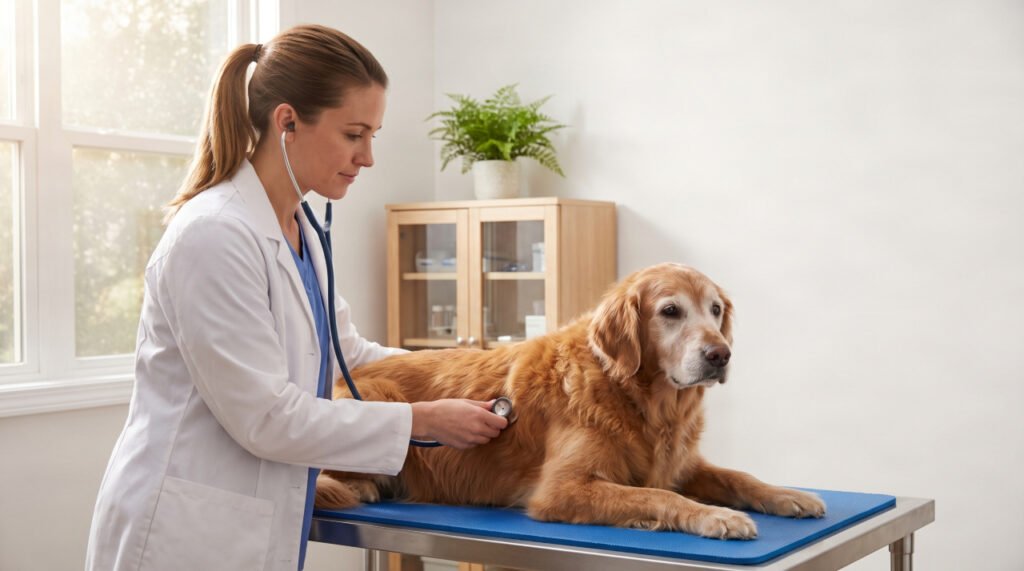
Dogs age roughly five to seven times faster than humans — which means skipping one annual vet checkup for your senior dog is the equivalent of you going seven years without seeing your own doctor.
That’s a long time for something serious to quietly develop.
If your dog is seven years or older, their health needs have changed significantly. Senior dog vet checkups aren’t the same as the quick annual visits you made when they were young. They’re more thorough, more targeted, and more important than most owners realise.
This guide tells you exactly what happens at a senior dog vet checkup, what tests your vet should run, what it costs, and — most critically — how you can prepare to get the most out of every single visit.
When Does a Dog Become a “Senior”?
The answer depends on your dog’s size, not just their birthday.
Small breeds like Chihuahuas and Dachshunds are generally considered senior at around 10–12 years. Medium breeds reach senior status around 8–10 years. Large and giant breeds like Great Danes and Saint Bernards are considered senior as early as 5–6 years old, because their bodies age faster.
Understanding your dog’s life stage by size matters because it tells you when to start senior-level vet care — according to the American Kennel Club, giant breeds are considered senior at just five years old, which surprises many owners.
If you’re unsure where your dog falls, ask your vet at your next visit. They’ll give you a clear answer based on breed, weight, and current health markers.
How Often Should Senior Dogs See the Vet?
Most vets recommend twice-yearly checkups for senior dogs — every six months instead of once a year.
This isn’t about generating more revenue. It’s about catching problems early. Conditions like kidney disease, diabetes, and cancer can progress rapidly in older dogs. A six-month gap between visits gives your vet a much better chance of spotting changes before they become serious.
The American Veterinary Medical Association recommends semi-annual wellness exams for senior and geriatric pets. Your vet may recommend more frequent visits if your dog already has a diagnosed condition like heart disease or arthritis.
Between visits, you play the most important role. Watching for changes at home — in appetite, water intake, energy, and mobility — is something no vet can do for you.
What Happens at a Senior Dog Vet Checkup?
A senior wellness exam goes well beyond a quick listen with a stethoscope.
Here’s what a thorough senior dog checkup should include:
| Exam Component | What the Vet Is Looking For |
|---|---|
| Physical exam (nose to tail) | Lumps, lymph node changes, coat quality, weight |
| Eye and ear exam | Cataracts, glaucoma, infection, hearing loss |
| Dental exam | Periodontal disease, tooth loss, oral tumors |
| Heart and lung auscultation | Murmurs, fluid, irregular rhythms |
| Abdominal palpation | Organ size changes, pain, masses |
| Joint and mobility assessment | Arthritis, muscle loss, pain response |
| Bloodwork (senior wellness panel) | Kidney, liver, thyroid, blood sugar, red/white blood cells |
| Urinalysis | Kidney function, infection, protein levels |
| Blood pressure measurement | Hypertension (common and often missed in senior dogs) |
| Fecal exam | Parasites, which remain a risk at any age |
Your vet may not run every single test at every visit. But they should explain which tests they’re recommending, why they’re recommending them, and what they’re looking for. Don’t be afraid to ask.
Senior Dog Bloodwork: Why It Matters So Much
Bloodwork is the single most important diagnostic tool in senior dog care.
A senior wellness blood panel typically checks kidney and liver function, thyroid hormone levels, blood sugar, red blood cell counts, and white blood cell counts. These numbers give your vet a picture of what’s happening inside your dog’s body that no physical exam can reveal.
Kidney disease, for example, affects roughly 1 in 10 dogs over age 10, according to research published in the Journal of Veterinary Internal Medicine. By the time symptoms appear — drinking more water, weight loss, vomiting — significant kidney function is already lost. Bloodwork catches the early warning signs.
Thyroid disease is another common issue. Hypothyroidism in dogs causes weight gain, lethargy, and skin problems, and it’s easily managed with daily medication once diagnosed. Without bloodwork, many owners assume these are just signs of “getting old.”
Ask your vet to explain your dog’s bloodwork results in plain language. Request a printed copy for your records. Comparing results between visits helps identify trends before they become crises.
How to Prepare for Your Dog’s Senior Checkup
Most owners show up at the vet and wait for questions. The owners who get the most from senior vet visits do a little homework first.
Before you go, write down answers to these questions:
- Has your dog’s appetite changed in the last three to six months?
- Are they drinking more or less water than usual?
- Have you noticed changes in urination or bowel habits?
- Has their activity level or willingness to exercise dropped?
- Do they seem stiff in the mornings or after lying down?
- Have you noticed any lumps, bumps, or skin changes?
- Are there any behaviour changes — more confusion, restlessness, or anxiety at night?
Bring a list of all medications, supplements, and flea/tick/heartworm preventatives your dog currently takes. If your dog has had any vomiting, diarrhoea, or unusual symptoms, note the dates and frequency.
This prep work sounds simple, but it dramatically improves what your vet can do for your dog. Memory is unreliable, especially under the stress of a vet visit.
Questions to Ask Your Vet at a Senior Checkup
You’re not just there to let the vet examine your dog. You’re there to have a conversation.
These are the questions worth asking at every senior dog checkup:
- Are my dog’s bloodwork results within normal range, and how do they compare to last time?
- Is my dog at a healthy weight, and should I adjust their diet?
- Do you see any early signs of arthritis or joint disease?
- Should we screen for cognitive dysfunction? (This is dog dementia — it’s more common than most owners know.)
- Is their dental health causing them pain?
- What warning signs should I watch for at home?
- When should I schedule the next visit?
Don’t rush through this part. A good vet welcomes questions, and these questions help you leave the clinic with a real action plan — not just a bill.
What Does a Senior Dog Vet Checkup Cost?
Cost is a real concern for many pet owners, and ignoring it doesn’t help anyone.
A routine senior wellness exam in the US typically costs between $50–$100 for the office visit alone. Add in a comprehensive senior bloodwork panel ($80–$200), urinalysis ($30–$60), blood pressure check ($20–$40), and any vaccines or parasite prevention, and a thorough twice-yearly senior checkup can run $200–$500 per visit.
That’s $400–$1,000 per year for proactive senior care — which sounds like a lot, until you compare it to the cost of treating an advanced illness that early detection could have prevented.
Pet insurance can offset these costs significantly. If your dog doesn’t already have coverage, it’s worth reviewing options now. Some plans cover wellness exams and routine bloodwork. Just know that pre-existing conditions are typically excluded, so earlier enrollment generally means better coverage.
Comparing pet insurance plans for senior dogs through Consumer Reports is a good starting point. They regularly update their reviews with real cost data.
Signs Your Senior Dog Needs to See a Vet Right Away
Twice-yearly checkups cover routine monitoring. They don’t replace knowing when something is wrong between appointments.
Take your senior dog to the vet immediately if you notice:
- Sudden loss of appetite lasting more than 24 hours
- Laboured breathing or persistent coughing
- Collapse, extreme weakness, or inability to stand
- Seizures
- Sudden swelling in the abdomen
- Blood in urine or stool
- Sudden behavioural changes — especially disorientation or extreme aggression
These are not “wait and see” situations. Senior dogs can decline quickly. Trust your instincts — if something feels wrong, get them seen.
One Thing Most Guides Don’t Tell You: Track Changes at Home
The gap between vet visits is six months. A lot can change in six months.
You can give your vet far better information — and catch problems earlier — if you keep a simple health log at home. Once a week, note your dog’s weight (if you have a scale), appetite, water intake, energy level, and any unusual behaviours.
You don’t need a fancy app. A notes document on your phone works perfectly. After just a few weeks, patterns become clear. After a few months, you have real data your vet can use.
This is the one habit that separates reactive owners (who show up at the vet when something is clearly wrong) from proactive owners (who catch problems weeks or months earlier). Your dog can’t tell you what’s bothering them. Your observations are their voice.
FAQ: Senior Dog Vet Checkups
How often should a senior dog go to the vet?
Most vets recommend twice a year — every six months — for dogs aged seven and older. Dogs with existing health conditions may need visits every three to four months. Twice-yearly visits give your vet the best chance to catch age-related conditions early, when they’re most treatable.
What age is a dog considered senior?
It depends on size. Small breeds are generally senior at 10–12 years. Medium breeds at 8–10 years. Large breeds at 7–8 years. Giant breeds can be considered senior as young as five years old. Ask your vet which category your dog falls into.
What does a senior dog wellness exam include?
A thorough senior wellness exam includes a head-to-tail physical, bloodwork, urinalysis, blood pressure measurement, dental exam, joint assessment, and a review of your dog’s diet, weight, and behaviour. Your vet may also screen for cognitive dysfunction and vision or hearing changes.
How much does a senior dog checkup cost?
Expect to pay $200–$500 per visit for a thorough senior wellness exam including bloodwork and urinalysis. Costs vary by location and clinic. Twice-yearly visits mean annual senior care costs of roughly $400–$1,000. Pet insurance with wellness coverage can offset these expenses.
What blood tests are done on senior dogs?
A standard senior blood panel checks kidney and liver function, blood sugar levels, thyroid hormone, and red and white blood cell counts. Your vet may also run a urine protein-to-creatinine ratio to assess early kidney disease, or a T4 test specifically for thyroid function.
Can I skip bloodwork if my senior dog seems healthy?
Vets strongly advise against skipping bloodwork for senior dogs, even when they appear healthy. Many serious conditions — including kidney disease, diabetes, and liver disease — show no visible symptoms in the early stages. Bloodwork is the only reliable way to detect these problems before they cause real damage.
Your Senior Dog Deserves This
The single most important takeaway from this guide is simple: twice-yearly senior dog vet checkups, combined with your own careful observation at home, give your dog the best possible chance at a longer, more comfortable life.
Don’t wait for obvious symptoms. Senior dogs hide pain and illness well. By the time something is visibly wrong, the problem has often been developing for months.
Here’s your next step: if your dog is seven or older and hasn’t had a senior wellness exam — including bloodwork — in the last six months, book that appointment this week. Not next month. This week. Call your vet, tell them you want a full senior wellness panel, and bring your written list of observations from home.
Your dog is counting on you to make that call.