


Most owners know their dog needs the vet more often once he gets older. What they don’t always know is why those visits look so different — and what to actually do with the results.
Your dog can’t tell you his kidneys are working at 60% capacity. He can’t describe the low-grade joint ache that’s making him slower to rise in the mornings. His bloodwork might show values well within the printed “normal” range, and still represent a meaningful decline from where he was two years ago. That’s the problem with geriatric veterinary care when it’s done passively: you’re looking at snapshots instead of a story.
This guide changes that. It walks through exactly what shifts in veterinary care once your dog reaches senior age, which tests to ask about and why, how vaccinations change, and when to call the vet between scheduled visits. If you want an overview of every aspect of your aging dog’s health, the complete senior dog health guide covers nutrition, joints, cognitive health, and more. This article focuses specifically on what happens at — and between — the vet visits.
What You’ll Need
- Your dog’s previous vet records, especially any bloodwork results from the last 1–2 years
- A written list of observations from home (changes in appetite, water intake, mobility, sleep, or behaviour)
- An understanding of your dog’s current age and breed size — because “geriatric” means something specific, and it’s not the same for every dog
“Senior” vs “Geriatric” — Why the Distinction Matters
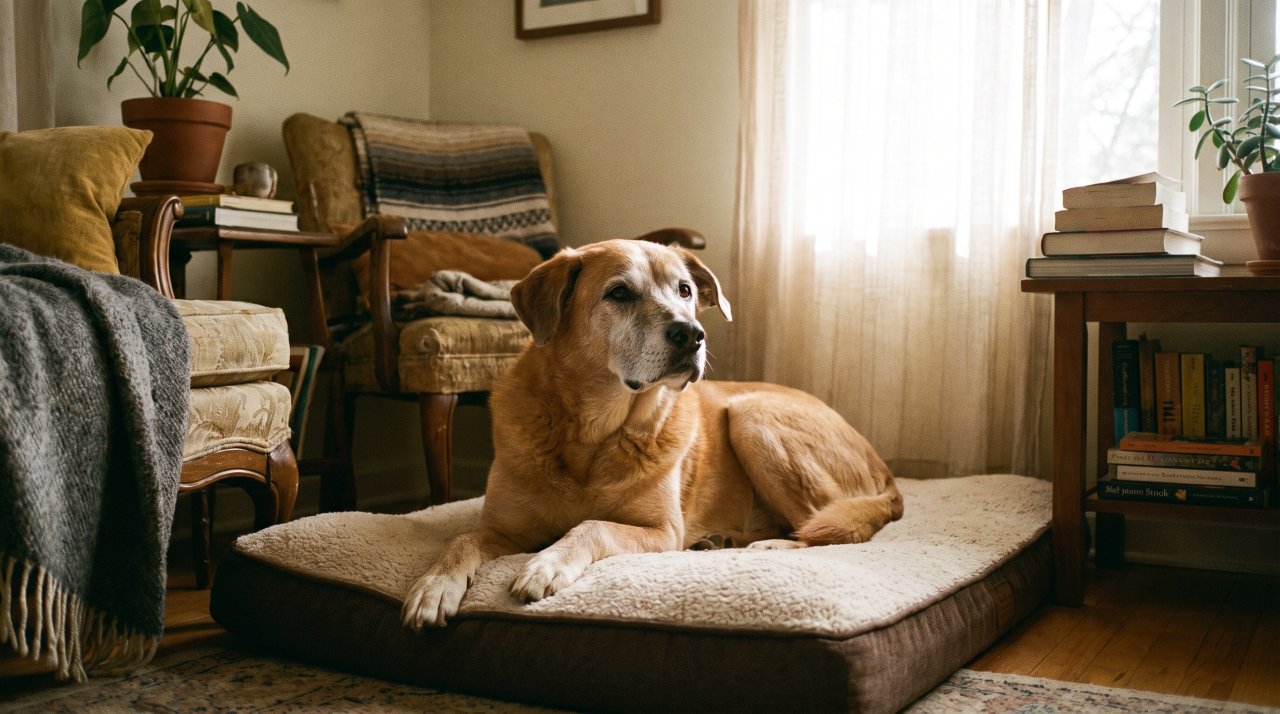
Most guides use “senior” and “geriatric” interchangeably. Veterinarians don’t.
Senior refers to the last quarter of a dog’s expected lifespan — a phase of generally good health that benefits from closer monitoring and preventive care.
Geriatric describes a dog in his final life stage, often managing multiple chronic conditions simultaneously. Geriatric patients typically need more frequent vet contact, more nuanced medication management, and in some cases, conversations about quality-of-life scoring and palliative support.
| Life Stage | Typical Age (Medium/Large Breed) | Care Focus |
|---|---|---|
| Adult | 2–6 years | Annual maintenance |
| Senior | 7–10 years | Biannual monitoring, early detection |
| Geriatric | 10+ years (or 8+ for giant breeds) | Multi-condition management, comfort care |
Understanding which stage your dog is in helps you have the right conversation with your vet. A healthy 8-year-old Labrador and a 13-year-old Labrador with arthritis and early kidney changes need very different care plans — and they should both be framed differently in the room.
1: Shift to Twice-Yearly Vet Visits
Make the Calendar Change Before Symptoms Arrive
The most significant shift in geriatric veterinary care isn’t a test or a medication. It’s frequency.
Annual visits made sense when your dog was young and healthy. At 7 or 8, a year is a long time. Dogs age roughly 7 times faster than humans, which means 12 months between check-ups is the human equivalent of going 7 years without seeing a doctor. Conditions like chronic kidney disease, hypothyroidism, and early-stage cancer can move from subclinical to significantly progressed within that window.
The current recommendation from the American Animal Hospital Association (AAHA) for dogs 7 and older is at least two wellness exams per year. For dogs in the geriatric stage managing multiple conditions, some vets recommend every 3–4 months.
What most owners do wrong: They wait for a symptom to appear before booking an appointment. By that point, many conditions have already progressed past the easiest intervention window. Preventive visits are where geriatric care actually earns its value.
What doing it right looks like: Two appointments scheduled in January — one in spring, one in autumn. You arrive at each with a written list of anything that’s changed, even if it seemed minor. Vets can only respond to what you share with them.
2: Understand the Senior Wellness Panel
Know Which Tests Matter and Why
Here’s where geriatric veterinary care gets specific — and where many guides fall short. It’s not enough to know that your dog needs “more bloodwork.” You need to understand what each test is looking for so you can ask the right questions and interpret what comes back.
A comprehensive senior wellness panel includes:
Complete Blood Count (CBC) Checks red blood cells, white blood cells, and platelets. In senior dogs, a CBC can reveal anemia (common with kidney disease), signs of chronic infection or inflammation, and early indicators of bone marrow conditions or blood cancers.
Comprehensive Chemistry Panel Measures organ function — liver enzymes (ALT, ALP), kidney markers (BUN, creatinine), blood sugar, protein levels, and electrolytes. Kidney and liver disease both show up here, as does diabetes.
SDMA (Symmetric Dimethylarginine) This is the test many owners haven’t heard of — and it’s one worth specifically asking about. SDMA detects kidney function loss significantly earlier than the traditional creatinine marker. Research has shown SDMA can flag declining kidney function when approximately 25% of kidney capacity has been lost, versus the 75% loss typically required before creatinine rises above normal. If your vet isn’t already running SDMA as part of a senior panel, ask whether it’s appropriate for your dog.
Thyroid Screen (Total T4) Hypothyroidism is underdiagnosed in older dogs and frequently misread as “normal slowing down.” Classic signs include weight gain despite unchanged food intake, lethargy, hair thinning, and a dull coat. A simple T4 blood test checks thyroid hormone levels — and if hypothyroidism is the cause, it’s highly treatable with daily medication.
Urinalysis Often skipped or treated as optional, but it’s one of the most informative tests in geriatric care. Urine concentration ability is one of the earliest signs of kidney decline. A dilute urine specific gravity (below 1.030) in a dog who’s drinking more than usual is a meaningful finding, even when blood values look normal.
Blood Pressure Measurement Hypertension is common in senior dogs and is often secondary to kidney disease, hypothyroidism, or Cushing’s disease. It causes silent damage to the eyes, heart, and kidneys. Most healthy dogs don’t need blood pressure checked at every visit, but if any organ disease is identified, it should become routine.
The trend problem — and why it matters: Lab results come with printed reference ranges. Those ranges are population averages — they represent what’s “normal” for most dogs. But your dog has his own baseline. A creatinine of 1.7 might be normal for one dog and an increase from a consistent 0.9 for another. Without prior results to compare against, a single panel tells an incomplete story.
This is one of the most important reasons to start comprehensive senior bloodwork before your dog shows any symptoms — ideally at his first senior wellness visit. Those early results become his personal baseline, and future tests gain meaning by comparison to them.
3: Revisit the Vaccination Schedule
Understand What Changes — and What Doesn’t
Vaccinations don’t disappear from the schedule when a dog gets older, but they do get more personalised. Here’s a practical breakdown based on current AAHA vaccination guidelines:
Core Vaccines (Required for All Dogs)
- DAPP (Distemper, Adenovirus, Parvovirus, Parainfluenza): After the initial puppy series and a booster at one year, most adult and senior dogs need a DAPP booster every 3 years. Annual boosters for core vaccines are not necessary once this schedule is established.
- Rabies: Legally mandated in most jurisdictions. Booster frequency is determined by local law — typically every 1–3 years. Check what applies in your area, because legal compliance overrides clinical preference.
Non-Core Vaccines (Based on Lifestyle and Risk)
These are given based on your dog’s individual exposure risk:
| Vaccine | Who Needs It | Typical Frequency |
|---|---|---|
| Bordetella (kennel cough) | Dogs in boarding, grooming, or dog parks | Every 6–12 months |
| Leptospirosis | Dogs with outdoor exposure or water access | Annual |
| Lyme disease | Dogs in tick-endemic regions | Annual |
| Canine Influenza | Dogs in high-density social settings | Annual |
What about titer testing?
Titer testing measures existing antibody levels in the blood and can confirm whether a dog is still protected against specific diseases without a booster. It’s a legitimate option — but with important caveats.
The AAHA notes that titer testing is most appropriate in specific situations: dogs who have had adverse reactions to vaccines, dogs with immune-mediated diseases, or cases where the owner has genuine concerns about over-vaccination for a dog already managing chronic illness. It’s not a replacement for routine vaccination for healthy seniors.
Crucially, a positive titer for Rabies does not satisfy legal vaccination requirements in most areas. You’ll need to confirm your local regulations.
If you’re considering titer testing, it’s a conversation to have with your vet rather than a unilateral decision. The cost (typically 50–150 per panel) and the interpretation of results both need clinical context.
4: Prepare Properly for Each Visit
Get More From Every Appointment
A vet visit is only as useful as the information you bring in. Senior wellness exams with a well-prepared owner consistently yield better outcomes — earlier catches, clearer diagnoses, more targeted care plans.
Before the appointment, note down:
- Any changes in water intake or urination frequency (increased thirst is often the first visible sign of kidney disease, diabetes, or Cushing’s)
- Changes in appetite — both increase and decrease are clinically relevant
- Weight changes you’ve noticed (ideally confirmed by a home scale if possible)
- Mobility observations: hesitation on stairs, stiffness after lying down, reluctance to jump
- Sleep pattern changes — restlessness, pacing at night, or sleeping more than usual
- Any new lumps, bumps, or skin changes
- Behavioural shifts — confusion, anxiety, changed social interest, house accidents
Questions worth asking at every senior visit:
- “What is his blood pressure, and should we be tracking it?”
- “Are you running SDMA as part of the kidney panel?”
- “How do his results compare to the last set? Has anything trended in a direction we should watch?”
- “Is there anything in these results that would change his diet, supplements, or activity level?”
- “Based on where he is now, how often should we be running panels?”
That last question is important. Some vets default to annual bloodwork even for senior dogs. It’s worth a direct conversation about whether that frequency is appropriate for your dog’s specific health picture.
5: Know When to Call Between Visits
Red Flags That Don’t Wait for the Next Appointment
Biannual exams are the foundation. But geriatric veterinary care doesn’t live only inside the vet’s office — it depends on your observation at home.
The following changes in a senior or geriatric dog warrant a vet call within 24–48 hours, not a wait for the next scheduled visit:
- Sudden or significant increase in water intake and urination
- Unexplained weight loss of more than 10% body weight over a few weeks
- Loss of appetite lasting more than 24 hours, particularly in a dog who was previously food-motivated
- New coughing, especially at night or on exertion (potential heart disease sign)
- Sudden change in gait — new limping, knuckling, or stumbling
- An episode of house soiling in a previously reliable dog with no recent dietary change
- Visible distension of the abdomen
- Pale, grey, or blue-tinged gums (emergency — call immediately)
- Collapse, seizure, or sudden inability to stand (emergency — do not wait)
A useful habit is keeping a brief weekly log — just two or three sentences about your dog’s appetite, movement, and general demeanour. When something changes, you’ll have a timeline to show your vet that makes the clinical picture clearer.
Warning Signs to Watch For

Many geriatric conditions progress slowly enough that owners adapt without noticing. Watch for these patterns across several days rather than isolated incidents:
- Drinking from rooms he didn’t previously visit (often seeking water more frequently)
- Taking longer and longer to settle on his bed or rise from it
- Backing away from stairs he used to take confidently
- Reduced response to his name or familiar commands — not stubbornness, potentially cognitive or hearing-related
- A face that looks pinched around the muzzle and eyes — a subtle but real sign of chronic pain
None of these alone requires a panic call. All of them are worth noting and raising at your next appointment — or sooner if they’re sudden or worsening.
Frequently Asked Questions
What is geriatric pet care and how is it different from regular senior care?
Geriatric pet care refers to veterinary management of dogs in the final stage of their lifespan — typically dogs managing multiple chronic conditions simultaneously, rather than generally healthy older dogs. The difference in practice: senior care is largely preventive and monitoring-based. Geriatric care involves more active management of overlapping conditions, closer monitoring intervals (sometimes every 3–4 months), and conversations about quality of life and comfort-focused support.
What is the recommended senior dog vaccination schedule?
Core vaccines (DAPP) are typically boosted every 3 years after the initial series, per current AAHA guidelines. Rabies follows local legal requirements — usually every 1–3 years. Non-core vaccines like Bordetella, Leptospirosis, and Lyme are recommended annually or every 6–12 months based on your dog’s lifestyle and exposure risk. Always confirm the schedule with your vet, as individual health status can affect what’s appropriate for your specific dog.
When should I see the vet for my old dog between scheduled visits?
Book an unscheduled appointment if you notice sudden changes in water intake or urination, unexplained weight loss, loss of appetite lasting more than 24 hours, new limping or stumbling, persistent coughing, a first-time episode of house soiling, or any sudden change in behaviour or alertness. For collapse, seizures, or blue/pale gums, treat these as emergencies and call immediately. Minor concerns can wait for the next scheduled visit — anything sudden or worsening can’t.
Does my senior dog still need vaccines if he stays mostly at home?
Yes — core vaccines (DAPP and Rabies) remain appropriate for most senior dogs regardless of lifestyle. An aging immune system is a less robust one, and immunity from earlier vaccines does wane over time. Rabies is legally required in most places regardless of lifestyle. Non-core vaccines can reasonably be reassessed based on actual risk — a dog who never visits boarding facilities may not need annual Bordetella. Discuss this specifically with your vet, as “mostly at home” still involves walks, parks, and contact with other animals.
What is SDMA and should I ask my vet about it?
SDMA (Symmetric Dimethylarginine) is a kidney biomarker that can detect loss of kidney function at an earlier stage than the traditional creatinine test. It’s included in many standard senior panels but not all. Asking your vet “are you running SDMA?” is a reasonable question, particularly if your dog is 8 or older or has any other risk factors for kidney disease. Early detection of kidney decline allows for dietary management strategies that can meaningfully slow progression.
How often should a senior dog have bloodwork done?
For generally healthy dogs aged 7–9, most vets recommend a full panel twice yearly. For dogs in the geriatric stage (10+) or those already managing a chronic condition, more frequent testing — every 3–4 months — may be appropriate. The most important thing is consistency: results become most meaningful when you’re tracking trends over time rather than reading single-point snapshots.
Conclusion
Geriatric veterinary care works best when it’s a partnership — you observing at home, your vet interpreting the clinical data, and both of you tracking the trend over time rather than reacting to individual numbers.
The owners who get the most from these visits aren’t necessarily the ones with the highest vet bills. They’re the ones who come prepared, ask specific questions, and keep records between appointments. That combination means earlier catches, fewer surprises, and more time spent acting on information rather than looking for it.
If you haven’t already built a broader care plan for your senior dog — covering nutrition, joints, cognitive health, and daily routines — the complete senior dog health guide is the right next read. This article covers the vet visit side of the equation. That one covers everything else.
Bookmark this page so you can revisit it before each appointment. And if something in your dog’s routine has changed since you last read it — trust that instinct and pick up the phone.