

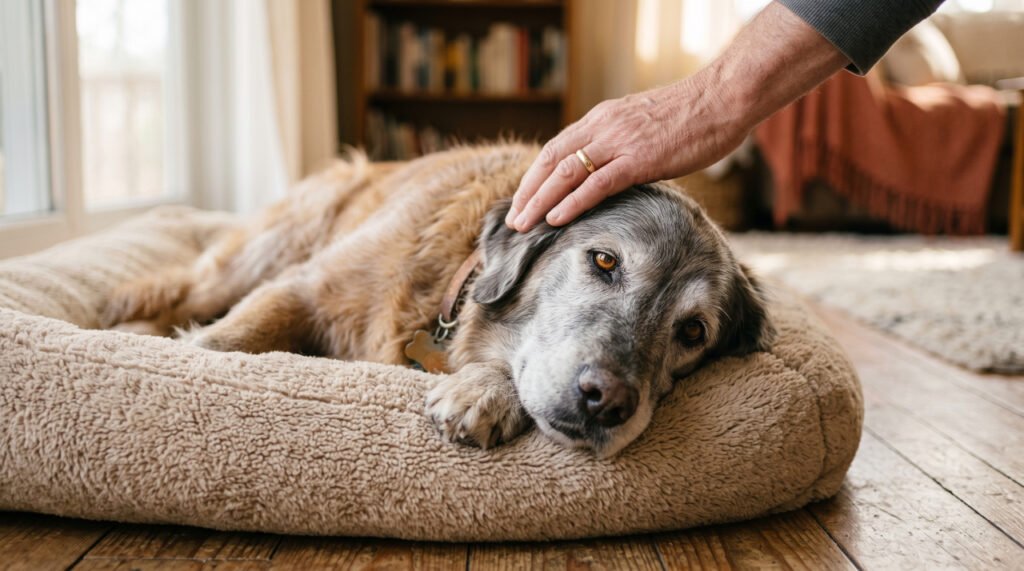
Your dog just turned seven, and suddenly you’re seeing gray hairs around their muzzle. Maybe they’re slower getting up from their bed, or they didn’t hear you come home yesterday. You’re wondering what comes next—and what you should be doing differently.
Here’s something most dog owners don’t know: dogs who receive proactive senior care starting at age seven live an average of 2.5 years longer than those who only get reactive medical treatment. That’s 30 months of morning greetings, evening walks, and couch cuddles you might otherwise miss.
Caring for aging dogs isn’t about a single change or veterinary visit. It’s about understanding what happens at each life stage and adjusting your care accordingly. This guide walks you through exactly what to expect—and what to do—from your dog’s first senior years through their final comfortable days. You’ll learn the specific signs to watch for, the home changes that matter most, and the honest financial reality of senior dog care.
When Does a Dog Become “Senior”?
The answer depends entirely on your dog’s size, and getting this wrong means you’ll miss the early intervention window that makes the biggest difference.
Small breeds (under 20 pounds): Senior at 10-11 years
- Chihuahuas, Yorkshire Terriers, Pomeranians
- Often live 14-16+ years
Medium breeds (20-50 pounds): Senior at 8-9 years
- Beagles, Cocker Spaniels, Border Collies
- Typical lifespan 12-14 years
Large breeds (50-90 pounds): Senior at 7-8 years
- Labrador Retrievers, German Shepherds, Golden Retrievers
- Average lifespan 10-13 years
Giant breeds (90+ pounds): Senior at 5-6 years
- Great Danes, Mastiffs, Saint Bernards
- Often live only 7-10 years
This size difference matters because a seven-year-old Chihuahua is middle-aged, while a seven-year-old Great Dane is already a senior citizen. The veterinary guidelines for senior pets recommend you start senior-specific care at these age thresholds, not when you notice obvious decline.
The 7-10 Age Range: Recognizing Early Senior Changes
Most changes during these early senior years are subtle. You’ll miss them if you’re not watching for specific signs.
What’s happening inside: Joint cartilage starts thinning, kidney function drops by about 10%, and metabolism slows by 15-20%. Your dog’s body repairs itself more slowly after exercise or minor injuries.
What you’ll notice:
- Takes 5-10 seconds longer to stand up after resting
- Hesitates before jumping into the car or onto furniture
- Sleeps an extra 1-2 hours per day
- Drinks slightly more water than before
- Gray hair spreads beyond the muzzle to eyebrows and paws
What you should do now:
Start twice-yearly vet visits instead of annual checkups. These visits should include blood work to establish baseline kidney and liver values. You’ll want these numbers to compare against later when age-related decline accelerates. Most vets recommend a senior panel that costs $150-$250.
Switch to food formulated for senior dogs, which typically contains 20-25% fewer calories and added joint support ingredients. Make this change gradually over 7-10 days to avoid digestive upset.
Add a joint supplement containing glucosamine and chondroitin. Research shows dogs who start supplementation before arthritis symptoms appear maintain better mobility for 2-3 years longer than those who wait.
The 10-13 Age Range: Managing Progressive Decline
This stage requires your most active management. You’ll see noticeable changes every 4-6 months, and your response speed directly impacts your dog’s comfort level.
What’s happening inside: Arthritis develops in 80% of dogs over ten years old. Heart efficiency decreases. Hearing and vision loss progresses. Cognitive changes begin as brain cells die and aren’t replaced.
What you’ll notice:
- Reluctance to use stairs or walk on slippery floors
- Confusion about which door they use to go outside
- Accidents in the house despite years of perfect house training
- Stiffness that improves after moving around (classic arthritis pattern)
- Less interest in playing or interacting with other dogs
- Sleeping 16-18 hours per day instead of 12-14
What you should do now:
Install ramps or pet stairs anywhere your dog currently jumps. A $50-$100 ramp at your bed or couch prevents the daily joint stress that accelerates arthritis. You might feel silly buying a ramp for a dog who can still jump, but prevention beats treatment.
Add non-slip surfaces to tile and hardwood floors. Yoga mats ($15-$20 each) work better than expensive runner rugs because you can wash them easily. Place them on your dog’s path between their bed, food bowls, and outside door.
Consider pain medication if you notice signs of arthritis in your dog. Modern pain management has changed dramatically—many dogs benefit from daily anti-inflammatory medication that costs $30-$60 monthly but dramatically improves quality of life.
Shorten walks but increase frequency. Three 10-minute walks keep joints mobile better than one 30-minute trek that leaves your dog sore for hours afterward.
The 13+ Age Range: Prioritizing Comfort and Quality
At this stage, you’re no longer preventing decline—you’re managing it thoughtfully. Every decision should pass through a simple filter: does this improve my dog’s daily comfort?
What’s happening inside: Multiple body systems are failing gradually. Pain from arthritis becomes constant rather than movement-related. Organ function drops to 40-60% of young-adult levels. Cognitive dysfunction syndrome (dog dementia) affects 60% of dogs over thirteen.
What you’ll notice:
- Reluctance to move unless necessary
- Disorientation in familiar places
- Forgetting family members or house rules they’ve known for years
- Sleeping 18-20+ hours daily
- Appetite changes (either increased or decreased)
- Bathroom accidents becoming regular, not occasional
What you should do now:
Create a ground-floor living space if your dog can no longer manage stairs. Move their bed, food, and water to one accessible area. Your dog shouldn’t have to navigate your entire house anymore.
Invest in an orthopedic memory foam bed ($60-$150) at least 4 inches thick. Thin beds don’t provide adequate pressure relief for arthritic joints. Place beds in every room where your family spends time—your dog wants to be near you even if they can’t actively participate.
Use a lifting harness ($25-$60) to support your dog’s hindquarters during walks and bathroom breaks. This simple tool prevents falls and allows dogs with severe arthritis to maintain bathroom dignity.
Adjust your expectations about cleanliness and routine. Washable pee pads ($20 for a pack of 3) near their bed might feel like giving up on house training, but they’re actually giving your dog the gift of not holding their bladder past comfort.
Essential Home Modifications That Actually Matter
Most articles mention “making your home comfortable” without specifics. Here’s what actually works, based on what veterinary physical therapists recommend.
Flooring is your biggest priority. Slippery surfaces cause constant muscle tension as your dog tries to maintain balance. This tension worsens arthritis and causes anxiety. You don’t need to replace flooring—you need strategic placement of:
- Yoga mats on walking paths ($15-$20 each)
- Rug runners with non-slip backing ($30-$50)
- Paw wax or dog socks for extra traction ($10-$15)
Lighting matters more than you’d think. Senior dogs lose night vision first. Add nightlights ($3-$5 each) along hallways and near doors. Motion-sensor lights ($15-$25) help dogs navigate at night without you waking to turn on lights.
Raised food bowls reduce neck strain for large dogs but can increase bloat risk. For small and medium dogs, elevating bowls 4-6 inches ($20-$40 for raised feeders) makes eating more comfortable when arthritis affects the neck and shoulders.
Temperature control becomes critical. Senior dogs can’t regulate body temperature as efficiently. They need blankets in winter and cooling mats ($25-$50) in summer. Watch for excessive panting or shivering—both indicate discomfort.
The Real Cost of Caring for Aging Dogs
Nobody talks about money until you’re already spending it. Here’s the honest breakdown so you can plan ahead.
Routine senior care (annual costs):
- Twice-yearly vet visits with bloodwork: $400-$600
- Senior diet food: $600-$900
- Joint supplements: $200-$400
- Flea/tick/heartworm prevention: $200-$300
- Total: $1,400-$2,200 yearly
Common additional expenses:
- Arthritis pain medication: $360-$720 yearly
- Dental cleaning under anesthesia: $300-$800 (often needed every 2-3 years)
- Prescription diet for kidney/heart disease: add $400-$600 yearly
- Mobility aids (ramps, harnesses, beds): $200-$400 one-time
- Potential total with complications: $2,500-$4,500 yearly
Emergency/end-of-life costs:
- Emergency vet visit: $500-$2,000 per incident
- Cancer treatment: $3,000-$10,000+
- Advanced imaging (MRI/CT): $1,500-$3,000
- Euthanasia and cremation: $300-$600
These numbers aren’t meant to scare you. They’re meant to help you plan. Pet insurance typically doesn’t cover pre-existing conditions, so if you don’t have it before your dog turns senior, you’ll pay out of pocket. Setting aside $150-$200 monthly starting when your dog turns senior covers most routine expenses.
Nutrition and Supplements That Make a Difference
Marketing claims about senior dog food are everywhere, but only a few nutritional changes are backed by research.
What senior dogs actually need:
Reduced calories (20-30% fewer) because metabolism slows, but the same or higher protein levels to maintain muscle mass. Most commercial senior foods get this wrong—they reduce both calories AND protein, which accelerates muscle loss.
Look for foods listing 25-30% protein for large breeds, 28-32% for small breeds. Check the first three ingredients—they should be specific meat sources (chicken, beef, salmon), not generic “meat meal” or grains.
Supplements worth considering:
Glucosamine and chondroitin show modest benefit for joint health in multiple studies. You need at least 500mg glucosamine per 25 pounds of body weight daily. Products containing these at effective doses cost $25-$40 monthly.
Omega-3 fatty acids (fish oil) reduce inflammation and may slow cognitive decline according to recent canine aging research. Effective dosing is 20- 55 mg combined EPA/DHA per pound of body weight. A 50-pound dog needs about 1,000- 2,750 mg daily.
Skip these overhyped supplements:
Antioxidant blends and vitamins E and C have no proven benefit in dogs eating complete commercial diets. Probiotics might help some dogs with digestive issues, but they’re not essential for all seniors.
When in doubt, invest in higher-quality food before adding supplements. Your complete senior dog diet guide breaks down specific brand recommendations.
Exercise Balance: Not Too Much, Not Too Little
The biggest mistake you’ll make is either over-exercising your senior dog because “they’ve always been active” or under-exercising them because “they’re old now.”
The right approach: Match exercise to current ability, not past performance. A dog who hiked 5 miles at age five might manage 1-2 miles comfortably at age twelve. Pushing past that causes joint damage and pain that lasts for days.
Watch for these exercise intolerance signs:
- Sitting or lying down during walks
- Limping that appears during or after exercise
- Excessive panting that continues 10+ minutes after stopping
- Reluctance to walk the next day
These signs mean you’ve exceeded your dog’s current capacity. Cut the distance in half and monitor for improvement.
Low-impact exercise options:
Swimming provides excellent joint movement without impact stress. Many areas have dog rehabilitation centers with heated pools ($20-$40 per session). Even 10 minutes of swimming works muscles more effectively than a 30-minute walk.
Slow, short leash walks on soft surfaces (grass, dirt trails) are better than pavement. Hard surfaces increase joint stress with every step.
Mental exercise counts more than you think. Teaching new tricks, hiding treats for your dog to find, and puzzle feeders all tire your dog’s brain, which reduces anxiety and improves sleep quality.
Cognitive Health and Behavioral Changes
One aspect competitors completely ignore: roughly 60% of dogs over age thirteen develop canine cognitive dysfunction syndrome (CDS), essentially dog dementia. Recognizing this early lets you make adjustments that keep your dog calmer and more comfortable.
CDS signs you shouldn’t ignore:
- Staring at walls or into space for extended periods
- Forgetting familiar people or pets
- Getting “stuck” behind furniture or in corners
- Disrupted sleep-wake cycles (awake all night, sleeping all day)
- House training accidents in unusual locations
- Decreased interest in greeting family members
What helps cognitive decline:
Environmental enrichment through novel experiences. Take your dog to new (quiet) places, introduce new toys regularly, and continue training simple new commands. Novel experiences stimulate brain activity and may slow decline.
Prescription medication (selegiline) shows benefit in about 60-70% of dogs with CDS. It won’t reverse changes, but many dogs show improved awareness and reduced anxiety. Cost runs $30-$80 monthly depending on dog size.
Maintain strict routines. Dogs with cognitive decline do better when feeding, walking, and sleeping happen at identical times daily. Unpredictability increases confusion and anxiety.
The hard truth: CDS is progressive and eventually worsens despite intervention. Your goal isn’t to stop it—it’s to maintain your dog’s comfort and dignity as long as possible.
Quality of Life Assessment Framework
The hardest part of caring for aging dogs is knowing when you’re still improving their life versus just prolonging it. This validated quality of life assessment helps you make decisions based on your dog’s actual daily experience.
Rate your dog honestly on these factors, using a scale of 1-10 (10 = no problems, 1 = severe problems):
Hurt: Is pain managed adequately? Can your dog breathe comfortably? Consider pain medication effectiveness.
Hunger: Is your dog eating enough to maintain weight and energy? Does eating appear difficult or painful?
Hydration: Does your dog drink water willingly? Can they keep water down? Are they dehydrated?
Hygiene: Can your dog stay clean? Do they soil themselves? Can you keep them clean without causing distress?
Happiness: Does your dog show interest in family, activities, or anything? Do they still have “good moments”?
Mobility: Can your dog stand and walk without falling? Can they reach food, water, and bathroom spots?
More good days than bad: Count the actual good versus bad days over two weeks, not your hopeful impression.
A total score under 35 (averaging 5 per category) suggests quality of life is poor. Scores consistently in the 20s or below indicate suffering. This assessment doesn’t decide for you, but it removes the emotion enough to see clearly.
Reassess weekly when your dog is in the 13+ age range. Quality can decline suddenly, and weekly checking ensures you don’t miss significant changes.
Frequently Asked Questions
At what age is a dog considered senior?
Small dogs (under 20 pounds) are senior at 10-11 years, medium dogs (20-50 pounds) at 8-9 years, large dogs (50-90 pounds) at 7-8 years, and giant breeds (90+ pounds) at just 5-6 years. Size determines aging rate because larger dogs’ organs and joints wear out faster.
How often should senior dogs see the veterinarian?
Senior dogs need veterinary checkups every six months instead of annually. The AAHA senior care protocols recommend twice-yearly visits because health can decline significantly in six months at this life stage. Each visit should include physical examination and bloodwork to track organ function.
What are the first signs my dog is aging?
The earliest signs include taking longer to stand up after resting (5-10 extra seconds), hesitation before jumping, gray hair spreading beyond the muzzle, sleeping 1-2 hours more per day, and slightly increased water consumption. These changes often appear 6-12 months before owners typically notice.
Should I change my senior dog’s food?
Yes, but focus on protein content, not just age-labeled products. Senior dogs need 20-30% fewer calories but equal or higher protein (25-32%) to maintain muscle mass. Many commercial “senior” foods reduce both calories and protein, which accelerates muscle loss. Check ingredient labels carefully.
How much exercise does a senior dog need?
Most senior dogs benefit from shorter, more frequent exercise sessions rather than long single outings. Three 10-minute walks usually work better than one 30-minute walk. Watch for signs of exercise intolerance like sitting during walks, post-exercise limping, or next-day reluctance to move.
When is it time to euthanize my senior dog?
Use a quality of life scale to assess pain management, eating ability, hydration, hygiene, happiness, mobility, and ratio of good to bad days. Scores consistently below 35 out of 70 (averaging 5 per category) suggest poor quality of life. Consult your veterinarian when you’re tracking more bad days than good over two weeks.
Moving Forward With Your Senior Dog
Caring for aging dogs means making dozens of small adjustments that add up to significantly more comfortable years. You don’t need to implement everything immediately—start with the changes that match your dog’s current age range.
If your dog is in the 7-10 range, schedule that senior blood panel this month and add a quality joint supplement. These two actions set you up to track changes and prevent arthritis progression.
If your dog is 10-13, focus on home modifications this week. Order yoga mats for slippery floors and a ramp for furniture. These tools prevent falls that can seriously injure an aging dog.
If your dog is 13+, start using the quality of life assessment weekly. Print it out, put it on your refrigerator, and score honestly every Sunday evening. This practice helps you make decisions based on your dog’s actual experience rather than your hopes.
Your senior dog gave you their best years. These adjustments—the ramps, the vet visits, the medication, the patience with accidents—are how you return that gift. Start with one change today. Your dog will feel the difference tomorrow.