
Nearly 50% of dogs over age 10 will develop cancer, according to the American Veterinary Medical Association — yet most of those cases are caught far later than they need to be. You don’t need a medical degree to change that outcome. You need a plan.
This senior dog health checklist gives you exactly that. By the end of this article, you’ll know what to check daily, monthly, and annually — and you’ll know the red flag symptoms that mean you need to call your vet today, not next week.
Whether your dog just hit the senior years or you’ve been caring for an aging pup for a while, this guide makes it simple and clear.
When Does a Dog Become a Senior?
Your dog’s “senior” status depends on their size, not just their age. This surprises many owners who assume all dogs age at the same pace.
Here’s a quick breakdown:
| Dog Size | Approximate Senior Age |
|---|---|
| Small breeds (under 20 lbs) | 10–12 years |
| Medium breeds (20–50 lbs) | 8–10 years |
| Large breeds (50–90 lbs) | 7–8 years |
| Giant breeds (over 90 lbs) | 5–6 years |
A Great Dane at age 7 faces age-related health risks that a Chihuahua won’t face until its early teens. According to the American Kennel Club, giant breeds age faster because their bodies work harder to maintain such a large frame. Knowing your dog’s true “senior threshold” is the first step in this checklist.
The Senior Dog Health Checklist: Daily Tasks
Daily monitoring sounds like a lot, but it takes less than five minutes once you know what to look for. These are quick visual and touch checks you do during normal bonding time with your dog.
Check these every day:
- Appetite: Did your dog eat their full meal? Skipping one meal occasionally is normal. Skipping two or more in a row signals a problem.
- Water intake: Drinking far more or far less than usual can indicate kidney disease, diabetes, or Cushing’s disease.
- Mobility: Does your dog stand, sit, and walk without wincing? Stiffness after rest is a hallmark sign of arthritis in senior dogs.
- Eyes and nose: Look for discharge, cloudiness, or crustiness. A small amount of eye gunk is normal; thick, colored discharge is not.
- Bathroom habits: Accidents indoors, straining to urinate, blood in urine or stool — any of these need same-day attention.
- Mood and energy: You know your dog. Sudden withdrawal, confusion, or excessive clinginess are worth tracking.
You don’t need to write every observation down at first. Just tune in consistently. You’ll notice deviations faster than any vet can from a yearly exam.
The Senior Dog Health Checklist: Monthly Tasks
Monthly checks let you catch slower-developing issues before they become serious. Set a calendar reminder for the same day each month.
Do these once a month:
- Weight check: A kitchen scale works for small dogs. For larger breeds, use the rib test — you should feel your dog’s ribs without pressing hard, but you shouldn’t see them. Unexplained weight loss in senior dogs is always a red flag.
- Lumps and bumps scan: Run your hands slowly over your dog’s entire body. Note any new growths, soft masses, or swellings. The American Veterinary Medical Association recommends that any new lump in a senior dog gets evaluated by a vet promptly.
- Dental check: Lift your dog’s lips and look at the gum line. Red, swollen, or bleeding gums are signs of periodontal disease, which affects over 80% of dogs by age three and worsens with age.
- Nail length: Overgrown nails change your dog’s gait and put pressure on aging joints. If you hear clicking on hard floors, it’s trim time.
- Coat and skin: Look for excessive shedding, dry flaky skin, bald patches, or redness. These can signal thyroid problems, allergies, or parasites.
This monthly scan takes about 10 minutes and requires nothing more than your hands and good lighting.
The Senior Dog Health Checklist: Bi-Annual Vet Visits
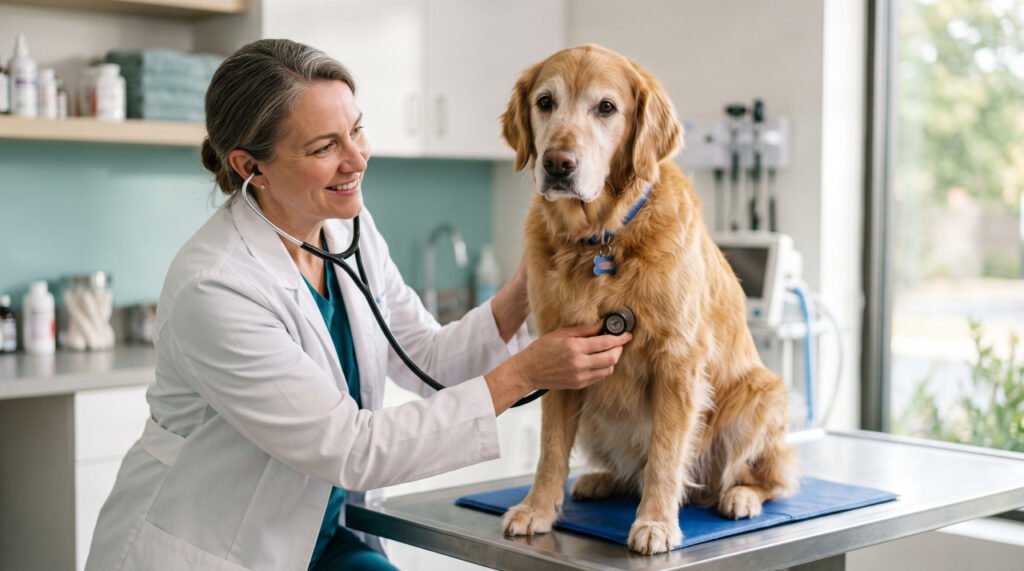
The standard recommendation used to be one vet visit per year. For senior dogs, that’s no longer enough. The American Animal Hospital Association released updated senior care guidelines recommending twice-yearly wellness exams for dogs in their senior years.
Think of it this way: one human year equals roughly 5–7 dog years for a senior dog. A yearly vet visit for your 10-year-old dog is like you seeing a doctor once every six years.
What your vet should do at each bi-annual visit:
- Full physical exam including lymph nodes, abdomen, heart, and lungs
- Blood pressure measurement (hypertension is common in senior dogs and often missed)
- Weight tracking and body condition scoring
- Pain assessment for arthritis or internal discomfort
- Discussion of any behavioral changes you’ve noticed
Bring a written list of observations from your daily and monthly checks. Your vet sees your dog for 20 minutes; you see them every day. Your notes matter.
The Senior Dog Health Checklist: Annual Lab Work
Lab work gives your vet a picture of what’s happening inside your dog that a physical exam can’t reveal. For senior dogs, annual bloodwork is non-negotiable.
Tests your senior dog needs every year:
- Complete Blood Count (CBC): Checks red blood cells, white blood cells, and platelets. Catches anemia, infection, and immune issues.
- Chemistry panel: Evaluates kidney function, liver health, blood sugar, and electrolytes.
- Urinalysis: Detects kidney disease, urinary infections, and diabetes early.
- Thyroid panel: Hypothyroidism is common in senior dogs and causes weight gain, lethargy, and coat changes.
- Fecal exam: Intestinal parasites don’t disappear with age. Annual fecal checks keep your dog — and your family — protected.
If your dog is already managing a chronic condition, your vet may recommend more frequent testing. That’s normal and worth the investment.
Cognitive Health: The Checklist Item Most Owners Miss
Canine Cognitive Dysfunction Syndrome (CDS) — sometimes called “dog dementia” — affects an estimated 28% of dogs aged 11–12 and over 68% of dogs aged 14–15, according to research published in the Journal of Veterinary Behavior. Yet most owners and even some vets still underdiagnose it.
You can check for early signs of CDS at home using the DISHA framework:
- Disorientation — getting lost in familiar spaces, staring at walls
- Interactions — reduced interest in family, decreased social engagement
- Sleep/wake cycle changes — awake and restless at night, sleeping heavily during the day
- Housetraining lapses — accidents in a previously reliable dog
- Activity changes — less play, less exploration, increased anxiety
If you spot two or more of these signs, bring them to your vet’s attention. Medications like selegiline (Anipryl) and dietary supplements including omega-3 fatty acids have shown measurable benefit in early-stage CDS. Early action genuinely changes outcomes here.
Red Flag Symptoms: Call Your Vet Today
Some symptoms can’t wait for a scheduled appointment. You know your dog better than anyone. Trust your instincts — and act fast when you notice any of the following.
Contact your vet immediately if your senior dog shows:
- Sudden collapse or inability to stand
- Labored or rapid breathing at rest
- Pale, white, blue, or yellow gums
- Distended or hard abdomen
- Seizures or uncontrolled shaking
- Blood in urine, stool, or vomit
- Sudden, complete loss of appetite for more than 48 hours
- Extreme disorientation or circling behavior
- Crying out when touched or moved
These symptoms don’t mean the worst is inevitable. They do mean that waiting costs you time you and your dog may not have.
Nutrition and Weight on Your Checklist
Diet is one of the most powerful tools you have for your senior dog’s health. Senior dogs have different caloric needs, lower metabolic rates, and often reduced kidney function compared to younger dogs.
What to prioritize:
- High-quality protein to maintain muscle mass (don’t reduce protein without vet guidance — this is a common misconception)
- Omega-3 fatty acids for joint and brain health
- Reduced sodium if your dog has heart or kidney issues
- Adequate hydration — wet food or water added to dry kibble helps
Talk to your vet before switching to a “senior” formula. Not all senior dog foods are created equally, and some dogs do better staying on their adult formula with specific supplements added.
FAQ: Senior Dog Health Checklist
What should I monitor in my senior dog every day?
Monitor appetite, water intake, mobility, bathroom habits, and mood every day. You’re looking for changes from your dog’s normal baseline. Sudden shifts in any of these areas warrant a call to your vet.
At what age is a dog considered a senior?
It depends on size. Small breeds become senior around age 10–12. Giant breeds like Great Danes are considered senior as early as age 5–6. Your vet can confirm your specific dog’s senior status based on their health history and breed.
How often should senior dogs go to the vet?
Senior dogs should visit the vet at least twice per year. The American Animal Hospital Association formally recommends bi-annual wellness exams for senior dogs, as many age-related conditions develop between annual visits.
What tests should a senior dog have every year?
Your senior dog should have a complete blood count, chemistry panel, urinalysis, thyroid panel, and fecal exam annually. If your dog has an existing condition, your vet may recommend additional or more frequent testing.
What are the early signs of dog aging I should know?
Early signs include sleeping more, slowing on walks, stiffness after rest, cloudiness in the eyes (lenticular sclerosis), grey around the muzzle, and reduced interest in play. These are normal. Sudden or severe changes are not — those need veterinary attention.
Can I do a senior dog health check at home?
Yes, and you should. Daily visual and touch checks, monthly weight and lump scans, and tracking behavioral changes at home are all things you can do without any special equipment. Your observations between vet visits are genuinely valuable — write them down and bring them to your appointments.
Your Next Step
The single most important takeaway from this senior dog health checklist is this: consistency beats perfection. You don’t need to do everything at once. Start with the daily check today — it takes five minutes.
Then book your bi-annual vet appointment if you haven’t had one in the last six months. Bring your notes. Tell your vet what you’ve observed. That combination — your daily attention plus professional oversight — gives your senior dog the best possible shot at comfortable, healthy golden years.
You’ve already taken the right step by looking this up. Now act on it.